
Utpala, known as Utpalacharya and Utpakleva, was one of the greatest philosophers of Kashmir Shaivism. The Fourth Buddhist Council, which was held in Kashmir during Kanishika`s time, was a warning to the Brahmins. Nagarjuna`s preachings awakened the people and anti-Buddhist forces became active. This movement gave birth to the Kashmir School of Shaivism in the ninth century. Two great philosophers, Somananda and Vasugupta, were born in Kashmir by this time. They laid the foundation of Paratyabhigna School and Spanda School of Shaivism. This system of thought was a reaction against Buddhism prevalent then. Buddhism believed in "unknowableness" and Shaivism believed in "bliss". It was no longer ritualistic wrangle but a scientific approach to the subject. It was this reorientation which ousted Buddhism from Kasmir. Somananda and Vasugupta were contemporaries, and Utpala belonged to the line of Somananda who was his Guru. Utpala was the Parma-Guru of Abhinavagupta.
Utpala was a Brahmin by birth and lived around the middle of 900AD. A poet, a mystic and a philosopher, Somananda`s Shivadrishti inspired him to write Pralyabhijunasutras - a book which is given a place of authority on Shaivism. It contains instructions on practical Yoga also. He discussed monism but his approach was different from that of Vasugupta. In ecstasy he would sing rapturous notes intensely musical and full of meaning. He had passion for music which is common to mystics. He also wrote Sivastotravali, a collection of poems. It contains very powerful hymns which reflect Utpala as a mad lover, a mystic, a devotee and a drunken soul.
Philosophy of Utpala
In his philosophy Utpala was more devotional than Shankara. What is significant about the works and philosophy of Utpala is not his divergence from any kind of standard theological belief but his presentation of things. These are given a significant insight by the light of understanding which shows that he lived in the world of which he speaks. In the spiritual path it is the actual experience that counts and not the discourses of philosophy.
According to his philosophical reckoning, Utpala does not deny the existence of free will in man, but he implies the indispensable character of Divine Grace. This sort of attitude is found in all mystics. Lal Ded saw him in everything that she saw; Rabindranath Tagore and Kabir felt him in everything that they touched.
Metaphysics of Utpala is not different from that of the Vedic doctrine. He says-
"There is nothing to be known from outside; my own light shines on all sides."
Giving the conception of Divinity, Utpala writes-
"One who is second less, thoughtless, infinitely deep and the very life-breath of all"
Utpala possesses the awareness of mystery and the consciousness of the unknown. Utpala`s intellectualism and mysticism is of a high order. His school of self-introspection is a school in itself. His love and music is soul-lifting. The chief characteristic of Utpala`s language is symbolism. He has the power to penetrate human feelings and the magic to transform people. The philosopher has the dynamic touch to mesmerize and enthrall people one.
Utpala
Utpala was a philosopher belonging to the school of Kashmir Shaivism. A follower of Somananda’s line of thought, his philosophy and mysticism is of a high order.
Recently updated articles in Religion in India
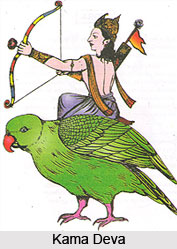
Kusumayudha
Kusumayudha is a name of Kamadeva, the Hindu God of Love. Depicted with a sugarcane bow and flower-tipped arrows, he represents attraction and longing...

Bhoyar Caste
Bhoyar Caste is largely found in the Central Provinces of the country. Traditional occupation of Bhoyars is agriculture. They are good cultivators and...
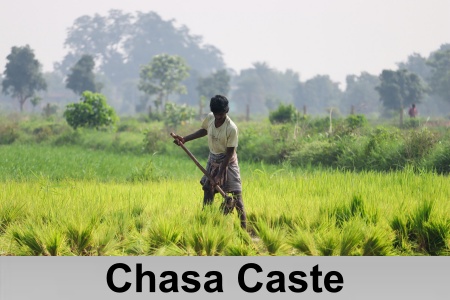
Chasa Caste
Chasa caste is a prominent agrarian community native to Odisha. Traditionally associated with cultivation and farming, Chasas have historically played...
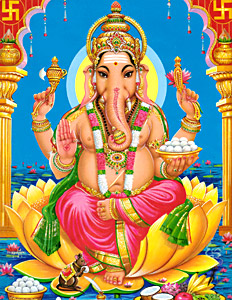
Vigneswara, A Form of Lord Ganesha
Lord Vigneswara is another form of Lord Ganesha or Vinayaka, prominently worshipped as the God of intelligence and good luck in the Indian subcontinen...
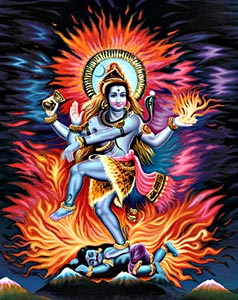
Maheswara
Maheswara, meaning “the Great Lord,” is a revered name of Lord Shiva in Hindu tradition. It represents Shiva’s supreme authority over creation, preser...
Related articles in Religion in India
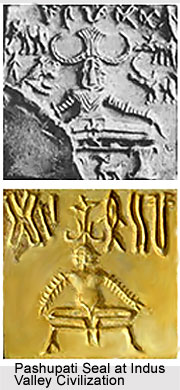
Religion in Indus Valley Civilization
Religion in Indus Valley Civilisation included Hinduism, Buddhism and Jainism. Details about the religion in Indus Valley Civilization have been gathe...
Iyer Brahmin
Iyer Brahmins are originally from Tamil Nadu of South India. They are known for their adherence to Advaita philosophy and Smarta traditions. Tradition...
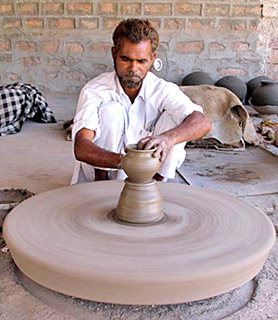
Kumbhakar / Kumhar Caste
Kumbhakar or Kumhar caste is a traditional artisan community in India known for pottery making. Derived from Sanskrit word Kumbhakar, meaning potter,...

Gujjars in Mughal Era
Gujjars in the Mughal era enjoyed great power. Further their power increased with the decline of Aurangzeb, Mughal emperor.
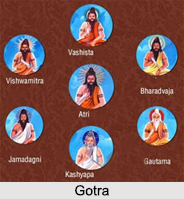
Gotra in Hinduism
In Hinduism, gotra refers to a lineage system tracing descent from ancient sages, primarily through the paternal line. Originating from Vedic traditio...