
The George Town was developed by the British to provide temples for their Hindu clerks, accountants and traders. It was also known as Thimmanna Town. Therefore, the British also built various Hindu temples in that area.
The twin-temple of Chenna Kesava (Vishnu) and Chenna Malleshvara (Siva) are among the oldest and most famous of the George Town temples. The second temple is also known as the `Patnam Koil` or Town Temple, which is located at Devaraja Mudali Street.
According to the historical reports, it is said that the temple was originally built in the early 17th century at the spot where the present High Court stands now.
The British demolished the George Town temple in 1757 and it was reconstructed again between 1762 and 1780 at the present position. It was given as a compensatory gift by the British to the Hindus of the area. This is one of the exclusive Siva shrine and a Vishnu shrine functioning next to each other. These two shrines share a common wall with a doorway through which one could access one shrine from the other. They also share a common tank, which is located close to the entrance. The typical Vijayanagar features are reflected in most of the temples of George Town. There are large number of pillared mandapas and sub-shrines and elaborately carved pillars with pillar brackets sometimes terminating in the form of the inverted lotus bud can be seen in the George Town temples.
There is an open `pradakshina patha` or circumambulatory passage lies between the main shrine in the middle and the series of supplementary shrines on all the four sides of the George Town temples. Several meetings were conducted in this temple in the earlier days. There was a time, when prasadam from this temple was regularly sent to the judges and witnesses in the High Court, which was located in the neighbouring area.
Some of the important temples of George Town include the Kandaswami temple at Rasappa Chetty Street and the Kalikamba temple at Thambu Chetty Street. It is said that Chattrapati Sivaji, the great Maratha king of the 17th century and Subramania Bharathi, the nationalist poet of the 20th century worshipped in the Kalikamba temple.
The George Town also has a few Jain temples for the small Jain community living in this area. These temples with their arched openings, floral cornice mouldings and ornamented parapet represented the Rajasthani style of Jain architecture. These shrines were the prototype for more recent Jain temples built in other parts of the city.
Temples of George Town
This was developed by the British to provide temples for their Hindu employees.
Recently updated articles in Temples of India
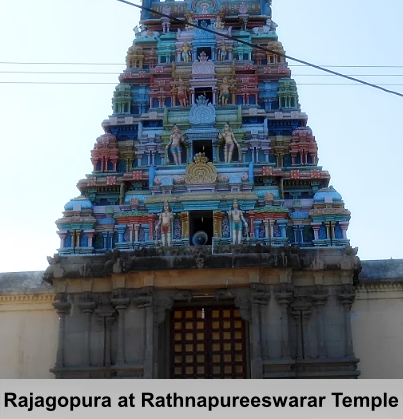
Rathnapureeswarar Temple
Rathnapureeswarar Temple in Tiruvarur district, Tamil Nadu, is a revered Shaivite shrine among the Paadal Petra Sthalams. Dedicated to Lord Shiva, it...

Gayatri Temple, Sirmaur
Gayatri Temple is located in Sirmaur district, Himachal Pradesh. Gayatri Temple is a sacred shrine that belongs to the medieval age.
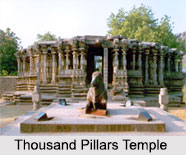
Thousand Pillars Temple
Thousand Pillars Temple, Andhra Pradesh possesses 1000 pillars built by the Kakatiya ruler Rudra Deva during 1163 AD and is adorned with beautiful scu...
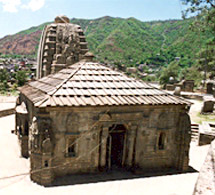
Triloknath Temple, Mandi District
Triloknath Temple is built in the Shikhara style of architecture, situated in Mandi, HP.

Shiv Temple at Mooni, Jammu & Kashmir
Ideally seated at the Billawar taluk of Kathua, Shiv Temple is a holy shrine.
Related articles in Temples of India

Khajuraho Temples
Khajuraho Temples are known the world over for their beauty and architectural construction. This group of temples is situated in the central Indian st...
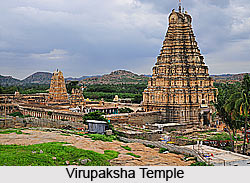
Temples In Hampi
Temples in Hampi are the manifestations of rich religious beliefs and architectural and sculptural abundance.
Badami Cave Temples
The Badami Cave Temples, an exemplary production of Indian architecture, are situated in the town of Badami.
Temple Architecture During Rajput Period
Temple architecture during the Rajput period was inclined to the aspect of Bhakti. Rajput kings encouraged this art which is reflected in the grandeur...
Medieval Temples of India
Medieval temples of India vary from each other due to the style and architecture. The impact of the prevalent kingdom is prominent in the style of bui...