
Svetakanchana is a small, crooked, bushy, deciduous tree with drooping branches. The bark of the plant is bluish-black, rough, and it is pinkish-red inside, turning brown on exposure. Flowers of svetakanchana come in yellowish- or greenish-white colour. Fruits (pods) of this plant are falcate, glabrous, turgid, and indehiscent. Depending on locality, the flowers of the plant come from April to November (April to June in central India), and fruits from November to February. In central Indian, deciduous forests and trees remain leafless for a short period between March-April and April-June.
This plant is also known as `banraji` in Bengali, `ashitri` in Gujarati, `dhodri` in Hindi. The scientific name of Svetakanchana is Bauhinia parviflora Vahl.
Svetakanchana is found throughout India to an altitude of 1650 metre in the western Himalayas, and common in dry deciduous forest of peninsular India to an elevation of about 1200 metre. It is sometimes planted for erosion control and as an ornament in gardens.
Benefits of Svetakanchana
Svetakanchana is used for various medicinal purposes. Be it the bark or leaf or the flower, everything is equipped with some quality which ensures benefits to the mankind. Some of the advantages are as follows:
•The stem bark and flowers are used in Ayurvedic medicine as a substitute for those of Bauhinia variegata.
•The bark is highly astringent and is used to treat dysentery; it also shows significant anti-inflammatory and cholagogue properties.
•It is used to treat glandular inflammation, ulcers, skin diseases, and is a useful remedy for goiter.
•Among the Bhil tribes in Rajasthan, the stem bark is boiled and used as a vapour bath following childbirth for its reputed restorative and tonic action. Among the tribal inhabitants of Udaipur district in Rajasthan, an infusion of the stem bark is taken orally as a blood-purifier and a decoction of the fruit pulp is given to treat dysentery.
•The leaves are given with onion to treat diarrhoea and as an anthelmintic.
•A decoction of the leaves is given to relieve headache in malarial fevers.
•The flowers are used to treat haemorrhage, piles, cough, and as a laxative.
Svetakanchana Medicinal Plant
Svetakanchana is a plant with several medicinal properties and it is found in all parts of India.
Recently updated articles in Flora & Fauna
Indian Aloe Vera
Indian Aloe, growing to moderate heights, appears glossy, with pulpy leaves, essential in making drugs.
Amaranthus spinosus
Amaranthus spinosus is a medicinal herb found in India and is commonly known for its medicinal value.
Shilli Wildlife Sanctuary
Shilli Wildlife Sanctuary in Himachal Pradesh was established in 1963 in order to preserve the Himalayan Black Bear which is an endangered creature. D...
Flora and fauna of Karnataka
Karnataka boasts a remarkable diversity of flora and fauna, nurtured by its varied landscapes ranging from the Western Ghats to dry plains. The state’...

Vedanthangal Bird Sanctuary
Known to be the oldest water bird sanctuary in the country, Vedanthangal Bird Sanctuary is home to myriad types of migratory birds including 26 rare s...
Related articles in Flora & Fauna
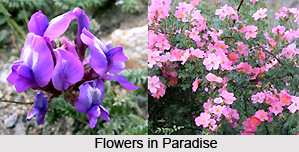
Flora and Fauna of Ladakh
Flora and Fauna is typical to t he kind of mountainous terrain which dominate the entire landscape of the region. Though some varieties of fauna are t...
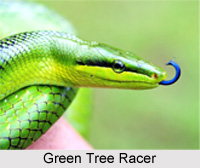
Flora and Fauna in Meghalaya
70 percent of Meghalaya is forested. Meghalayan forests are considered to be among the richest botanical habitats of Asia. These forests receive abund...
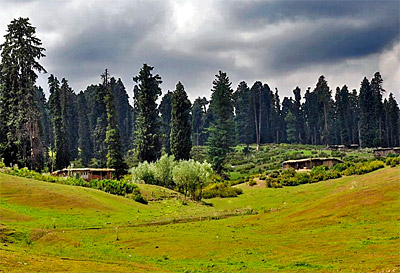
Flora and Fauna of Jammu & Kashmir
Jammu and Kashmir is rich in flora and fauna. Flora includes thorn bush type of the arid plain to the temperate and alpine flora of the higher altitud...
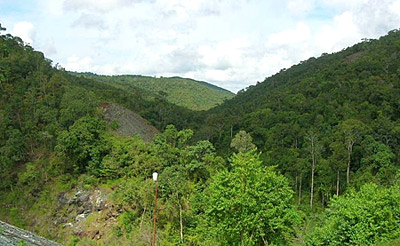
Flora and fauna in Andaman and Nicobar Islands
Economy of this region is primly based on agriculture. In Andaman island, paddy is the main food crop, while in Nicoabar island coconut and areca nut...
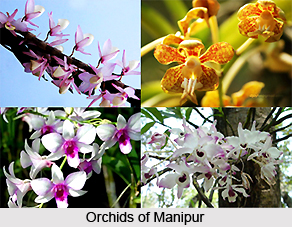
Flora and Fauna of Manipur
Flora and fauna of Manipur are known to be the assemblage of a huge variety including the endangered ones. The place is especially famed for orchid sp...