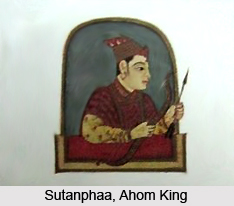
 Sutanphaa, also known as Siba Singha, ruled over Ahom kingdom from 1714 to 1744 AD. His father Swargadeo Rudra Singha had desired at his deathbed to crown his eldest son Siba Singha as the king of Ahom kingdom after his death. Siba Singha, after becoming the king adopted the name Sutanphaa. During his reign he refused the idea of his father of forming an alliance of the kings of the country for the invasion of Bengal. He however obeyed his father`s order of becoming the disciple of Shakta priest, Krishnaram Bhattacharjya, from Nabadwip in West Bengal. The management of Kamakhya temple was given by him to Krishnaram, popularly known as Parbatiya Gosain. He dwelled atop Nilachal hill. Sutanphaa made him the royal priest. He also provided the temples and Brahmin priests a large number of land grants. Sutanphaa ruled for about 30 years over the kingdom.
Reign of Sutanphaa
Reign of Sutanphaa was quite peaceful except the expedition against the Daflas belonging to northern hills. Daflas had started raiding the people of plains. After defeating them Sutanphaa ordered to construct an embankment at the foot of the hill where they lived to ensure protection from future raids.
Bar Raja during Sutanphaa`s Rule
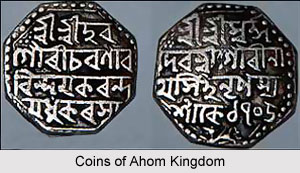
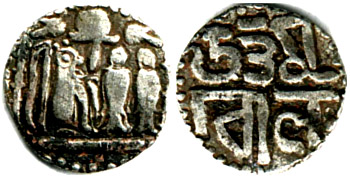
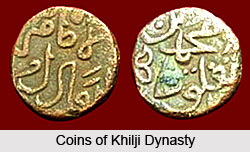
By religion, Siba Singha was a Shakta. He was greatly inspired by astrologers and Brahmin priests. In the year 1722, he was quite alarmed by the prediction of an astrologer that his reign would end soon. Consequently he started presenting lavish gifts to temples. He also declared his chief queen, Phuleswari, as the "Bar Raja" (chief king). The queen later assumed the name of Pramateswari Devi. Coins were minted by Phuleswari by the name of both Sutanphaa and herself. Persian legends were for the first time used in the coins of Assam. She was also greatly influenced by the Brahmins, especially the Parvatiya Gosain. It is said that she also tried to make Saktism the religion of the state. Owing to this she instructed the Vaishnava gosains to worship Goddess Durga and also prohibited the worshipping of other deities. She also forced the Moamaria to worship Goddess Durga and to smear sacrificial blood on the foreheads. This was considered as an insult by the Moamaria who later rebelled against the Ahoms in the Moamoria rebellion.
After the death of Phuleswari in 1731, Sutanphaa married her sister Deopadi and assigned her the title of Bar Raja. He named her Ambika. In 1738 she died and the title was succeeded by another wife, Enadari who assumed the name Sarbeswari. A number of temples were built by Sutanphaa and he also provided land for supporting the Brahmins. He was a patron of music and literature too.
Administration of Sutanphaa
The administration of Sutanphaa was excellent and he had all the information about his kingdom. His civil works included the construction of Dhai Ali, tanks and temples in the regions of Sibsagar, Gaurisagar and Kalugaon. He built a huge tank dedicated to Gauri, another name for Goddess Durga, and thus named it Gaurisagar tank. For this tank, the whole place later became famous as Gaurisagar. Near this tank, two temples were erected namely Jagadhatri Dol and Bishnu Dol. These two temples stand along the bank of Lakshmisagar Pukhuri, another tank. Kamrup region also houses some temples built by Sutanphaa viz. Ballilecha Shri Shri Kali Dewaloy, Shripur Dewaloy and Jaypal Than. In Nalbari and Sualkuchi, Basudev Dewaloy and Sidheswar Dewaloy stand respectively. Land survey was also carried out during his reign and its records were used even by the British rulers.
Death of Sutanphaa
In the year 1744 Sutanphaa died and the second son of Rudra Singha, known as Pramatta Singha, succeeded his throne.