
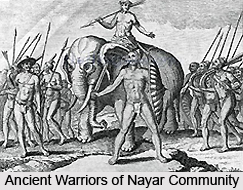
 Nayar community, also known as Nair community, belongs to the Hindu caste in the state of Kerala. Traditionally a martial people, the Nayars have made history in Kerala. Today they are more distinguished as bureaucrats, writers, artists, administrators and diplomats. They are the community in the country that has a matriarchal form of society. Under the marumakkathayam system, the property rights of the joint family are vested in the female members and are passed on from mother to daughter. However, the property is managed by the oldest male relative of the family, who is called the karanavan.
Nayar Community
Nayar community hails primarily from Kerala and have matriarchal form of society. The community is further categorized into various sub castes according to their occupation and traditions.
Introduction
Nayar community, also known as Nair community, belongs to the Hindu caste in the state of Kerala. Traditionally a martial people, the Nayars have made history in Kerala. Today they are more distinguished as bureaucrats, writers, artists, administrators and diplomats. They are the community in the country that has a matriarchal form of society. Under the marumakkathayam system, the property rights of the joint family are vested in the female members and are passed on from mother to daughter. However, the property is managed by the oldest male relative of the family, who is called the karanavan.History of Nayar Community
The Brahmins arrived in Kerela in about the first millennium. This ruling class was Nayars who already had an established kingdom there. Before the advent of British rule, the region had small feudal kingdoms and in each of them the Nayars constituted the royal and noble lineages, the militia and the land managers. During the rule of British, the people belonging to this community gained prominence in law, education, medicine, government service and politics. They have their own marital arrangements, laws of succession, discipline and involvement in the arts and culture, such as, Kathakali. They were a class of professional warriors with a high skill in swordsmanship who formed themselves into suicide squads called chavers, in wartimes. As warriors the Nayars were unequalled and their sense of loyalty was legendary. Nayar community despised manual work and left the ploughing and tilling to tenants or hired hands. Attached to the house of each village headman was a kalari in which young men trained in the art of combat and defence. Till date it is a famous martial art form in Kerela.
Demography of Nayar Community
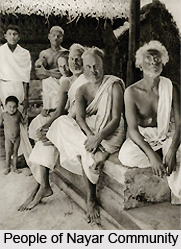 Nayars are essentially Dravidians. Many have a lighter complexion than the Tamil Dravidians and resemble North Indians in their facial structure which may be the result of interbreeding with the Namboodiri Brahmins.
Sub Castes of Nayar Community
Nayar community has many sub castes, the majority being land owners. Several subgroups have been made primarily according to the occupation, which include barbers, potters, servants, palanquin bearers, coppersmiths, traders, drummers etc. Ethnologists, anthropologists and authors however believe that the last name of a Nayar is the title which indicates the subgroup of a person along with the occupation pursued by him or bestowed on him by a chief or king. Classification of this community has undergone many variations. However presently Nayars are not treated as a single entity by the government. Illathu and Swaroopathu Nairs are considered as a forward caste while the Veluthedathu, Vilakkithala and Andhra Nairs are grouped as other backward classes.
Religion of Nayar Community
While the rest of Hindu India celebrates Diwali with new clothes, fire-crackers, sweets and gambling, Nayars have only a special ceremonial oil bath on this day. Onam, in September, is their big festival. This is a harvest festival and the emphasis in its celebration is on festivity and fun, songs and laughter rather than on the religious aspect.
Nayars are not vegetarians by religion or compulsion. However, on auspicious or festive occasions only vegetarian food is served, preferably cooked by Brahmins.
They also have some shared characteristics with the ancient Naga people or Scythians. The Nagas worshipped the Naga, the serpent deity of the underworld and took their name from this cult. The Nayars have also preserved the serpent cult till today.
Every Nayar tarawad has a clump of bushes before which a lamp is lit every evening and some milk placed as an offering to the snake deity. Next morning, if it is seen that the offering has been accepted, there is satisfaction. If for some reason the forked tongued creature has ignored the milk, there is general gloom and introspection. The belief is that the snakes belonging to the shrine of a tarawad are protectors of the family and will not bite anyone.
Other celebrations in a Nayar family are those marking the important stage in the life of the daughter of the house such as when she attains puberty and when she or a number of girls of the clan have a `mock` marriage. Their real marriage being a simple affair with no feast, ritual or pomp, here she has all she could wish for from a real wedding.
Nayars are not vegetarians by religion or compulsion. However, on auspicious or festive occasions only vegetarian food is served, preferably cooked by Brahmins.
They also have some shared characteristics with the ancient Naga people or Scythians. The Nagas worshipped the Naga, the serpent deity of the underworld and took their name from this cult. The Nayars have also preserved the serpent cult till today.
Every Nayar tarawad has a clump of bushes before which a lamp is lit every evening and some milk placed as an offering to the snake deity. Next morning, if it is seen that the offering has been accepted, there is satisfaction. If for some reason the forked tongued creature has ignored the milk, there is general gloom and introspection. The belief is that the snakes belonging to the shrine of a tarawad are protectors of the family and will not bite anyone.
Other celebrations in a Nayar family are those marking the important stage in the life of the daughter of the house such as when she attains puberty and when she or a number of girls of the clan have a `mock` marriage. Their real marriage being a simple affair with no feast, ritual or pomp, here she has all she could wish for from a real wedding.
Society of the Nayar Community
The Nayars are not really Sudras. Logan, in his Malabar Manual, says that the Namboodiris respected the Nayars as kings. They were owners and controllers of temples and enjoyed all the privileges of the high caste Hindus.
Position of Women: The Nayars have two distinctive characteristics - a strong sense of pride in the clan and a healthy respect for women. To the Nayar, the tarawad (the undivided matrilineal family) is the most significant. It connotes for him upbringing, pedigree and pride in lineage and a sense of belonging. He learns to respect the women in the house and carries the same respect over to all women.
The Nayar woman has for centuries been used to long periods of managing the home by herself, the man being away and has consequently acquired the strength, dignity and poise that comes naturally to women used to asserting their authority. The man too accepts the idea that the very structure of the social fabric rests on the women.
Marriage: Among Nayars there are more than a hundred endogamous subdivisions, separated according to region and occupation, among whom marriage till recently was taboo.
Marriage among the Nayars has a somewhat different meaning from marriage in other communities and is not so much a religious as a social ceremony. The term bandham used originally for marriage meant a connection or alliance or union. Temple marriages, especially at the Guruvayur Temple, are popular and economical. There is an exchange of garlands and sometimes of rings and the bridegroom ties a `mangalasutra` around the bride`s neck and the traditional presentation of saris takes place. There is no chanting of mantras and the ceremony is over in 5 minutes. It is both touching and impressive in its simplicity.
After marriage a daughter does not go to her husband`s home but remains in her own ancestral place called the tarawad. On the contrary the husband comes to visit her and he remains a member of his own tarawad. According to the familial rules of the Nayars the first duty of a husband is not to his sons but to his nephews. This custom and the marumakkathayam system are both dying out but a child still takes its mother`s family name and is entitled to a share of the matrilineal property if it is divided.
Motherhood and the birth of a girl naturally have a special sanctity among the matrilineal Nayars. The line of a woman with no daughter ends with her. Though sons are also recognised now as having a place in the family, there is still nothing like having a daughter to whom the family wealth and property can be passed on.
Art and Culture: The contribution of the Nayars to the arts- dance, drama, music, Malayalam and Sanskrit literature-- has been tremendous. Dancing was part of the training received by young Nayar warriors in the feudal age. Elements of this `shastrakali` can be seen in Velakali which re-enacts the battle scenes of the Mahabharata and is performed in Trivandrum by Nayar youths. Kathakali, a unique style of the dance drama, performed in temples in night long sessions by the light of flickering brass lamps. This dance form is part of every Nayar`s life even today. Kathakali is also his introduction to and his association with all the glorious epics and legends of the past.
Krishnattam, performed regularly by trained dancers at the Guruvayur Temple and Ramanattam, Kudiyattam and Ottam Thullal, are some of the surviving dance forms which can be seen in Kerala today.
Malayalam literature has been greatly enriched by the contributions of Nayar writers, who include nationally known poets like the revolutionary Vallathol and novelists like Thakazhi S. Pillai. Kathakali is another art in which the names of the Nayars are foremost.
The Nayar still puts a priority on learning. The women of this community are educated and can discuss anything from the division of ancestral property to serious matters in politics.
Nayars were once divided into castes according to occupation. They lived together as a self-sufficient community. A majority of them were landowners though they played a vital role as fighters too.
Attached to the house of each village headman there was a `kalari` in which youths were given martial training. This training consisted of rubbing the body with a mixture of different oils, physical exercises and practice with stick and sword. Even today there are some kalaris, especially in North Kerala.
As warriors Nayars were unequalled and their sense of loyalty was legendary. There was an old custom testifying to this by which Nayar volunteers signified their vow to burn themselves on the day their king died and this vow they faithfully fulfilled.
Position of Women: The Nayars have two distinctive characteristics - a strong sense of pride in the clan and a healthy respect for women. To the Nayar, the tarawad (the undivided matrilineal family) is the most significant. It connotes for him upbringing, pedigree and pride in lineage and a sense of belonging. He learns to respect the women in the house and carries the same respect over to all women.
The Nayar woman has for centuries been used to long periods of managing the home by herself, the man being away and has consequently acquired the strength, dignity and poise that comes naturally to women used to asserting their authority. The man too accepts the idea that the very structure of the social fabric rests on the women.
Marriage: Among Nayars there are more than a hundred endogamous subdivisions, separated according to region and occupation, among whom marriage till recently was taboo.
Marriage among the Nayars has a somewhat different meaning from marriage in other communities and is not so much a religious as a social ceremony. The term bandham used originally for marriage meant a connection or alliance or union. Temple marriages, especially at the Guruvayur Temple, are popular and economical. There is an exchange of garlands and sometimes of rings and the bridegroom ties a `mangalasutra` around the bride`s neck and the traditional presentation of saris takes place. There is no chanting of mantras and the ceremony is over in 5 minutes. It is both touching and impressive in its simplicity.
After marriage a daughter does not go to her husband`s home but remains in her own ancestral place called the tarawad. On the contrary the husband comes to visit her and he remains a member of his own tarawad. According to the familial rules of the Nayars the first duty of a husband is not to his sons but to his nephews. This custom and the marumakkathayam system are both dying out but a child still takes its mother`s family name and is entitled to a share of the matrilineal property if it is divided.
Motherhood and the birth of a girl naturally have a special sanctity among the matrilineal Nayars. The line of a woman with no daughter ends with her. Though sons are also recognised now as having a place in the family, there is still nothing like having a daughter to whom the family wealth and property can be passed on.
Art and Culture: The contribution of the Nayars to the arts- dance, drama, music, Malayalam and Sanskrit literature-- has been tremendous. Dancing was part of the training received by young Nayar warriors in the feudal age. Elements of this `shastrakali` can be seen in Velakali which re-enacts the battle scenes of the Mahabharata and is performed in Trivandrum by Nayar youths. Kathakali, a unique style of the dance drama, performed in temples in night long sessions by the light of flickering brass lamps. This dance form is part of every Nayar`s life even today. Kathakali is also his introduction to and his association with all the glorious epics and legends of the past.
Krishnattam, performed regularly by trained dancers at the Guruvayur Temple and Ramanattam, Kudiyattam and Ottam Thullal, are some of the surviving dance forms which can be seen in Kerala today.
Malayalam literature has been greatly enriched by the contributions of Nayar writers, who include nationally known poets like the revolutionary Vallathol and novelists like Thakazhi S. Pillai. Kathakali is another art in which the names of the Nayars are foremost.
The Nayar still puts a priority on learning. The women of this community are educated and can discuss anything from the division of ancestral property to serious matters in politics.
Nayars were once divided into castes according to occupation. They lived together as a self-sufficient community. A majority of them were landowners though they played a vital role as fighters too.
Attached to the house of each village headman there was a `kalari` in which youths were given martial training. This training consisted of rubbing the body with a mixture of different oils, physical exercises and practice with stick and sword. Even today there are some kalaris, especially in North Kerala.
As warriors Nayars were unequalled and their sense of loyalty was legendary. There was an old custom testifying to this by which Nayar volunteers signified their vow to burn themselves on the day their king died and this vow they faithfully fulfilled.
Recently updated articles in Religion in India
Kusumayudha
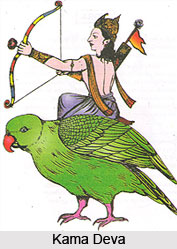
Kusumayudha is a name of Kamadeva, the Hindu God of Love. Depicted with a sugarcane bow and flower-tipped arrows, he represents attraction and longing...
Bhoyar Caste
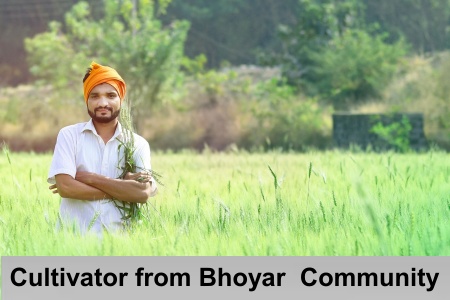
Bhoyar Caste is largely found in the Central Provinces of the country. Traditional occupation of Bhoyars is agriculture. They are good cultivators and...
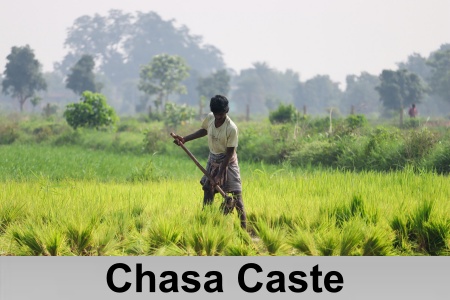
Chasa Caste
Chasa caste is a prominent agrarian community native to Odisha. Traditionally associated with cultivation and farming, Chasas have historically played...
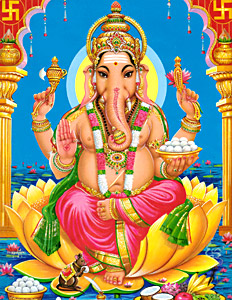
Vigneswara, A Form of Lord Ganesha
Lord Vigneswara is another form of Lord Ganesha or Vinayaka, prominently worshipped as the God of intelligence and good luck in the Indian subcontinen...
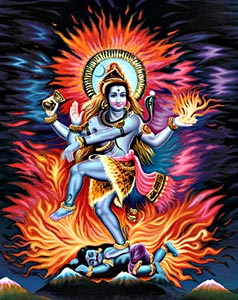
Maheswara
Maheswara, meaning “the Great Lord,” is a revered name of Lord Shiva in Hindu tradition. It represents Shiva’s supreme authority over creation, preser...
Related articles in Religion in India
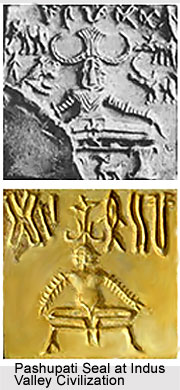
Religion in Indus Valley Civilization
Religion in Indus Valley Civilisation included Hinduism, Buddhism and Jainism. Details about the religion in Indus Valley Civilization have been gathe...
Iyer Brahmin
Iyer Brahmins are originally from Tamil Nadu of South India. They are known for their adherence to Advaita philosophy and Smarta traditions. Tradition...
Kumbhakar / Kumhar Caste
Kumbhakar or Kumhar caste is a traditional artisan community in India known for pottery making. Derived from Sanskrit word Kumbhakar, meaning potter,...

Gujjars in Mughal Era
Gujjars in the Mughal era enjoyed great power. Further their power increased with the decline of Aurangzeb, Mughal emperor.
Gotra in Hinduism
In Hinduism, gotra refers to a lineage system tracing descent from ancient sages, primarily through the paternal line. Originating from Vedic traditio...