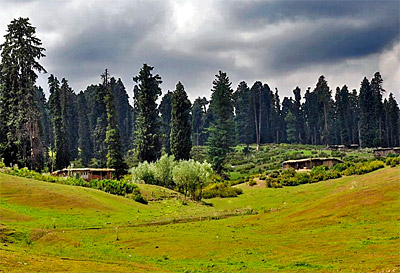
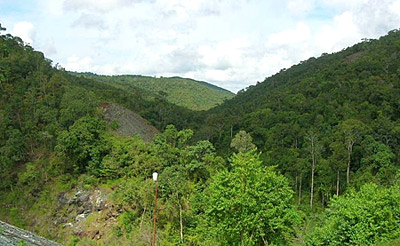
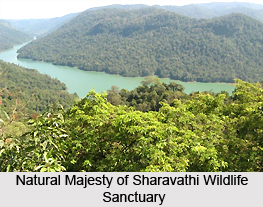
 Sharavathi Wildlife Sanctuary, situated in Shimoga district of the south Indian state Karnataka, covers vast expanses of the Western Ghats. It forms a part of the Sharavati river basin and got the stature of a wildlife sanctuary on 20th April 1972. Also known as Sharavathi Valley Wildlife Sanctuary, it spans over an area of 431 square kilometres. The western boundary of Sharavathi Wildlife Sanctuary is shared with the Mookambika Wildlife Sanctuary.
Geography of Sharavathi Wildlife Sanctuary
Sharavathi Wildlife Sanctuary has been divided into a buffer zone which covers an area of 170.67 square kilometres, a core zone which encompasses an area of 74.33 square kilometres and a tourism zone stretching over an area of 57.53 square kilometres. Liganamakki Reservoir also occupies a portion of the sanctuary encompassing 123.63 square kilometres. The altitude of the sanctuary ranges from 94 to 1102 metres. Devarakonda, the highest point of Sharavathi Wildlife Sanctuary, lies on the southern edge. The average temperature lies in between 15 to 38 degree Celsius whereas the mean rainfall has been recorded as 4500 mm.
Flora of Sharavathi Wildlife Sanctuary
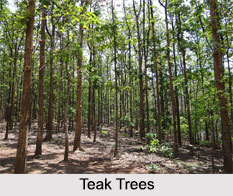
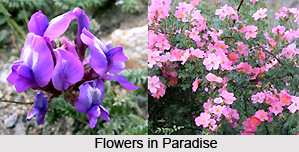
The prime flora of Sharavathi Wildlife Sanctuary comprises moist deciduous forests, semi-evergreen and evergreen forests. Common plants of evergreen forest are Aporosa lindleyana, Caryota urens, Machilus macrantha, Calophyllum tomentosum and Dipterocarpus indicus whereas Vitex altissima, Terminalia spp., Randia spp., Emblica officinalis, Careya arborea, Dillenia pentagyna, Dalbergia latifolia, Hopea parviflora and Lagerstroemia lanceolata are the members of moist deciduous and semi-evergreen forests.
Fauna of Sharavathi Wildlife Sanctuary
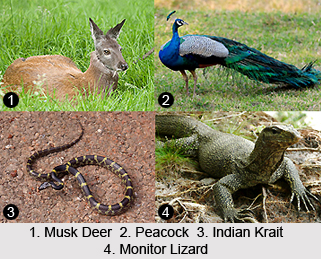
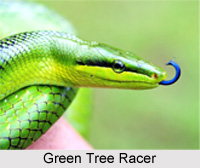
The common fauna sheltered in the sanctuary include Pangolin, Otter, Porcupine, Giant Flying Squirrel, Malabar Giant Squirrel, Bonnet Macaque, Common Langur, Wild Pig, Mouse Deer, Barking Deer, Sambar, Spotted Deer, Sloth Bear, Jackal, Wild Dog, Leopard and Tiger. Several reptiles also dwell in the sanctuary such as Monitor Lizard, Crocodile, Rat Snake, Python and King Cobra. Endangered Lion-tailed Macaque is also the inhabitant of the sanctuary. Avifauna spotted here includes Blue-Throated Barbet, Racket-Tailed Drongo, Paradise Flycatcher and Hornbill.
Visiting Information
The ideal time to visit Sharavathi Wildlife Sanctuary is during the period of November to July. Nearest airport to reach the sanctuary is Mangalore, situated at a distance of 220 kilometres. Shimoga is the nearest railhead. The sanctuary also has a good connectivity with other cities through roadways.