
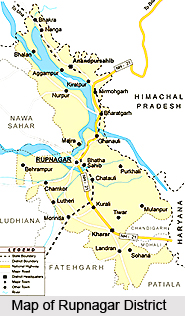
 Rupnagar District, included in the Patiala Division of Punjab falls between north latitude 30 degree 32 minutes and 31 degree 24 minutes and east longitude 76 degree 18 minutes and 76 degree 55 minutes. Rupnagar (formerly known as Ropar) town, the district headquarters is 42 kms from Chandigarh. The district adjoins Nawanshahr, Mohali and Fatehgarh Sahib Districts.
Rupnagar District
Rupnagar District is an administrative district of Punjab. Rupnagar District is named after its district headquarters, the town of Rupnagar.
Introduction
Rupnagar District, included in the Patiala Division of Punjab falls between north latitude 30 degree 32 minutes and 31 degree 24 minutes and east longitude 76 degree 18 minutes and 76 degree 55 minutes. Rupnagar (formerly known as Ropar) town, the district headquarters is 42 kms from Chandigarh. The district adjoins Nawanshahr, Mohali and Fatehgarh Sahib Districts.History of Rupnagar District
 According to the history of Rupnagar District, it is said to have been founded by a Raja called Rokeshar who ruled in the 11th century and named Rupnagar after his son Rup Sen. The recent excavations carried out at Rupnagar District have proved that this town was the seat of well developed Indus Valley Civilization. In protohistoric Punjab perhaps Rupnagar is the only known excavation site which can claim the status of a small town or city. These recent excavations consists of earthen bares, statues, coins, etc. That proves that the city dates back to Harappa and Mohenjodaro civilization which crossed Sutlej River. In the excavations many things that have been found belonged to Chandragupta Maurya, Kushan and Mughal periods. Rupnagar District was formed on 1st of November, 1966 after the re-organization of the state.
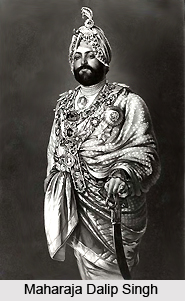
Many historians are of the view that when the first man descended from the mountains in the North to plains, they settled down at Ropar. History of Rupnagar District states that S. Hari Singh Rais of Sialba conquered Ropar in 1763 AD and established his state. His son Charat Singh made Ropar capital of the state. After the fall of Sirhind in 1763, Rupnagar came under the authority of Sikhs Chief Hari Singh. The most famous ruler of Ropar state was Raja Bhup Singh, who fought in the Anglo Sikhs war of 1945 on the side of Maharaja Dalip Singh. Consequently, after the victory of the British, Ropar state of Raja Bhup Singh was confiscated.
The history of Rupnagar District is in fact about the war of Guru Gobind Singh against Mughal tyranny, exploiters and social evils. One of the most important historical places in this district is Kiratpur Sahib situated on the banks of the river Sutlej. This town was established by Guru Har Gobind after buying land from Raja Tara Chand of Kehloor. It is said that Guru Nanak made profess regarding the establishment of this place. It is here at this place that Guru Nanak Dev met saint Buddan Shah. Anandpur Sahib, a historical town in Rupnagar District was founded by 9th Guru of Sikhs Guru Tegh Bahadur after buying land in Makowal in 1723 AD. Further it was at Anandpur Sahib in Rupnagar District that Guru Gobind Singh created Khalsa in 1699 on Baisakhi and that brought about a cultural revolution.
Geography of Rupnagar District
The climate of Rupnagar District is characterized by its general dryness (except in the south-west monsoon season), a hot summer and a bracing cold winter. The year is generally divided into four seasons. The period from mid November to February is the cold season. This is followed by the summer season from March to the end of June. The south-west monsoon season commences late in June and continues up to about middle of September. The period from mid September to the middle of November constitute the post-monsoon or transition season. The temperature ranges from minimum of 4 degree Celsius in winter to 45 degree Celsius in summer. May and June are generally hottest months and December and January are the coldest months. Relative humidity is high. The average annual rainfall in district is 775.6 mm. About 78 percent of the annual rainfall is received during the period from June to September. Geography of Rupnagar District contains soils that vary in texture generally from loamy to clayey except along Sutlej River where some sandy patches may be found. In some areas, soils are undulating.
Administration of Rupnagar District
 Administrative set-up of Rupnagar District comprises four tehsils namely Rupnagar, Anandpur Sahib, Nangal and Chamkaur Sahib. The two sub-tehsils of Rupnagar District are Morinda and Nurpur Bedi. Further, administration of Rupnagar District comprises five development blocks - Anandpur Sahib, Chamkaur Sahib, Morinda, Nurpur Bedi and Rupnagar. It includes 624 villages and six towns namely Rupnagar, Chamkaur Sahib, Anandpur sahib, Morinda, Kiratpur Sahib and Nangal. All the towns except Chamkaur sahib fall on railways line.
Tourism in Rupnagar District
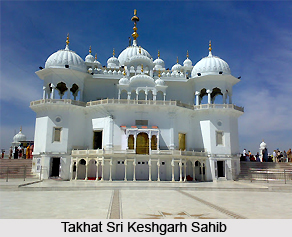
Tourism in Rupnagar District mainly includes holy shrines and Gurudwaras. It is one of the popular tourist places and is known for its pilgrimage sites. The main religious attractions of Rupnagar District are Takhat Sri Keshgarh Sahib, Jateshwar Mahadev Temple, Gurudwara Parivar Vichhora Sahib, Gurudwara Bhatta Sahib and Gurudwara Sadabarat. Bhakra Nangal Dam and the place of treaty between Maharaja Ranjit Singh and Lord William-Bentick are other tourist attractions offered by Rupnagar District.
Rupnagar District is also popular for its fairs and festivals. Holla Mohalla, Shaheedi Jor Mela and Shivaratri Fair are some of the major fairs that draw the attention of large number of people from all parts of the state.
Rupnagar District is also popular for its fairs and festivals. Holla Mohalla, Shaheedi Jor Mela and Shivaratri Fair are some of the major fairs that draw the attention of large number of people from all parts of the state.
Pilgrimage Tourism in Rupnagar District
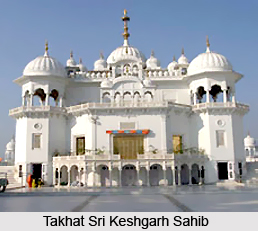 Pilgrimage tourism in Rupnagar District means visits to several holy sites that also have deep historical association. The district has a glorious and religiously significant past that are reflected through its several pilgrimage sites. The various fairs and festivals celebrated here enhance the charm of pilgrimage tourism in Rupnagar District.
Some of the prominent tourist attractions of Rupnagar District are :
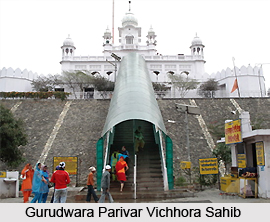
Gurudwara Parivar Vichhora Sahib: Gurudwara Parivar Vichhora Sahib is situated adjacent to the canal near village Nangal Sirsa, at a distance of about 14 kms from Rupnagar. It has a lofty flight of 84 steps leading up to the top. This Gurudwara called Parivar Vichhora Sahib marks the site where family of Guru Gobind Singh was separated. The construction of the Gurudwara was started in 1963 and completed in the year 1975. A big fair of three days is held here annually in the month of December.
Gurudwara Bhatta Sahib: Gurudwara Bhatta Sahib is situated in village Kotla Nihang, at the outskirts of Rupnagar town. It was built in the memory of Guru Gobind Singh. After leaving Anandpur Sahib, Guru Gobind Singh reached Kotla Nihang and asked the Pathans there to give him shelter. They pointed out to a lime-kiln as the only fit place for him to stay. The Gurudwara was built at the site of the kiln by Baba Jiwan Singh in the year 1914. A silver sword and a dhal gifted by the Guru to the Pathans are preserved in the Gurudwara. A fair is held here in the month of August on the death anniversary of Baba Jiwan Singh.
 Gurudwara Sadabarat: Gurudwara Sadabarat is situated on Nangal Road. It is said to have been built in the year 1930. The place where now Gurudwara Sadabarat stands was an important halting place for the merchants and other travellers coming from and going to hilly areas. It is said that even Guru Nanak stayed at this place while returning from Kiratpur Sahib after meeting Baba Buddan Shah there. Later on Guru Har Gobind halted at this place while proceeding from Kartarpur to Kiratpur Sahib. Thereafter, Guru Har Rai and Guru Har Krishan, Guru Tegh Bahadur and Guru Gobind Singh also frequently visited the place. Keeping in view the importance of the place, Raja Bhup Singh, the ruler of Ropar started Langar and as such this place came to be known as Gurudwara Sadabarat. The raised platform from where Raja Bhup Singh himself used to serve food to the people still exists. A big festival is held here annually on the occasion of Lohri-Maghi in the month of January.
Takhat Sri Keshgarh Sahib: Gurudwara Keshgarh Sahib stands on the place where Khalsa was created. It is regarded as one of the five sacred `Takhats` or seats of Sikh religion. It is on the main Rupnagar-Nangal road. It was here in 1699, on Baisakhi (13th April), Guru Gobind Singh created Khalsa by baptizing five beloved Sikhs known as `Panj Piaras`. At the behest of the Guru, thousands of people had assembled on the hill where now Gurudwara Keshgarh Sahib stands.
Jateshwar Mahadev Temple: Popularly known as Shiva Mandir, the ancient temple of Jateshwar Mahadev is situated in the village Jatwahr which is about 6 kms from village Bains on the Rupnagar-Nurpur Bedi road. The antiquity of the temple according to local tradition goes back to the remote past. But the present building does not seem to be more than 100 years old. It was built by Jai Dayal Sharma, a resident of village Takhatgarh. There is also a mound near the temple which seems to belong to the medieval period. The temple is held in great reverence and is visited by devotees from various parts of the country. A fair is held every year on the occasion of Shivaratri in the month of February.
All these holy sites are worth visiting and attract people from different parts of the country.
Recently updated articles in States of India
Bandare Waterfalls, Meghalaya
Bandare Waterfalls in South Garo Hills, Meghalaya, is a secluded natural attraction surrounded by dense subtropical forests and rugged mountain terrai...
History of Thissur District
Early History of Thissur District explains flourishing of the port cities. Now these port cities are transformed into archaeological sites.
Tippi Orchid Research Centre, Arunachal Pradesh
Tippi Orchid Research Centre in Arunachal Pradesh is renowned for its rich collection of exotic and endangered orchids. Surrounded by lush rainforest...
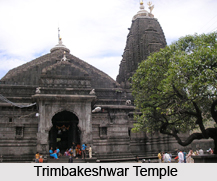
Tourism in Nashik District
Pilgrimage tourism in Nashik district involves visiting the various places of Hindu and Jain worship located here. Some of the holiest sites for Hind...
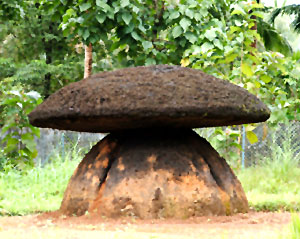
Mangadu, Kerala
Mangadu in Kerala’s Kollam district is a significant megalithic site known for its urn burials, cist burials, menhirs, and stone circles. Excavations...
Related articles in States of India
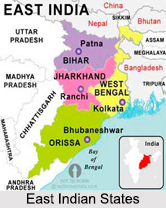
East Indian States
East Indian States comprises of Bihar, Jharkhand, West Bengal, Odisha and also the Union Territory of Andaman and Nicobar Islands. It defines the cult...
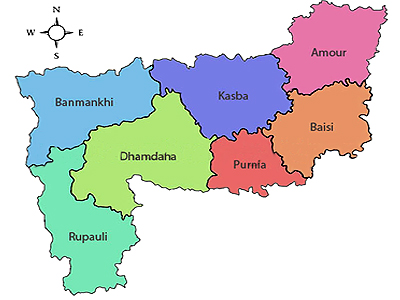
Purnia District in Bihar
Purnia District is located in Bihar and extends from River Ganga to Nepal. The district has a rich Hindu history and glorious past.
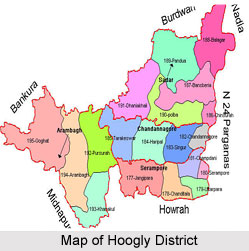
Hooghly district
Hooghly District along the bank of the river Hooghly is one of the principal trading ports of West Bengal.
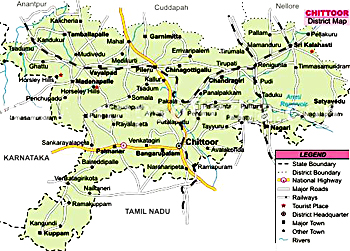
Geography Of Chittoor District
Geography of Chittoor district is spread along the topography of the land which is divided into two natural divisions; Chittoor has a dry and healthy...
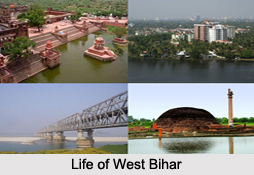
Districts of West Bihar
Districts of West Bihar is comprised of medieval monuments that were built by the different governors of Mughal era.