
Role of Acharya in Vaishnavism is of utmost importance. In fact it is considered as one of the essential requirements of a Vaishnava to have a well-qualified Guru or acharya in order to lead a religious life. The term acharya signifies a person who represents certain qualities. He is one who has acquired philosophic knowledge by the study of sacred texts. He is capable of making the followers to adopt the religious life as laid down by the shastras by imparting his philosophic knowledge to them. The acharya himself strictly follows the same. The term Guru itself means the one who removes the ignorance of philosophic knowledge. It is believed that the one who aspires for moksha or final liberation from bondage needs the blessings and the spiritual guidance of a preceptor.
It has been pointed out by a Smriti text that a person may be a sinner of the worst kind or one may be the most meritorious but both of them would achieve moksha only through the guidance of an acharya. It is, therefore, essential for a Vaishnava seeking moksha to have a preceptor. The Upanishads also enjoin that one should approach a proper guru in order to comprehend the philosophic truth. The reason for emphasising the need to acquire a preceptor is that true philosophic knowledge and a deeper understanding of the inner meaning of the philosophical truths with conviction cannot be obtained by self-study of Vedanta. It has to be imparted by a suitably experienced and qualified teacher. Only such knowledge as is obtained through the teachings of a guru will be useful for practising the sadhana laid down by the Vedanta for achieving the spiritual goal. Once a person is attached to a Guru, he should show him the utmost respect. The principle of devamiva acharyam upasita is strongly upheld. This means that it is almost like a moral obligation that a Vaishnava should worship the acharya in the same way that he worships God. The Katha Sruti says, "An individual who has the utmost devotion in God and who in the same way shows equal respect to his guru, will be able to comprehend all philosophic knowledge."
It is, therefore, absolutely necessary for a spiritual aspirant to show the utmost devotion to his guru and speak about his glory. It is believed that a failure to do so leads to the decay of his spiritual knowledge.
Role of Acharya in Vaishnavism
Role of the Acharya in Vaishnavism is very important as it is believed that the he is the only one who has the philosophic knowledge required to help his follower attain moksha. It is a must for the Vaishnava to worship the acharya in the same way that he worships God.
Recently updated articles in Religion in India
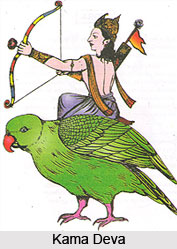
Kusumayudha
Kusumayudha is a name of Kamadeva, the Hindu God of Love. Depicted with a sugarcane bow and flower-tipped arrows, he represents attraction and longing...

Bhoyar Caste
Bhoyar Caste is largely found in the Central Provinces of the country. Traditional occupation of Bhoyars is agriculture. They are good cultivators and...

Chasa Caste
Chasa caste is a prominent agrarian community native to Odisha. Traditionally associated with cultivation and farming, Chasas have historically played...
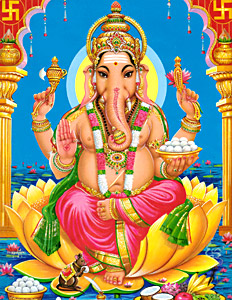
Vigneswara, A Form of Lord Ganesha
Lord Vigneswara is another form of Lord Ganesha or Vinayaka, prominently worshipped as the God of intelligence and good luck in the Indian subcontinen...

Maheswara
Maheswara, meaning “the Great Lord,” is a revered name of Lord Shiva in Hindu tradition. It represents Shiva’s supreme authority over creation, preser...
Related articles in Religion in India
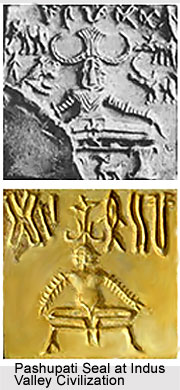
Religion in Indus Valley Civilization
Religion in Indus Valley Civilisation included Hinduism, Buddhism and Jainism. Details about the religion in Indus Valley Civilization have been gathe...
Iyer Brahmin
Iyer Brahmins are originally from Tamil Nadu of South India. They are known for their adherence to Advaita philosophy and Smarta traditions. Tradition...
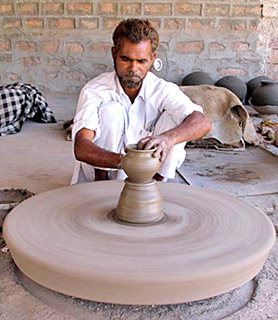
Kumbhakar / Kumhar Caste
Kumbhakar or Kumhar caste is a traditional artisan community in India known for pottery making. Derived from Sanskrit word Kumbhakar, meaning potter,...

Gujjars in Mughal Era
Gujjars in the Mughal era enjoyed great power. Further their power increased with the decline of Aurangzeb, Mughal emperor.
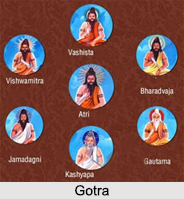
Gotra in Hinduism
In Hinduism, gotra refers to a lineage system tracing descent from ancient sages, primarily through the paternal line. Originating from Vedic traditio...