
The Revolutionary Socialist Party of India is amongst the Leninist Marxist socialist political parties of India. The party was established on 19th March 1940 as one of the Indian Organisations during Freedom Struggle. The association had its basis the Bengali liberation movement, namely the Anushilan Samiti as well as the Hindustan Socialist Republican Association or Hindustan Socialist Republican Army (HSRA), which was initially known as Hindustan Republican Association (HRA). A major segment of the Anushilan Samiti had been fascinated by the ideologies of Marxism in the 1930s. A marginal segment moved away from the Anushilan movement and eventually became a part of the Communist Consolidation and afterwards the Communist Party of India. The Anushilan Marxists lacked the resources to form their own separate political party. Further more they refused to join the Communist Party of India due to differences in political viewpoints, thus the Anushilan Marxists became an integral part of the Congress Socialist Party as it was the only acceptable platform for them. The Congress Socialist Party adopted the ideals of Marxism in the year 1936.
During the year 1938, a meeting was conducted between Jayaprakash Narayan, who was the leader of the Congress Socialist Party (CSP), Keshav Prasad Sharma, Tridib Chaudhuri and Jogesh Chandra Chatterjee. The Anushilan marxists discussed the issue with Acharya Narendra Deva, who was amongst founders of the Congress Socialist Party as well as an Anushilan militant. Later the Anushilan marxists decided to became a part of the Congress Socialist Party, maintaining a distinct identity in the association. In the latter half of 1938, the Anushilan marxists started to publish a journal entitled The Socialist from Calcutta (now Kolkata). Satish Sarkar acted as the editor of the journal.
Several differences emerged between the Anushilan Marxists and the other members of the party regarding the ideological views of the Congress Socialist Party (CSP) and its political practice. These contrasting view points became prominent during the Annual Session of the Indian National Congress Party in the year 1939, held at Tripuri. The Anushilan marxists provided full support to Netaji Subhas Chandra Bose both in opposing the Pant resolution as well as the presidential elections. Jogesh Chandra Chatterjee also rejected his party membership as a sign of protest against the action undertaken the eminent leaders of the Congress Socialist Party.
The Left Consolidation Committee eventually declined, after the Communist Party of India, the Congress Socialist Party and the Royists abandoned it. Subhas Chandra Bose organised the Anti-Compromise Conference in Ramgarh, Bihar, (now in Jharkhand). The conference was attended by the members of the Forward Bloc, the Kisan Sabha, the Labour Party and the Anushilan Marxists. During the conference, the Anushilan marxists assembled to establish their own separate party which would be known as the Revolutionary Socialist Party of India (Marxist-Leninist). Thus Anushilan Marxists left the Congress Socialist Party (CSP). Jogesh Chandra Chatterjee was appointed as the first General Secretary of the Revolutionary Socialist Party of India.
After the nation achieved independence from the rule of the British Empire in India, Jogesh Chandra Chatterjee resigned as the Jogesh Chandra Chatterjee of the party, as he left the Revolutionary Socialist Party of India and became a member of the Indian National Congress Part in the year 1953. Later Tribid Kumar Chaudhuri was appointed as the new General Secretary of the Revolutionary Socialist Party.
Revolutionary Socialist Party of India
Revolutionary Socialist Party of India is a Leninist Marxist socialist political party of India. It was formed on 19th March 1940 as one of the Indian Organisations during Freedom Struggle.
Recently updated articles in History of India
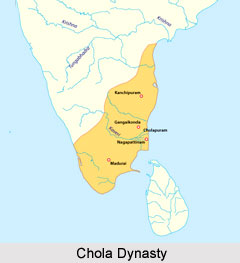
Chola Dynasty
Chola Dynasty is a Tamil dynasty and had longest duration of ruling in parts of South India. Chola dynasty had ruled South India successfully for a ex...
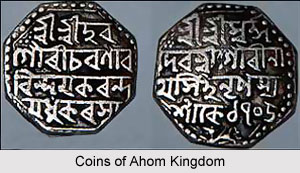
Suhungmung
Suhungmung was the fourteenth ruler of the Ahom dynasty who ruled from the period 1497 to 1539 AD. His reign was significant in terms of expansion of...
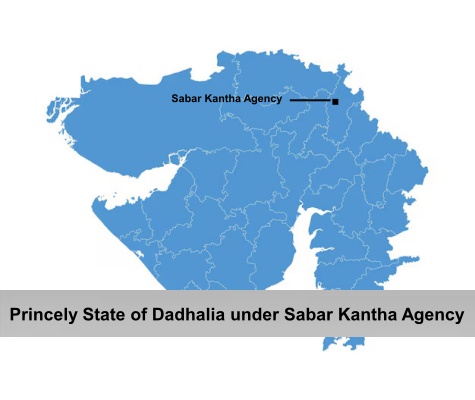
Princely State of Dadhalia
Princely State of Dadhalia was located in the present state of Gujarat. The state covered a total area of 28 sq miles and comprised of 15 villages. Th...
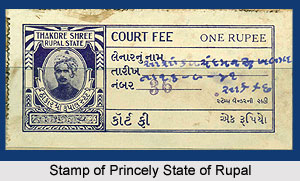
Princely State of Rupal
Princely State of Rupal was a part of the Baroda Agency, a sub division of Western India States Agency. It was under the administrative control of the...
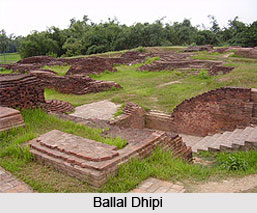
Archaeological Sites of West Bengal
Archaeological sites of West Bengal reveal several aspects of ancient India. Excavations by the Archaeological Survey of India have furnished artefact...
Related articles in History of India

Mughal Architecture during Babur
Mughal architecture during Babur marked the foundation of a new architectural era in India, blending Timurid, Persian, and local influences. His reign...

Architecture during Sayyid and Lodi Dynasty
Architectures during the Sayyid and Lodi dynasty were mainly the tombs and monuments for the dead rulers. It were carefully designed and meticulously...

Brahmanical Sources of Ancient History
Brahmanical Sources of ancient history are contained in the Vedas and they constitute one of the most important literary sources of information about...

Coins of Chola Empire
Coins of Chola Empire were issued in gold, silver and copper and carried the Chola emblem.

Coins of Khilji Dynasty
Coins of Khilji Dynasty had an influential feature that was followed by the other dynasties.