
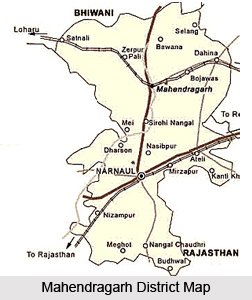
 Mahendragarh District is one of the 21 administrative districts of Haryana and is situated in the south western region of the district. Mahendragarh District was earlier known as `Kanaud` because of its association with Kanaudia group of Brahmans. During the middle of the nineteenth century, it came to be known as Mahendragarh. Mahendragarh District is one of the 21 administrative districts of Haryana. Narnaul town is the district headquarters. Total area occupied by Mahendragarh District is 1,859 sq kms. As per 2001 Census, total population of the district is 812,022. Mahendragarh District has two sub divisions namely Narnaul and Mahendragarh. The five development blocks of the district are Nangal Choudhary, Narnaul, Ateli, Mahendragarh and Kanina.
Mahendragarh District
Mahendragarh District of Haryana came into existence with the formation of the state in 1966. Mahendragarh District derived its name from Mahendragarh that was formerly known as Kanaud.
Introduction
Mahendragarh District is one of the 21 administrative districts of Haryana and is situated in the south western region of the district. Mahendragarh District was earlier known as `Kanaud` because of its association with Kanaudia group of Brahmans. During the middle of the nineteenth century, it came to be known as Mahendragarh. Mahendragarh District is one of the 21 administrative districts of Haryana. Narnaul town is the district headquarters. Total area occupied by Mahendragarh District is 1,859 sq kms. As per 2001 Census, total population of the district is 812,022. Mahendragarh District has two sub divisions namely Narnaul and Mahendragarh. The five development blocks of the district are Nangal Choudhary, Narnaul, Ateli, Mahendragarh and Kanina.History of Mahendragarh District
 Although the nomenclature of Mahendragarh District is not very old, the antiquity of the area it covered can be stretched to earlier periods also. The Archaeological explorations conducted in the region have brought to light late Harappan sites especially from its Rewari tehsil. Most of the sites explored in the district belong to the late-medieval period. However, it has been suggested that some of the present streams of the district may be identified with those mentioned in early Vedic literature. The succeeding stages in the historical growth of the district cannot be traced in because of the absence of concrete evidences.
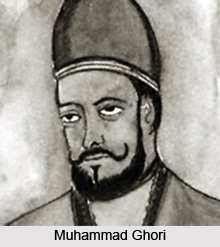 Possibly it was included in the empire of the Mauryas, the Guptas, and the Gurjara- Pratiharas. After the death of Muhammad Ghori, one of his generals, Qutub-ud-din Aibak, laid the foundations of the Turkish rule in India in 1206.
Further, after Firoz Shah`s death, Mahendragarh along with other adjacent territories went out of the control of the Tughlaqs. The Sayyids after Tughlaqs, tried to bring the district under their control, but they also seem to have achieved little success. Soon after establishing his rule in northern India, Babur brought the district under his effective control. Humayun, who succeeded Babur in 1530, made no change in the existing administrative arrangement. Sher Shah was an administrative genius. He divided his whole kingdom into sixty six sarkars. Mahendragarh came under the sarkars of Narnaul and Rewari. Sher Shah ruled for only five years (1540-45). After the death of Aurangzeb, the district`s position changed drastically. In 1750 Raja Madho Singh of Jaipur seized a sizeable territory in the district around Narnaul and Kanaud. In 1792, the Maratha chief Mahadji Sindhia succeeded in capturing the district. The British rulers too reached Rewari. With the launch of Non Cooperation Movement by Mahatma Gandhi, the struggle became still more intense. In 1930, the Civil Disobedience Movement was launched by Mahatma Gandhi. The district contributed heavily in the country`s freedom struggle.
After India achieved independence, Mahendragarh district along with the other districts of Patiala State formed part of the Patiala and East Punjab State Union (PEPSU) in 1948, which merged with Punjab in 1956. Haryana was carved out of Punjab in 1966 and Mahendragarh became the district of the new state.
Geography of Mahendragarh District
Mahendragarh District is surrounded by Bhiwani District and Rohtak district on the north, by Rewari district and Alwar district of Rajasthan on the east, by Jaipur and Sikar district on the south, and by Sikar and Jhunjhunu district on the west. The xerophytic type of flora dominates the district. The district is inadequately wooded and some parts are practically bare of trees. Mahendragarh District is inhabited by various groups of mammals. The district is also inhabited by large number of birds which add beauty to the wildlife.
Historical Places in Mahendragarh District
 Historical places in Mahendragarh, Haryana are wonderful tourist destinations and are thronged by innumerable tourists every year. They involve some historical structures like Jal Mahal, Chor Gumbad, Birbal ka Chatta, Mausoleum of Ibrahim Khan and others, some of which have been created by ancient rulers or dynasties.
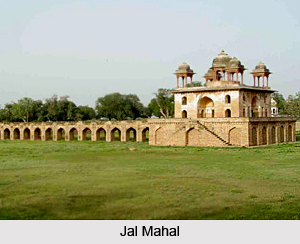
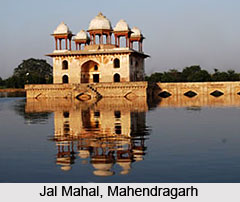
Jal Mahal : This historical building boasts of specially constructed interiors and magnificent architectural patterns. The Jal Mahal was created by Shah Quli Khan in 1591 A.D and the walls of this beautiful palace consist of a contemporary form of architecture. This palace or `pleasure-house` is located in the middle of a gigantic water tank which is presently dry and can be accessed through a causeway. Five kiosks form the foundations of this structure, the larger one based at the centre while the others based at the corners. An arched passage near the palace imparts a unique appeal to Jal Mahal but the garden which was previously a part of this wonderful palace is no longer existent.
 Chor Gumbad : Also known as the `signboard of Narnaul`, the Chor Gumbad resembles a fairytale palace of old legends, owing to its isolated location and haunting appearance. An Afghan known as Jamal Khan was known to have built Chor Gumbad as his tomb. The appropriate date of construction of this historical structure is unknown. However, the arches of Chor Gumbad, which are ornamented with S-curves and other details of the building, suggest that it might have been created during the time when Shah Waliyat`s tomb had been constructed. Though currently, there are graves inside it, Chor Gumbad had been a favourite haunting place for thieves which probably might have lent this structure its present name. Chor Gumbad is a large monument and it possesses a single chamber. From the outside, one might feel it is a double storeyed since one can approach the second level by means of a surrounding verandah. Some architectural characteristics of the Chor Gumbad like wide low domes give an idea that it might have been built during the period of creation of the tomb of Shah Nizam or parts of the nearby Madarsa created in 1357 A.D. Visitors might be amazed by the sudden twists in the passages of Chor Gumbad, and therefore it is known as `Bhul Bhulaiyan`.
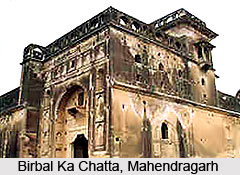
Birbal Ka Chatta : Adorned with spectacular rooms, pavilions and halls, Birbal ka Chatta is a five storeyed building which had been built by Ray-i-Rayan Mukand Dass, who was the Diwan of Narnaul during the regime of the Mughal emperor Shah Jahan. Its construction has been planned meticulously. There exists a central court which was once equipped with a marble fountain, elliptical pavilions, beautiful halls and halls on pillars. The marble pillars, cataracts and drains probably imparted a comfortable ambience to Birbal ka Chatta, especially during summers. A well is present on the terrace and water is said to have been released into reservoirs with the aide of a Persian wheel. Tall, projecting balconies, alongwith specially constructed isolated gateways are existent near the western portion of the palace. A legendary tale asserts that four underground tunnels are connected to this palace, which leads to Dhosi, Delhi, Mahendragarh and Jaipur. Since Birbal and Akbar had visited Mahendragarh, the palace is also referred to as `Chatta of Birbal`. There lies the Sarai Mukand Das, at a small distance from the Chatta, which was built by Rai-i-Rayan Mukand Dass, as per the inscription from an epigraph present here.
Tomb of Shah Waliyat : Shah Waliyat`s tomb is located just beside the mausoleum of Ibrahim Khan. Its architectural designs belong to the era which starts from the Tughluq period and continues till the British age. Initially, this tomb and it`s adjoining structures were created during the rule of Feroz Shah Tughluq. A hemispherical dome forms the base of the tomb, which is adorned with ogee curves. The dome is built as per the architectural style followed by Pathans. Paintings belonging to a later period and enclosures belonging to Mughal era are also existent inside the tomb. A portion of the tomb has also been added during the British period.
Mausoleum of Ibrahim Khan : The mausoleum of Ibrahim Khan is believed to have been created by Sher Shah Suri in the memory of Ibrahim Khan, his grandfather. The latter used to work as an officer of the Lodhis, at the region of Narnaul. It is said that the mausoleum was built under Sheikh Ahmed Niyazi`s supervision. Apart from the grave of Ibrahim Khan, there are two other graves inside this mausoleum. This structure is a replica of the square tomb, built in the Pathan style, beautified with exquisite outlines and attractive colour combination. There exist bold arches, turrets, high terrace, low domes, beautifully curved pillars and other magnificent structures in the mausoleum. The red, grey and white sandstone tiles and lapidary add to the beauty of the mausoleum.
Nasibpur : Nasibpur is located about 3 km from Narnaul and at this very region, the Indian freedom fighters had sacrificed their lives and become martyrs, after rebelling against the Britishers, with an aim to achieve freedom for India. To commemorate these brave freedom fighters of the nation, a historical park has been built in Nasibpur. It is said that the blood of numerous freedom fighters had made this land red.
Tomb of Shah Quli Khan : As per the records of Latif`s travelogue and `Ain-i-Akbari`, Shah Quli Khan I had created several beautiful buildings including a mausoleum for him. He made a lovely garden and called it `Aram-Kauser`. However, presently, only a gateway complex and enclosure walls are the only remainders of the tomb. The tomb was built in 1578 A.D. Red and bluish grey stones impart an artistic aura to the ancient tomb, whose octagonal structure reveals its reflection of the Pathan style of architecture. During 1589 A.D., the Tripoli Darwaza was constructed.
Religious Places in Mahendragarh District
 Religious Places in Mahendragarh in the northern Indian state of Haryana are numerous and due to the abundance of temples in this part of the country, this place is also referred to as `the town of temples`, like Pushkar. Some of these several temples are historic ally significant and comprise Mandir Chamunda Devi, Modawala Temple, Mandola and others.
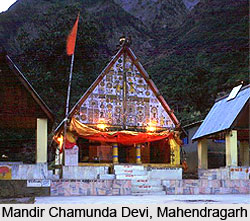
Mandir Chamunda Devi : Raja Naun Karan, a ruler of this area was considered to be a devotee of Chamunda Devi. At the foothills of a hill, he built a temple dedicated to Goddess Chamunda. Following the downfall of the dynasty of Raja Naun Karan, this region was conquered by the Mughals, who created a mosque on the temple of Chamunda Devi. It was called Jama Masjid. After Indian independence from the British Raj, the temple was discovered by the regional inhabitants of this town, thanks to their excavations. The temple was found to be damaged in certain portions. Today it is visited by many pilgrims and a great fair is conducted during Ram Navami.
Modawala Temple : This temple is dedicated to Lord Shiva and is located at Narnaul - Rewari Road near New Bus Stand. Modawala Mandir is the only local temple which is thronged by all Hindu families for the worship of Hindu deities and also Lord Shiva. During `Raksha Bandhan`, a grand fair is held near this temple. As per a legend, there was a `khet` or agricultural land at the site of the temple, where a farmer ploughing the field suddenly came across a Shiva linga while he was at his task. While the man was asleep, he heard a voice which told him that He was Lord Shiva and ordered him to construct a temple at the town so that the local people would be able to worship Lord Shiva. Thereafter, this temple was built. The regional residents of Mahendragarh believe that if someone worships Lord Shiva earnestly, he would definitely receive the divine blessings of this deity and all his desires would be fulfilled by Lord Shiva.
Dhosi Hill : Dhosi Hill is based at a distance of about 8 km away from the western part of Narnaul, near Kultajpur and Thana villages. This area is quite reputed since it is said that it is the very place where Chavan Rishi had performed penance for several years. The summit of Dhosi Hills contains a temple dedicated to Chavan Rishi. On `Somavati Amavasya`, a fair is arranged here. Chavan Rishi is believed to have founded the Bhargava community and he was belonged to `Bbirgu` dynasty. Haryana`s Bhargava communities are referred to as `Dhosar`. This place is considered quite holy and respected as a `Tirtha`. A well, tank and a Shiva temple are also existent on Dhosi Hill and the waters of the tank is said to be as sacred as that of Yamuna River and Ganga River.
Devotees from many parts of India visit the temple here to pray before the image of Chavan Rishi. They take a bath in the water tank, as it is believed that doing so a person would be cleansed from his past sins. There are separate bathing ghats for women and men. Pilgrims must climb 457 stairs of Dhosi Hill, which winds via Thana village. However, one might also approach Dhosi Hill through Kultajpur village and bathe in the Shiva Kund. A wall measuring about 5 to 6 feet in length is present near the stairway and pilgrims can proceed up the hill with the aide of this wall. Suraj Kund and Panch Tirathi are the two other important religious spots situated on this hill. On the top of Dhosi Hills, there exist two temples, one of which is aged about 100 years and the other about 250 years. Idols of Lord Krishna, Radha, Sukanya and Chavan Rishi are present in the premises of the main temple. One would also notice an `Ashta-dhatu` idol of Lord Vishnu, in the posture of `Shesh Shayya` here. There is a cave or `ghufa` near the temple where Chavan Rishi is said to have practiced `tapasya`. Legends state that the Rishi used to consume a herb known `Chavan Prash` which help him stay in good health.
Bagot : Situated at a distance of nearly 25 km from Mahendragarh, Bagot consists of a Shiva temple, near which a big fair is conducted annually on the eve of Shiva Ratri in `Shawan` month. Thousands of devotees visit Bagot to pray to Lord Shiva. It is believed that if pilgrims visit to Haridwar a week prior to their journey to Bagot and bring two pitchers filled with the water of Ganga River to this place on foot, it would bestow good luck upon them. The pitchers known as `kawars` must be not be placed on the earth as it would render them impure and must be sprinkled over the stone idol of Lord Shiva. `Bhajans` are sung in the praise of Lord Shiva throughout the day of this ritual.
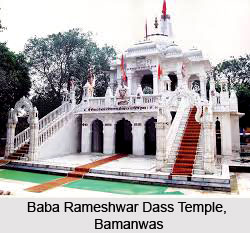
Bamanwas : Bamanwas village is located about 25 km from Narnaul on the Haryana-Rajasthan border and is very popular for the presence of a temple of Baba Rameshwar Dass. The temple was created in 1963 by Rameshwar Dass. There are marble floors and beautifully adorned walls inside the temple premises, while one would notice marvellous idols of Gods and Goddesses in various rooms of the temple. There exists a temple of Lord Shiva on the right side of the temple, which houses an image of Nandi which measures about 25 feet. A special Shiva Linga which is 10 feet in height has been established near the images of Lord Shiva. The principles mentioned in Bhagavat Gita and Ramayana are written on the walls of this temple. There is a large idol of Lord Hanuman near the main entrance of the temple. It measures about 40 feet in height and is one of the tallest idols of Hanuman in northern India. A vast number of devotees from regions like Kolkata, Delhi, Mumbai, Hyderabad, Ahmedabad and others throng this temple and the temple is maintained by donations from the inhabitants of all these cities. The Governments of Rajasthan and Haryana have ensured that devotees can travel safely to the temple by constructing metalled roads which lead to the temple. Every year, a giant fair is held during `Ram Navami`, wherein numerable people participate.
Kamania : The village of Kamania is located about 10 km away from Narnaul and it is famous for its Ram Mandir. The annual Shiva Ratri fair conducted here draws a large number of devotees from various portions of India.
Kanti : Baba Ganesh Dass and Baba Narsingh Dass were the two Indian saints who were born in Kanti village. As per a popular legend, Raja Hari Singh of Nabha was childless, but he was soon blessed in the form of a daughter as well as a son, thanks to the blessings of Baba Narsingh Dass. The saint named the son Tikla, who later became the next king of Nabha and was referred to as Tikla Singh. Raja Hari Singh then erected a temple for Baba Narsingh Dass which contained a `samadh` of marble and a tank. A small rest house is also present in this temple. During `Basant Panchami`, a fair is observed at the samadh of the Baba. Baba Ganesh Dass was also revered by the regional residents of Kanti and a grand fair is held on `Sankranti` near his `samadh`.
Mahasar : In Mahasar, Goddess Jwala is worshipped, particularly during the months of March till April, when the Jwala Devi Fair is held. Devotees offer wine before the image of Goddess Jwala and the temple dedicated to this Goddess is also visited by people for performing the `mundan` ritual for their babies. Newly married couples visit the temple and offer their prayers to Goddess Jwala for a happy married life.
Mandola : Mandola is quite significant, due to the saint named Baba Kesria who is deeply respected by the local inhabitants of Mandola. Every September a fair is held to commemorate this saint and it is widely believed that if a person visits this place he would be immediately cured of snake-bite.
Seylong : Seylong is yet another important religious place where a fair is celebrated in the memory of `Khimag Devta`, during January till February. It is said that a victim of leprosy attains relief if he lights a jot inside this shrine.
Recently updated articles in States of India
Bandare Waterfalls, Meghalaya
Bandare Waterfalls in South Garo Hills, Meghalaya, is a secluded natural attraction surrounded by dense subtropical forests and rugged mountain terrai...
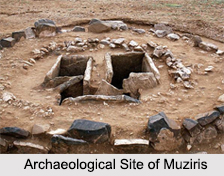
History of Thissur District
Early History of Thissur District explains flourishing of the port cities. Now these port cities are transformed into archaeological sites.
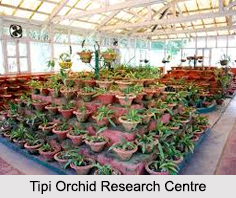
Tippi Orchid Research Centre, Arunachal Pradesh
Tippi Orchid Research Centre in Arunachal Pradesh is renowned for its rich collection of exotic and endangered orchids. Surrounded by lush rainforest...
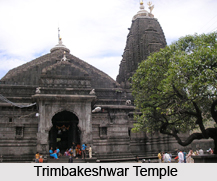
Tourism in Nashik District
Pilgrimage tourism in Nashik district involves visiting the various places of Hindu and Jain worship located here. Some of the holiest sites for Hind...
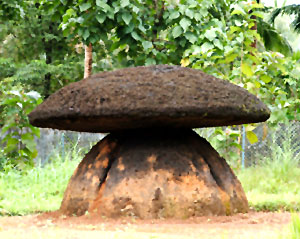
Mangadu, Kerala
Mangadu in Kerala’s Kollam district is a significant megalithic site known for its urn burials, cist burials, menhirs, and stone circles. Excavations...
Related articles in States of India
East Indian States
East Indian States comprises of Bihar, Jharkhand, West Bengal, Odisha and also the Union Territory of Andaman and Nicobar Islands. It defines the cult...
Purnia District in Bihar
Purnia District is located in Bihar and extends from River Ganga to Nepal. The district has a rich Hindu history and glorious past.
Hooghly district
Hooghly District along the bank of the river Hooghly is one of the principal trading ports of West Bengal.
Geography Of Chittoor District
Geography of Chittoor district is spread along the topography of the land which is divided into two natural divisions; Chittoor has a dry and healthy...
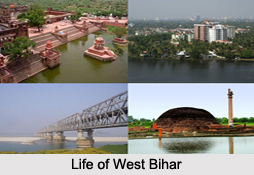
Districts of West Bihar
Districts of West Bihar is comprised of medieval monuments that were built by the different governors of Mughal era.