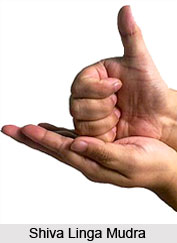
 Shiva Linga Mudra or the `Upright Mudra` is appropriately called "Throwing the Illness behind You." This Mudra is practised mainly to get relieved from the feeling of tension, restlessness, anxiety and dissatisfaction. This type of Mudra is termed as Shiva Linga Mudra because the right hand which is used, symbolizes masculine energy and is known as Shiva`s Phallus. Lord Shiva is the personification of destruction and transformation. It is believed that this particular Mudra is associated with the annihilation of all disease causing elements of a human being and establishment of the positive force.
The Shiva Linga Mudra can be practised entwining or cross-linking all fingers of both hands and keeping the thumb straight. Both hands should be held at the abdomen and the elbows pointing outwards and slightly forward. Shiva Linga Mudra can be done twice a day for four minutes or even longer. This Mudra follows the process by placing both palms together and clasping the fingers. One thumb should remain upright which is then encircled with the thumb and index finger of the other hand held together and cupped like a tight bowl. This finger position increases the powers of resistance against coughs, colds, and chest infections. It also increases the body temperature in order to burn the bacteria, waste, and unnecessary ballast. Shiva Linga Mudra is generally recommended for activation of the immune system.
Benefits of Shiva Linga Mudra
• Increases fire element in the body
• Useful in cold, phlegm and cough ailments
• Loosens mucus that has collected in the lungs
• It helps to increase dynamism in a person
This article is a stub. You can enrich by adding more information to it. Send your Write Up to content@indianetzone.com