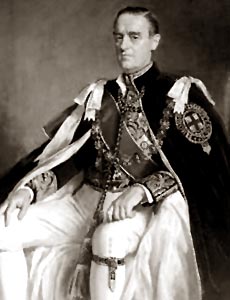
 The August Offer which was declared by Lord Linlithgow had an infuriated reaction within the Congress party which had already taken resolution in the Ramgarh session in 1940 for a more militant action. As the proposal of Congress was rejected by the government, the Indian National Congress wanted to move a step further and go for Civil Disobedience all over the country.
Planning for Civil Disobedience
The unresolved obstinacy on the part of the British government and the pressure created by the Left Wing within the Indian National Congress forced the entire party to take some drastic step for future. It decided to organize a Civil Disobedience Movement about which it had already mentioned in its Ramgarh session. The party organised an anti war and anti government movement under which senior party members like Vinobha Bhave and Jawaharlal Nehru delivered anti-government and anti war speech and get themselves arrested. Mahatma Gandhi, in case of Civil Disobedience, did not allow a mass movement but accepted the imposition of freedom of speech to be used as a weapon for the Indians. He further selected the leaders who shall prepare speeches and get arrested.
Strategy of British Government
The British Government, on other hand, kept its promise to expand Viceroy`s Council with Indian representatives but it insisted that only the non Congress and non League members would be within the council and sort to boycott the Congress party informally. The viceroy now included 12 members instead of 7 and the number of Indians increased from 3to 8. While the Indians formed the majority in the council, the departments of Defence, Home and Finance remained with the Viceroy himself.
Reaction of the Muslim League
The reaction of Muslim League was initially different from that of Congress. It was happy for being specially treated by the British as minority power and expected that this will help them to get their demand for a separate state called Pakistan. The League would then allow its members to join the war council and formally support the government. The government, on other hand, rejected the proposal for Pakistan which restricted the league members to join the war council. Hence the league also rejected the August Offer on return.
Thus, the August Offer did not benefit any of the parties and it only highlighted the rigid obstinacy of the British Government who still wanted to continue its hold over its colonies as long as it could minimizing its new generation demand for more active independent nation.