
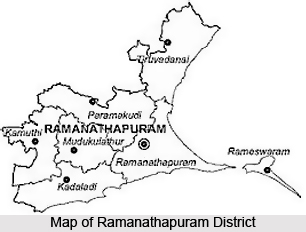
 Ramanathapuram district is one of the districts in the south Indian state of Tamil Nadu. In the early fifteenth century the present district of Ramanathapuram consisting of the Tiruvadanai, Paramakudi, Kamuthi, Mudukulathur, Ramanathapuram and Rameswaram taluks was in the Pandiyan Kingdom. Ramanathapuram was trifurcated to form the Sivaganga, Virudhunagar and Ramanathapuram districts. This district of the Tamil Nadu state possesses a hot tropical climate with temperature ranging from 22.3 degree Celsius to 37.8 degree Celsius, while the relative humidity is high at seventy nine percent on an average and it ranges from eighty percent to ninety percent in coastal areas. There are also several educational institutions which impart education starting from the elementary level to the higher level. The total area covered by this district is 4175 square kilometers and the total population of the Ramanathapuram district is 1187604.
Ramanathapuram District
Ramanathapuram district is spread over an area of four thousand one hundred and seventy five square kilometres and the total population is 1187604. This district of the Tamil Nadu state is having a hot tropical climate.
Introduction
Ramanathapuram district is one of the districts in the south Indian state of Tamil Nadu. In the early fifteenth century the present district of Ramanathapuram consisting of the Tiruvadanai, Paramakudi, Kamuthi, Mudukulathur, Ramanathapuram and Rameswaram taluks was in the Pandiyan Kingdom. Ramanathapuram was trifurcated to form the Sivaganga, Virudhunagar and Ramanathapuram districts. This district of the Tamil Nadu state possesses a hot tropical climate with temperature ranging from 22.3 degree Celsius to 37.8 degree Celsius, while the relative humidity is high at seventy nine percent on an average and it ranges from eighty percent to ninety percent in coastal areas. There are also several educational institutions which impart education starting from the elementary level to the higher level. The total area covered by this district is 4175 square kilometers and the total population of the Ramanathapuram district is 1187604.History of Ramanathapuram District
 History of Ramanathapuram district bears the evidence of the rule of the Pandyas, Cholas, Marathas and also the British. In the beginning of the fifteenth century the present dominions of the district of Ramanathapuram comprising of Tiruvadanai, Paramakudi, Ramanathapuram, Kamuthi, Mudukulathur and Rameswaram taluks were included in Pandyan Kingdom. It remained for a short period under the rule of the Chola Kings when Rajendra Chola brought Ramanathapuram under his territory in A.D. 1063. In A.D. 1520, the Nayaks of Vijayanagar brought this area under their control from the Pandyan dynasty. For about two centuries, Marava chieftains-Sethupathis who were Lords under Pandyan Kings reigned over this part.
The earlier parts of the eighteenth century witnessed several disputes in the family of the rulers over succession which led to the division of Ramanathapuram. By the aid of the King of Thanjavur in A.D. 1730, one of the chieftains deposed Sethupathy and became the Raja of Sivaganga. Acting upon the weakness of the Nayak rules, the local chieftains became independent. Chand, a Sahib of Carnatic, captured Ramanathapuram and in 1741, the area came under the control of the Marathas and then under the Nizam in 1744 AD. The rule of the Nawabs made displeasure in the mind of those chieftains and thus they declared the last Nayak as ruler of Pandya Mandalam against the Nawab in 1752 AD. By that time, throne of Carnatic had two rivals, Mohamed Ali and Shanda Sahib, and this district was part of Carnatic. The French and the British supported Mohamed Ali and Chanda Sahib respectively and thus resulted in a series of conflicts in the southern part of the continent.
In the year 1795, the British East India Company deposed Muthuramalinga Sethupathy and took over the control of administration of Ramanathapuram. In the year 1801 Mangaleswari Nachiyar was made the Zamindar of Sivagangai. After passing of Queen, the Marudhu Brothers took the charge by paying regular revenue to the East India Company. In the year 1803, the Marudhu Brothers of Sivaganga revolted against the British along with Panchalamkurichi and Kattabomman. Colonel Agnew captured Marudhu Brothers and hanged them and then made Gowri Vallbah Periya Udaya Thevar as Zamindar of Sivaganga. After the defeat of Tipu Sultan, the British took the control of this district and imprisoned the Nawab. In the year 1892, the Zamindari system was abolished and for the administration of the district a British Collector was appointed.
Ramanathapuram was formed in the year 1910 by clubbing some portions of the Madurai district and Tirunelveli district. Shri J.F. Bryant (I.C.S) was the first collector of this district and the district was named Ramanathapuram. During the rule of the district, this district was called `Ramnad`. This name continued after the independence of India and later the district was renamed as Ramanathapuram. The district of Ramanathapuram was trifurcated on the 15th of March 1985. Pasumpon Muthuramalinga Thevar district was formed after the trifurcation of Ramanathapuram district and it consists of Karaikudi, Devakottai, Thiruppattur, Manamadurai, Ilaiyankudi and Sivaganga taluks. Later, this district was renamed as Sivaganga district. Another district which was formed is the Kamarajar District. This district consists of Virudhunagar, Sriviliputtur, Chiruchuli, Sattur, Aruppukottai and Rajapalayam taluks and later the district was renamed as Virudhunagar district. The district of Ramanathapuram consisted of the Paramakudi, Kamuthi, Tiruvadanai, Ramanathapuram, Mudukulathur and Rameswaram taluks. During the trifurcation of the Ramanathapuram district the district collector was Shri S.Gurumurthy (I.A.S).
Administration of Ramanathapuram District
The district of Ramanathapuram in the Tamil Nadu state is having the collector as the administrative head of the district. There are two revenue divisions in this district known as Paramakudi and Ramanathapuram. Seven taluks of the Ramanathapuram district are Kadaladi, Ramanathapuram, Kamuthi, Tiruvadanai, Mudukulathur, Rameswaram and Paramakudi. There are thirty eight firkas, four hundred revenue villages and two thousand three hundred and sixty two hamlet villages in this district. In the Ramanathapuram district, there are eleven blocks called Tiruvadanai, Paramakkudi, R.S.Mangalam, Bogalur, Kamudi, Nainarkoil, Mudukulathur, Ramanathapuram, Kadaladi, Tiruppullani and Mandapam. Four hundred and twenty nine panchayats are there in this district. There are also two municipalities and nine towns in the district of Ramanathapuram.
Temples of Ramanathapuram District
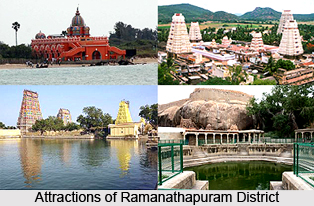
The architecture, fine sculptures and revered deities seen in the temples of Ramanathapuram district are some rare envisions in south India. Ramanathapuram district is located within the boundaries of Tamil Nadu and is famous for its small-scale industries and handloom industries.
Adanainathar Temple at Tiruvadanai in Ramanathapuram District is one of the most famous temples of Ramanathapuram district and is dedicated to Lord Shiva. The temple deities are Lord Adanainathar and Goddess Ambayiravali. The Sthala Teertham is Suryavaruna teertham. Saint Sambandar is known to have contributed pathigams in praise of the lord. The temple lies close to Paramakudi and is one of the most visited temples of Ramanathapuram district.
Kumaraian Temple, situated at Melakodumalur is a reputed temple of Ramanathapuram district. The temple deity is Lord Subramanya, represented with a 6-foot high idol; the lord is seen in a standing posture under a tree. Javvaduppulavar and Nallamuthu Pillai have sung in this temple. Panguni Uthiram is the major festival celebrated in this temple. Muppazha Tiruvizha is also celebrated in the Tamil month of Vaikasi.
Adi Jagannatha Temple, located at Tirupullani in Ramanathapuram District of Tamil Nadu is one of the consecrated temples of Ramanathapuram district, visited by hundreds of pilgrims. This temple enshrines the idol of Lord Vishnu, which is in resting posture. Padmasini and Kalyanavalli thayaar are also worshipped here. Sri Thirumangai Alwar has glorified this temple through his pathigams. There is a sacred Peepal Tree, located inside this temple and people believe that if childless parents perform Nagaprathishtha under this tree, they would be blessed with children with long life. The circumambulation of the tree wards off the worst sins.
Nambu Nayagi Amman Temple, a beautiful shrine located in the Ramanathapuram District of Tamil Nadu is visited by thousands of devotees from far and near. Kodandaramar Temple, one of the well-known temples of Ramanathapuram district, is a delightful shrine, dedicated to Lord Ram, Sita, Lakshman, Lord Hanuman and Vibhishana. Myth states that this is the place where Lord Ram performed the coronation of Vibhishana, the younger brother of Ravana.
Navapashanam Temple boasts the revered deities of Thilakeswarar (Shiva) and Kadaladaitha Perumaal (Vishnu). According to legends, Lord Ram has worshipped Shiva and the Navagrahas (the nine celestial bodies) at this place. Tiruvaadaanai Temple, dedicated to Lord Ganesh (Vinayaka); this temple of Ramanathapuram district has a huge gopuram, which depict the different stories of Hindu mythology. These inscriptions are done in oil paint. The main festivals are Vinayaka Chaturthi and Maha Shivratri.
The temples of Ramanathapuram district are some of the artistic marvels in the region and special care is taken to maintain the priceless sculptures behind the shines and on frescoes of these temples.
Adanainathar Temple at Tiruvadanai in Ramanathapuram District is one of the most famous temples of Ramanathapuram district and is dedicated to Lord Shiva. The temple deities are Lord Adanainathar and Goddess Ambayiravali. The Sthala Teertham is Suryavaruna teertham. Saint Sambandar is known to have contributed pathigams in praise of the lord. The temple lies close to Paramakudi and is one of the most visited temples of Ramanathapuram district.
Kumaraian Temple, situated at Melakodumalur is a reputed temple of Ramanathapuram district. The temple deity is Lord Subramanya, represented with a 6-foot high idol; the lord is seen in a standing posture under a tree. Javvaduppulavar and Nallamuthu Pillai have sung in this temple. Panguni Uthiram is the major festival celebrated in this temple. Muppazha Tiruvizha is also celebrated in the Tamil month of Vaikasi.
Adi Jagannatha Temple, located at Tirupullani in Ramanathapuram District of Tamil Nadu is one of the consecrated temples of Ramanathapuram district, visited by hundreds of pilgrims. This temple enshrines the idol of Lord Vishnu, which is in resting posture. Padmasini and Kalyanavalli thayaar are also worshipped here. Sri Thirumangai Alwar has glorified this temple through his pathigams. There is a sacred Peepal Tree, located inside this temple and people believe that if childless parents perform Nagaprathishtha under this tree, they would be blessed with children with long life. The circumambulation of the tree wards off the worst sins.
Nambu Nayagi Amman Temple, a beautiful shrine located in the Ramanathapuram District of Tamil Nadu is visited by thousands of devotees from far and near. Kodandaramar Temple, one of the well-known temples of Ramanathapuram district, is a delightful shrine, dedicated to Lord Ram, Sita, Lakshman, Lord Hanuman and Vibhishana. Myth states that this is the place where Lord Ram performed the coronation of Vibhishana, the younger brother of Ravana.
Navapashanam Temple boasts the revered deities of Thilakeswarar (Shiva) and Kadaladaitha Perumaal (Vishnu). According to legends, Lord Ram has worshipped Shiva and the Navagrahas (the nine celestial bodies) at this place. Tiruvaadaanai Temple, dedicated to Lord Ganesh (Vinayaka); this temple of Ramanathapuram district has a huge gopuram, which depict the different stories of Hindu mythology. These inscriptions are done in oil paint. The main festivals are Vinayaka Chaturthi and Maha Shivratri.
The temples of Ramanathapuram district are some of the artistic marvels in the region and special care is taken to maintain the priceless sculptures behind the shines and on frescoes of these temples.
Tourism in Ramanathapuram District
 Tourism in Ramanathapuram district in Tamil Nadu offer a great opportunity to visit some of the best temples and a number of other tourist attractions including the Kurusadai Island, Annai Indira Gandhi Bridge, Sea World Aquarium, etc. Some of the well-known temples in this district which attract a large number of pilgrims as well as general tourists due to their great architectural design are Veyulugantha Vinayagar Alayam, Patham Priya Koil, Satchi Hanuman Temple, etc. There is also a famous place of pilgrimage for the Christians known as Oriyur. Oriyur is one of the most-noted pilgrim centers for Christians all over the world as it is home to the martyrdom of St. John De Britto, a Portuguese Jesuit also known as `Arul Anandar`. There is a shrine with its Portuguese facade and it contains a captivating statue of Arul Anandar offering his neck in humble submission to the executioner.
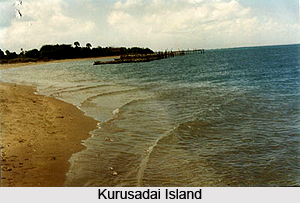
Kurusadai Islands : One of the major tourist attractions in the district of Ramanathapuram in Tamil Nadu state is the Kurusadai Island. This Island is located to the west of the Pamban Bridge between the mainland and the island. It is a marine biosphere, and it is considered to be a paradise for the marine biologists and nature lovers. Marine wealth is abounding at this place which attracts a large number of researchers and scholars to this Island. The Kurusadai Island is almost four kilometers from Mandapam. Away from the Kurusadai Island, one could also see a lot of coral-reef, fish, dolphins, sea-cows, etc.
Ramanathapuram :
 Another attraction in this district is Ramanathapuram, which is an ancient town and it is also the headquarters of the Ramanathapuram district. From this place the Sethupathis or the Chieftains ruled this territory. The Ramalingavilasam Palace with beautiful painting and the Tomb of Thayumana Swamigal are the places worth visiting. There is also a museum in this town. The Sea World Aquarium is located just opposite to the Rameswaram bus stand where one can get to enjoy the beauty of underwater creatures in their near natural habitat. It is the only one of its kind in the state, and probably in the country too, and it is filled with such varied marine life forms including exotic species like snake fish, octopus, sea lizard, parrot fish, cow fish, lion fish, sea squid, rabbit fish, butter fish, fire fish, crabs, lobsters, clown fish, sea lotus, beach tamet, prawns, starfish, sharks and sea horse. This place attracts a large number of general tourists as well as marine life lovers throughout the year.
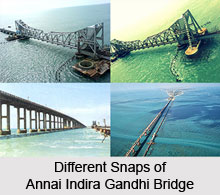
Annai Indira Gandhi Bridge : The Annai Indira Gandhi Bridge is located in the district of Ramanathapuram. The bridge is 2.2 kilometers long and it connects the Rameswaram Island and the mainland. This is also the longest Indian bridge constructed over a bay. This bridge is also known as the Pamban Bridge. There is also a railway bridge connecting the island and it is known for its unique opening to pass the ships through the sea. Thus, the Ramanathapuram district forms a major tourist attraction due to the presence of some of the most beautiful temples, bridges, church, tomb and a number of other natural beauties.
Recently updated articles in States of India
Bandare Waterfalls, Meghalaya
Bandare Waterfalls in South Garo Hills, Meghalaya, is a secluded natural attraction surrounded by dense subtropical forests and rugged mountain terrai...
History of Thissur District
Early History of Thissur District explains flourishing of the port cities. Now these port cities are transformed into archaeological sites.
Tippi Orchid Research Centre, Arunachal Pradesh
Tippi Orchid Research Centre in Arunachal Pradesh is renowned for its rich collection of exotic and endangered orchids. Surrounded by lush rainforest...
Tourism in Nashik District
Pilgrimage tourism in Nashik district involves visiting the various places of Hindu and Jain worship located here. Some of the holiest sites for Hind...
Mangadu, Kerala
Mangadu in Kerala’s Kollam district is a significant megalithic site known for its urn burials, cist burials, menhirs, and stone circles. Excavations...
Related articles in States of India
East Indian States
East Indian States comprises of Bihar, Jharkhand, West Bengal, Odisha and also the Union Territory of Andaman and Nicobar Islands. It defines the cult...
Purnia District in Bihar
Purnia District is located in Bihar and extends from River Ganga to Nepal. The district has a rich Hindu history and glorious past.
Hooghly district
Hooghly District along the bank of the river Hooghly is one of the principal trading ports of West Bengal.
Geography Of Chittoor District
Geography of Chittoor district is spread along the topography of the land which is divided into two natural divisions; Chittoor has a dry and healthy...
Districts of West Bihar
Districts of West Bihar is comprised of medieval monuments that were built by the different governors of Mughal era.