
The Princely State of Sawantwadi was one of the prominent states under the indirect control of the British Government of India. Sawantwadi was the initial capital of the former Kingdom of Sawantwadi during the rule of the British Empire in India. The Bhonsale dynasty was the ruling family of the state. In the year 1947, the territory was merged with the newly formed Republic of India, also known as the Union of India. Until the 18th Century, the state of Sawantwadi incorporated a key portion of the present district of North Goa, which included Pedne, Sattari and Bicholim, and the present Vengurla and Kudal from district of Sindhudurg. The regions of Pedne, Sattari and Bicholim were later occupied by the Portuguese as a part of their New Conquest between 1765 and 1788 and unified with their Old Conquest to form the modern day Goa.
The princely state of Sawantwadi was a compact region that was uninterrupted by the tracts of other British districts or Indian princely states. The region occupied the southern part of the territory called the Konkan. Sawantwadi state is bounded by the Indian Ocean in the west; by the British district of Ratnagiri in the north; by Kolhapur in the northeast; by the British district of Belgaum in southeast; by the Portuguese Goa in the south. After the British administration took charge of the princely state of Sawantwadi, the province has witnessed a number of disturbances and rebellions. Sawantwadi state was under the Deccan States Agency and Kolhapur Residency.
The Sawant Bhonsale dynasty had been hereditary deshmukhs of Wari (near Goa). In the year 1707, the Sawant clan established their full dominion with the support of Shahuji, the successor of Shivaji. Later in 1819, the region came under the protection of the British as the state was severely affected by piracy during the reign of Khem Sawant III. The entire sea coast was ceded to Britain. Sawantwadi state was under the control and administration of the British during the first half of the 19th century. The ruler of the princely state held the title Raja Sar Desai. The native ruler of the state had autonomous power to administer the internal issues of the state. But they maintained pleasant association with the British as they received protection and security in return.
The state was appointed as a 9 gun salute state and the courts of the state implemented full civil and criminal jurisdiction. The native ruler exercised final and absolute control over the administrative functions of the state. The Raja of Sawantwadi state was an original member of the Chamber of Princes in his own right.
The princely state of Sawantwadi was divided into 3 parts for administrative purposes, namely Banda, Kudal and Wadi. The local tender was replaced by the British currency in the year 1839.
Princely States of Sawantwadi
Princely State of Sawantwadi was appointed as a 9 gun salute state. The Sawantwadi state was divided into 3 parts namely Banda, Kudal and Wadi.
Recently updated articles in History of India
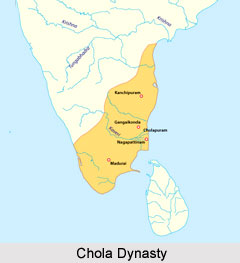
Chola Dynasty
Chola Dynasty is a Tamil dynasty and had longest duration of ruling in parts of South India. Chola dynasty had ruled South India successfully for a ex...
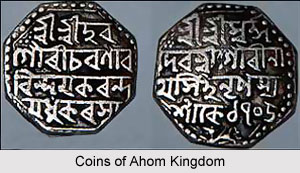
Suhungmung
Suhungmung was the fourteenth ruler of the Ahom dynasty who ruled from the period 1497 to 1539 AD. His reign was significant in terms of expansion of...
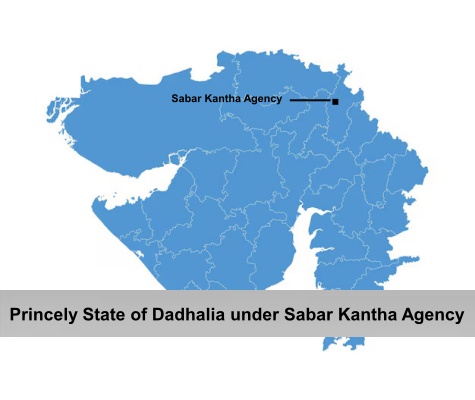
Princely State of Dadhalia
Princely State of Dadhalia was located in the present state of Gujarat. The state covered a total area of 28 sq miles and comprised of 15 villages. Th...
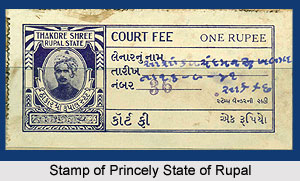
Princely State of Rupal
Princely State of Rupal was a part of the Baroda Agency, a sub division of Western India States Agency. It was under the administrative control of the...
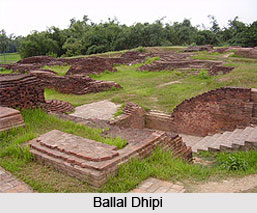
Archaeological Sites of West Bengal
Archaeological sites of West Bengal reveal several aspects of ancient India. Excavations by the Archaeological Survey of India have furnished artefact...
Related articles in History of India

Mughal Architecture during Babur
Mughal architecture during Babur marked the foundation of a new architectural era in India, blending Timurid, Persian, and local influences. His reign...

Architecture during Sayyid and Lodi Dynasty
Architectures during the Sayyid and Lodi dynasty were mainly the tombs and monuments for the dead rulers. It were carefully designed and meticulously...

Brahmanical Sources of Ancient History
Brahmanical Sources of ancient history are contained in the Vedas and they constitute one of the most important literary sources of information about...

Coins of Chola Empire
Coins of Chola Empire were issued in gold, silver and copper and carried the Chola emblem.

Coins of Khilji Dynasty
Coins of Khilji Dynasty had an influential feature that was followed by the other dynasties.