
The Princely State of Jigni was one of the prominent princely states of India that were administered by native rulers or Indian princes under the indirect control of the British Government of India. The state covered a total area of 18 sq miles and comprised of a total population of 4,745 in the year 1941. Jigni state was located in the Bundelkhand region and included around 6 villages in 1941. The territory was entirely bounded by the British United Provinces of Agra and Oudh. It lied between Sarila to the east and Samthar to the west. The Princely State of Jigni was incorporated as a part of the Bundelkhand Agency, which was a sub division of the Central India Agency.
History of Princely State of Jigni
The Bundela Rajputs were the ruling family of Jigni. During the year 1689, Chhatarsal of Panna granted Padam Singh, his eldest son, the pargana of Jigni and the seat of Jigni town. He was given the title of Rao. But as Padam Singh was born of a junior Rani (Queen), he was not permitted to succeed the ruler and ascend to the throne of Panna. Later the original jagir was reduced to great extent uring the invasion of the Maratha Empire. During the period of the occupation of Bundelkhand by the British East India Company, the state of Jigni comprised of only 14 villages. Although all villages were confiscated initially, but later 6 villages were restored by a sanad in the year 1810. They were again seized in 1840, following a rebellion by the native ruler of Jigni and other rulers of the territory. But in order to avoid upsetting the entire class of rulers in the Bundelkhand region, the native ruler or Thakor of Jigni and all villages in his estate were reinstated.
In the year 1934, a member of the ruling family of the princely state of Ajaigarh was adopted as the native ruler of Jigni state, who held the title of Rao. A member of the ruling family of Jigni was adopted by the ruler of Charkhari and succeeded to the gadi of that princely state in the year 1920. The Princely State of Jigni was a non-salute state. The Rao of Jigni state exercised the powers of a ruling chief and supervised the administration of his state. The native state was originally held in garhiband tenure.
The princely state of Jigni was one of the original constituent members of the Chamber of Princes, which was a number of smaller states indirectly represented by 12 princes whom they elected periodically.
After the nation attained independence through the Indian freedom struggle, the last Rao of Jigni, who was the 8th of his line, acceded the territory to the newly independent Dominion of India, which was formally known as the Union of India.
Princely State of Jigni
Princely State of Jigni was a native state of India which was administered by native rulers or Indian princes under the indirect control of the British.
Recently updated articles in History of India
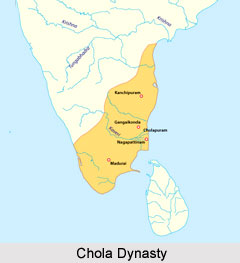
Chola Dynasty
Chola Dynasty is a Tamil dynasty and had longest duration of ruling in parts of South India. Chola dynasty had ruled South India successfully for a ex...
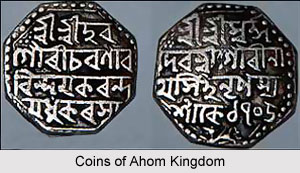
Suhungmung
Suhungmung was the fourteenth ruler of the Ahom dynasty who ruled from the period 1497 to 1539 AD. His reign was significant in terms of expansion of...
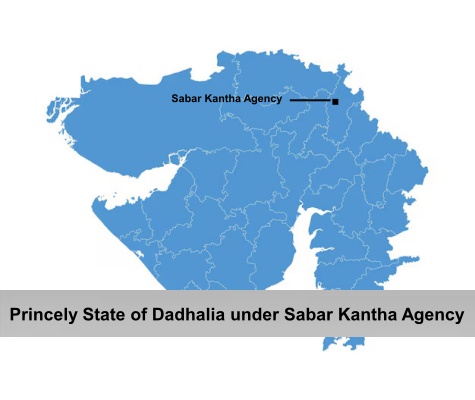
Princely State of Dadhalia
Princely State of Dadhalia was located in the present state of Gujarat. The state covered a total area of 28 sq miles and comprised of 15 villages. Th...
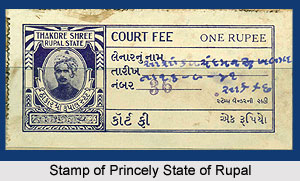
Princely State of Rupal
Princely State of Rupal was a part of the Baroda Agency, a sub division of Western India States Agency. It was under the administrative control of the...
Archaeological Sites of West Bengal
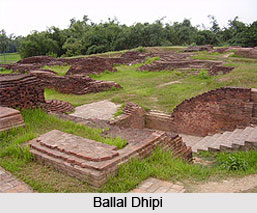
Archaeological sites of West Bengal reveal several aspects of ancient India. Excavations by the Archaeological Survey of India have furnished artefact...
Related articles in History of India

Mughal Architecture during Babur
Mughal architecture during Babur marked the foundation of a new architectural era in India, blending Timurid, Persian, and local influences. His reign...

Architecture during Sayyid and Lodi Dynasty
Architectures during the Sayyid and Lodi dynasty were mainly the tombs and monuments for the dead rulers. It were carefully designed and meticulously...

Brahmanical Sources of Ancient History
Brahmanical Sources of ancient history are contained in the Vedas and they constitute one of the most important literary sources of information about...

Coins of Chola Empire
Coins of Chola Empire were issued in gold, silver and copper and carried the Chola emblem.

Coins of Khilji Dynasty
Coins of Khilji Dynasty had an influential feature that was followed by the other dynasties.