
The Princely State of Alwar was originally known as Ulwar, which was later renamed as Alwar by a monarch as the initial name placed it last in alphabetically ordered lists. The name was changed to bring it to the top. Alwar state was included in the Matsya region in the ancient capital of Viratnagar. Until the 11th century AD, this region was ruled by an influential Gujar or Gurjar Chief. According to history, the province of current Alwar state was under the control of the Gurjars, with their capital at Rajyapura. During this period, the Gurjar ruled Mathandeva reigned over the region around 11th century. Samrat Hem Chandra Vikramaditya, also known as Hemu, was a Hindu Emperor in India and was born in the state of Alwar at Maccheri Devat village in the year 1501 AD. Rai Puran Das, his father who was a Brahmin Pandit, was beheaded in the year 1556 by the army of Akbar because he refused to convert to Islam in Machheri village.
History of Princely State of Alwar
During 1553 to 1556, Samrat Hem Chandra Vikramaditya fought 22 battles against Afghan rebels, across the entire North India from Punjab to Bengal, and defeated them. On 7 October 1556, he ascended to the royal throne in Delhi by defeating the army of Akbar at Delhi and Agra. His Rajyabhishake was held at the Purana Quila in Delhi. Samrat Hem Chandra Vikramaditya established the Hindu Raj in Northern India, after a foreign rule of period of three hundred and fifty years which was dominated mostly by Islamic rulers and invaders. He also fought in the Second Battle of Panipat against the Mughals and sacrificed his life.
The princely state of Alwar was founded by a Rajput of the Kachwaha lineage, Pratap Singh, in the latter half of the 18th century. Bakhtawar Singh, who was his adopted son, supported the British East India Company against the Marathas. After the battle of Laswari in the year 1803, the princely state of Alwar became the first Rajputana state to sign a treaty of Offensive and Defensive Alliance with the British Government of India. After a few years, Bakhtawar Singh initiated an armed invasion into bordering Jaipur, the Kachwaha state senior, and the former overlord of his predecessor. In the ensuing battle, Bakhtawar Singh was defeated and a new engagement was formed by the HEIC with him. This new arrangement prohibited him from political interaction and association with other states without the consent British authorities.
During the Sepoy Mutiny of 1857, also known as the great revolt of 1857, Raoraja Bane Singh sent a force, which consisted primarily of Rajputs and Muslims, to relieve the British garrison in Agra. The Islamic forces abandoned and retreated; while the rest were defeated by the rebels. Pran Sukh Yadav, who valiantly fought against the British, along with Rao Tula Ram, during the Indian rebellion of 1857, eventually resided with the relatives of the expired soldiers at the Nihalpura Village in Behror Tehsil of the princely state of Alwar. The village of Kishorpura of Bansur Tehsil was dominated by Bhati clan of the Gurjar Community.
After India achieved independence from the British Government in August 1947, the princely state of Alwar was acceded into the Union of India, also known as the Dominion of India. Later on 18th March 1948, Alwar state was merged with 2 adjoining princely states of Karauli, Dholpur and the princely state of Bharatpur. These were unified in order to form the Matsya Union, which in turn amalgamated with the Union of India. On 15th May 1949, the region was again merged with some other princely states of India and the region of Ajmer, in order to create the current state of Rajasthan in India. After Indian independence, Shobha Ram Kumawat, the Prime Minister of Matsya Union Shobha Ram Kumawat, and Jai Dayal Yadav, played significant role in the development of the education system in the rural regions of Alwar.
Rulers of Princely State of Alwar
The chronology of the rulers of the princely state of Alwar is mentioned below-
* Pratap Singh Prabhakar Bahadur, Rao Raja of Alwar (1775- 1791)
* Bakhtawar Singh Prabhakar Bahadur, Rao Raja of Alwar (1791- 1815)
* Bane Singh Prabhakar Bahadur, Maharao Raja of Alwar (1815- 1857)
* Sheodan Singh Prabhakar Bahadur, Maharao Raja of Alwar (1857- 1874)
* Mangal Singh Prabhakar Bahadur, Maharaja of Alwar (1874- 1892)
* Jai Singh Prabhakar Bahadur, Maharaja of Alwar (1892- 1937)
* Tej Singh Prabhakar Bahadur, Maharaja of Alwar (1937- 1971)
Princely State of Alwar
Princely State of Alwar was included in the Matsya region in the ancient capital of Viratnagar. On 18th March 1948, Alwar state was acceded into the Union of India.
Recently updated articles in History of India
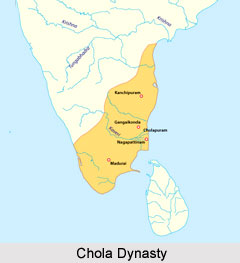
Chola Dynasty
Chola Dynasty is a Tamil dynasty and had longest duration of ruling in parts of South India. Chola dynasty had ruled South India successfully for a ex...
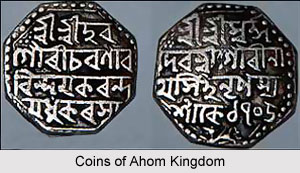
Suhungmung
Suhungmung was the fourteenth ruler of the Ahom dynasty who ruled from the period 1497 to 1539 AD. His reign was significant in terms of expansion of...
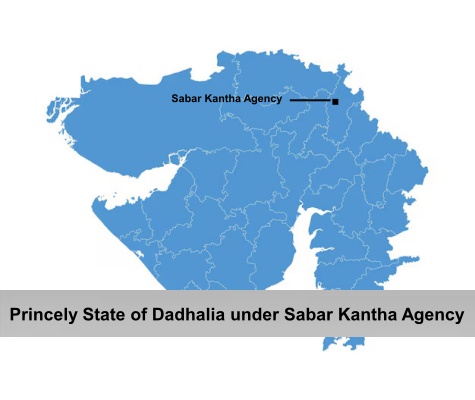
Princely State of Dadhalia
Princely State of Dadhalia was located in the present state of Gujarat. The state covered a total area of 28 sq miles and comprised of 15 villages. Th...
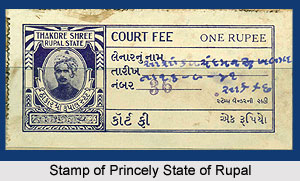
Princely State of Rupal
Princely State of Rupal was a part of the Baroda Agency, a sub division of Western India States Agency. It was under the administrative control of the...
Archaeological Sites of West Bengal
Archaeological sites of West Bengal reveal several aspects of ancient India. Excavations by the Archaeological Survey of India have furnished artefact...
Related articles in History of India

Mughal Architecture during Babur
Mughal architecture during Babur marked the foundation of a new architectural era in India, blending Timurid, Persian, and local influences. His reign...

Architecture during Sayyid and Lodi Dynasty
Architectures during the Sayyid and Lodi dynasty were mainly the tombs and monuments for the dead rulers. It were carefully designed and meticulously...

Brahmanical Sources of Ancient History
Brahmanical Sources of ancient history are contained in the Vedas and they constitute one of the most important literary sources of information about...

Coins of Chola Empire
Coins of Chola Empire were issued in gold, silver and copper and carried the Chola emblem.

Coins of Khilji Dynasty
Coins of Khilji Dynasty had an influential feature that was followed by the other dynasties.