 Pravir Chandra Bhanj Deo was the 20th ruler or Maharaja of the princely state of Bastar and the first Oriya ruler. The last ruler of the Bastar state, Pravir Chandra, ascended to the royal throne in the year 1936. Later the princely state was acceded to Union of India in the year 1948 during the Indian political integration. His Highness Maharaja Pravir Chandra Bhanj Deo was greatly admired by the tribals of the region. He was shot dead while leading a tribal movement in Bastar state on 25th March 1966. He was killed by the then Congress Government of Madhya Pradesh, as he fought for the cause of his subjects and supported the rights of the tribal people. Pravir Chandra was the last Kakatiya ruler of the princely state of Bastar and was venerated by his subjects.
Early Life of Pravir Chandra Bhanj Deo
Pravir Chandra Bhanj Deo was born on 25th June 1929. He completed his education from the Rajkumar College in Raipur, Madhya Pradesh. He succeeded the previous ruler and ascended to the royal throne on 28th October 1936.
Rule of Pravir Chandra Bhanj Deo
Maharaja Pravir Chandra Bhanj Deo of Bastar state was very popular among the people of the princely state, because he supported and encouraged the cause of the local tribal population. He also provided political leadership against exploitation of natural resources available in the region and corruption in land reforms. Therefore, the ruler of the princely state of Bastar was considered as a threat by the then ruling Congress party Government.
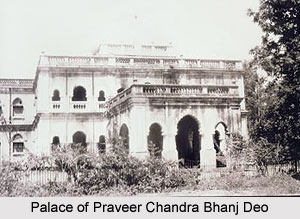
His Highness Maharaja Pravir Chandra Bhanj Deo was killed in police firing in 25th March 1966 at the steps of his own royal palace in Jagdalpur. Other than him, many other tribal people and the officials of the royal court were also killed. Officially the death toll was 12, including the Maharaja. The police had fired sixty one rounds and twenty people were severely wounded in the police action. Many of the other tribals and courtiers were murdered by the police too.
After the adverse incident, numerous tribals of the territory began to migrate to Andhra in order to escape the ruthless treatment of the local police force, with the support of the outside settlers. Due to the incessant Police violence and socio-cultural aggravation and harassment by the outsiders, who settled in the territory, the migration of the tribal people gained momentum. Further more, there was a steady decline in the tribal and native populations as a percentage of the total population.