
 Alibaug is a coastal town and serves as a weekend destination from Mumbai, Maharashtra. Alibaug is popular for the Maratha forts and serene sea beaches.
Alibaug
Alibaug is an impressive tourism destination in Maharashtra and it is not very far from the capital city Mumbai.
Introduction
Alibaug is a coastal town and serves as a weekend destination from Mumbai, Maharashtra. Alibaug is popular for the Maratha forts and serene sea beaches.Location of Alibaug
Alibaug is located in the Raigad District of Maharashtra. It is located to the south of Mumbai, the capital city of West Indian State- Maharashtra.
History of Alibaug
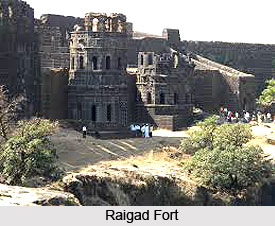 History of Alibaug covers the historical events occurred in the late middle ages that after the disintegration of Mughal Empire in India. After the death of Aurangazeb in the year 1707, the Marathas gained the power in West and Southern part of India.
Alibaug, now the tourist hot spot was developed in the 17th century by Sarkhel Kanhoji Aangre the naval chief of Shivaji. Alibaug is now a coastal town and municipal council in Raigad district in Konkan region of Maharashtra.
Alibaug is the headquarters of the Raigad district. The first name of Raigad District was "Kulaba". An Israelite named Ali used to live there at that time. He was a rich man and owned many plantations of mangoes and coconuts in his gardens. Hence the locals used to call the place "Alichi Bagh", which now came to be known as "Alibagh", and the name stuck from that time.
Alibaug is located just 3 kilometres away from Alibag-Mumbai highway, where one can find this small village called "Khandale". This small hamlet has the population of around 5000 people, which is also heading Gram Panchayats. Khandale is surrounded by ancient temple of Lord Shiva or Mahadeva called Sidheshwar Temple. During "Shrawan" month the landscape beauty on these hillocks is breathtaking and on each "Shrawani Somwars" or Monday in the month of August.
In Alibaug, one can find the unique breed of onions, which are having the rich contributions in Ayurvedic medicines and very useful during summer heat which is having unique sweeter taste. Rewdanda, Chaul, Nagon, Akshi, Varsoli,Thal, Kihim and Aawas villages were known as "Ashtagare" at that time. During the regime of Maratha Empire, there were some naval battles out of which one was fought at Varsoli between Kanhoji Aangre and Siddi of Janjira in the year 1706.
In the year 1722, the armies of the British East India Company and Portuguese East India Company jointly attacked on Kulaba fort and they lost this war. At Chaul there was a battle between the armies of English East India Company and Sakhoji, the Peshwear in 1730. Sakhoji won this war and brought down the losing party along with their Captain at Kulaba. Kanhoji even issued his own currency in the form of a silver coin called the "Alibagi Rupaiya".
Alibaug and its surrounding villages are covered with the historic hinterland of Bene Israeli Jews. A Magnetic Observatory was set up in 1904 by the British Government in India in forming a global network, which is now run by Indian Institute of Geomagnetism. The observatory has two buildings. The first building has magnetometers that record changes occurring in the Geo magnetic fields. The second building has the precision recording instruments, which give data about geomagnetic storms caused by solar storms which is shared with different countries.
Geography of Alibaug
 Alibaug is situated about 120 km south of Mumbai. The latitudinal and longitudinal limit of Alibaug is about 18 degree 38 minutes and 29 seconds north to 72 degree 52 minutes and 20 seconds East.
Demography of Alibaug
According to the Population census in the year 2001, Alibaug had a population of 19,491. The males constitute 52 percent and the females constitute 48 percent. The average literacy rate is 79 percent. At least 11 percent of the population in Alibaug is under 6 years of age.
Education of Alibaug
Alibaug became the center of advanced education after British captured this area in modern times. They established 4 Anglo-Indian medium schools and 30 government schools. Now Alibaug has many educational institutions like General Arunkumar Vaidya High School, R.C.F School, St. Mary`s Convent School, Chandrakant Hari Keluskar Homeopathic Medical College and J. R. H. Kanyashala.
Economy of Alibaug
The economy of Alibaug is completely dependent upon tourism.
Tourism in Alibaug
 Tourism of Alibaug covers the pilgrimage tourism, forts, village life, fortified islands and serene sea beaches on Arabian Sea. This coastal town is located in Raigad District of West Indian State-Maharashtra. The tourism destinations include Alibaug beach, Siddheshwar temple, Alibag Fort, Khanderi, Underi Fort, Varsoli Beach, Akshi Beach, Nagaon Beach, Kashid Beach, Chaul, Revdanda and many others.
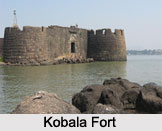
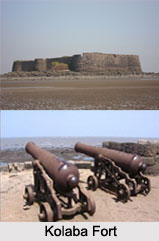
Kolaba Fort : Kolaba Fort is a fort in western Indian state of Maharashtra. This fort is situated in Arabian Sea and it easily accessible from of Alibaug (2 km). It is a monument maintained by Archaeological Survey of India. Kolaba Fort eye witnessed the rise and fall of Siddis and Marathas.
Sagargad Fort : Sagargad Fort is located in Alibaug. This fort is a best place for trekking. Sagargad Fort can be visited all round the year. The waterfall nearby is worth visiting during monsoon times. This fort was built during the time of Satvahana Dynasty.
Murud-Janjira : Murud-Janjira is located very close to Alibaug and this is a medieval fort that was built by Malik Ambar who was in service of Sultan of Ahmednagar in medieval era. This fort was unconquerable even by British, Portuguese and Marathas.
 Korlai Fort : Korlai Fort is a Protuguese fort that was built in medieval India (1521) and was demolished in 1594 AD. This fort is located in Korlai town and it is considered as a nearby destination from Alibaug. Portuguese built this fort taking the permission from Nizam Shahi Dynasty of Ahmadnagar.
Khanderi : Khanderi is important for the fortification by Shivaji and it is place where Sidis and Marathas collided in most of the time.
Underi : Underi is a medieval fortified island located near Alibaug. It is located in Raigad district now served as the landmarks for ships entering Mumbai Harbour. This medieval fort was built by Siddis. The fort of Underi was built in the year 1680.
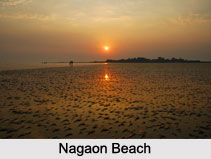
Nagaon Beach : Like Alibaug, Nagaon beach is a calm and serene beach where adventure sports are widely played. This beach is popular for the people of Mumbai and Pune, because it is a cleanest sea beach in western India.
Kashid Beach : Kashid is located on the shores of the Arabian Sea. Geographically it is in the North Konkan region, this beach is about an hour ride from Alibaug.
Kihim Village : Khim is a small village in Maharashtra located near the sandy sea beaches of Arabian Sea. This small rural settlement area is popular to the national and international tourists for the presence of Kankeshwar Temple and Karmarkar Museum. This village came into existence from the rule of Shivaji. The economy of this small village is dependent on tourism and rice cultivation.
Pilgrimage Tourism in Alibaug :
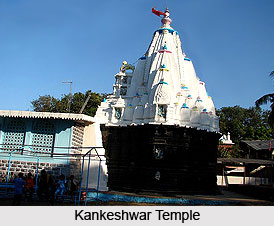 Pilgrimage Tourism in Alibaug deals with the temples of the medieval era. There are some temples located in Alibaug are Datta Mandir, Hingulja Temple, Shitaladevi Temple, Uma-Maheshwar temple, Balaji temple and Kankneshwar Temple.
Kankeshwar Temple : Kankeshwar Temple is located about 3 kilometres from Kihim Kankeshwar temple. This temple is located atop a hill near Mapgaon. Kankeshwar Temple was built in 1764 by Raja Ramdeorai Yadav and has a silver plated idol. Kankeshwar Temple also has a Kund known as "Brahma-Vishnu-Mahesh Kund". Brahma Kund is a rectangular tank surrounded by steps on all four sides has is on the way up.
Datta Temple : Datta Temple is located at about 18 kilometres from Alibaug or Alibag. It is situated on Alibag-Revdanda Road. This is one of the famous hill shrines in Maharashtra. To offer prayer, one needs to climb around 700 stairs to reach this shrine, which is surrounded by forest vegetation. The important religious destinations near Dutta Temple are Swami Samartha Mutt, Sadhana Kutir, Hare Ram retiring room, Hare Ram Baba Dhuni Temple, Audumbar Mutt, Mai Jankibai Mutt.
Ramaeshwar Temple : Ramaeshwar Temple is an ancient shrine of Lord Shiva in Alibaug. It was built in "Hemadpant" style of architecture, one of the ancient style of architecture in ancient India. But when this temple was built is not known. History of Alibaug says that it was renovated many times. The structure comprises of prayer hall ("Sabhamandap"), a sanctum sanctorum and the 7.62 meter high summit shaped dome. In front of the prayer hall, there are three tanks namely Parjanya Kund, Agni kund and Vayu kund.
Shitaladevi Temple : Shitaladevi Temple is located on the Alibag-Revdanda Road, which is 14 kms away from Alibag. This is exactly located in Chaul. One can hire an autorickshaw to reach this ancient temple. Shitaladevi Temple was originally built with a tiled roof and wooden structure. In 1990, Shitaladevi Temple was renovated into a modern structure. It is a greatly revered shrine among the residents of Alibaug and other adjacent areas in West India.
Vikram Vinayak Temple : Vikram Vinayak Temple better known as the Birla Temple of Alibaug is located at about 20 kilometres from Alibag, across Revdanda Bridge. Vikram Vinayak Temple is located to the left of the Revadanda Bridge. Vikram Vinayak Temple is a beautiful temple within the Vikram Ispat premises. The towering dome in exquisite white granite is visible from a long distance. Vikram Vinayak Temple is situated on a small hillock, where one can walk up to the temple over well-paved stairs. The surroundings of the temple are made up of a well-planned garden and colourful fountains. The prayer hall is open on all sides and the roof is made of transparent Polymorph sheet. Vikram Vinayak Temple has idols of Radha- Krishna, Lord Shiva and his consort Parvati, Goddess Durga and Lord Surya.
Siddhivinayak Temple : Siddhivinayak Temple is located in the village known as Nandgaon in ancient times. The local people believe that a "Darshan" of Lord Ganesha here lends finale to the "Asthtavinayak" pilgrimage. There also occur a grand religious festival every year on "Maghi Chaturthi", a day and another traditionally auspicious day for "Darshan" is `Sankashti Chaturthi" every month.
Alibaug Beach
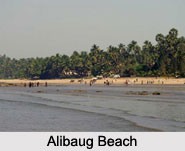
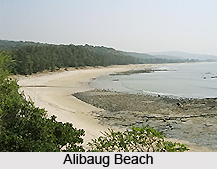 Alibaug beach is situated in the Indian state of Maharashtra, in the Raigad district, and serves as a refreshing tourist spot, visited by a plethora of tourists. Apart from the invigorating environs and serene beauty of the place, the beach also has a historical significance. Owing to the proximity of Alibaug beach to Pune and Mumbai it welcomes huge crowd during festivities, weekends and holidays. The beach is nestled in the tranquil palm groves and the place is often referred as Goa of Maharashtra state as the town is encased by sea from three sides.
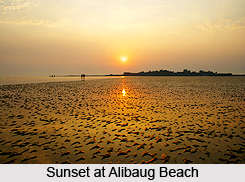 The picturesque beach is endowed with black sands and crystal clear waters. Visitors arrive in groups with friends or families or sometimes alone to cherish the serenity of this peaceful beach. The sparkling water of the beach stretches till the horizon and the coconut trees swaying along the beach creates a mesmerizing vista. Some of the enjoyable activities on Alibaug beach are sunbathing, long walks along the sea shore and riding in the six seated horse driven buggies. The beach however does not provide any water sports facilities like snorkelling, scuba diving or boating. The beach is quite safe for swimming at high tide, but during low tide one needs to be cautious as the place does not have any lifeguards.
Climate of Alibaug Beach : Alibaug beach is best visited between the months of November and February as during this time the weather remains very pleasant and cool. The temperature rises from March onwards and the month of June brings the monsoon.
Recently updated articles in Cities of India
Places of Interest in Deogarh Uttar Pradesh
A place of historical and archaeological significance, Deogarh is a site with few popular places of interest.
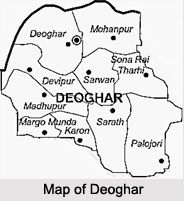
Deoghar in Jharkhand
Deoghar is the divisional headquarters of Santhal Parganas located in Jharkhand and is popular for the famous Baidyanath temple and Shiva Temples.
The Asiatic Society of Mumbai
Asiatic Society in Mumbai is the temple of Asian Studies from the time of British rule in India.
Vasco da Gama / Vasco City
Vasco da Gama / Vasco is the biggest city of Goa and is one of the most visited for its perfect amalgamation of business as well as leisure options.
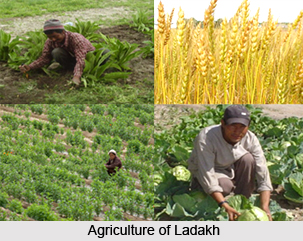
Agriculture of Ladakh
Agriculture in Ladakh is primarily practiced in the short summer season due to its cold desert climate. Farmers grow hardy crops like barley, wheat, p...
Related articles in Cities of India
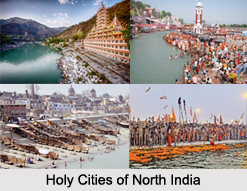
Holy Cities of North India
Holy Cities of North India are having the rich history of Hinduism and the entire civilization was grown up with the hands of beliefs, rituals and the...
Holy Cities of South India
Holy Cities of South India gives the detailed cultural formation of Dravidians from the early era, which later developed to the world by the Pallavas...
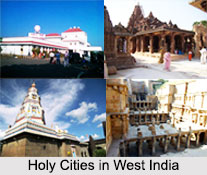
Holy Cities of West India
Holy Cities in West India were established by the rulers of Rajputs and the Satvahana Dynasty and the medieval rulers of Junagadh.
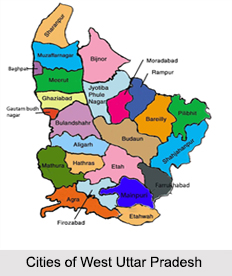
Cities of West Uttar Pradesh
Cities of West Uttar Pradesh include Meerut, Bulandshahr, Ghaziabad, Saharanpur, Muzaffarnagar, Bijnor, Bareilly, Rampur, Agra, Aligarh, Mathura and m...
Port Cities of South India
Port Cities of South India are developed from the early phase of colonial era when the Portuguese and the French traders came to India