 Literature in Turko-Afghan Rule rose at its height with the advent of Vaishnava Literature. The Turko Afghan period is remarkable for the growth of the vernacular and Sanskrit literature. The reformers had to take recourse to the local dialects for the propagation of their own thought while the orthodox Hindus stuck to classical Sanskrit literature.
Mithila remained as the centre of orthodox views and as a result of that various works in Sanskrit were written. The Brahmins of Kannauj, Magadha and Gauda having being vexed by the Muslims took shelter in Tirhut, Nepal and Tibet. The peaceful atmosphere of Tirhut made it the centre of learning and culture in the middle Ages.
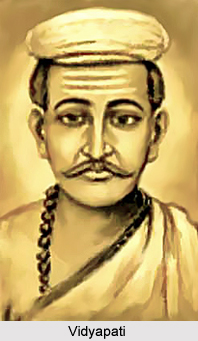
Tirhut was regarded as the preserver of cultural tradition during this period of political turmoil. The Oinwara Dynasty encouraged the growth of Sanskrit Literature. The most prominent writers of this period were Jagedhara, Vidyapati, Sankara, Vachaspati Misra and Paks-hadher Misra. Jagadhara wrote many works on Music. Vidyapati wrote on Smriti, Niti, Puja and, in Maithili, a large number of religions songs.
Vidyapati Thakur wrote a number of works Vir-Saivasarvasva-Sara, Gangavakyavali, Dan-vakyavali, Durgabhaktatarangini, Gayapattalaka Varsakrtya, Likhnavali Purushpariksha Gora-kshvijayanatak, Bibhagsaar, Kirtilata, Kirtipataka and Padavali. The above works reveal that he was capable of selecting and marshalling facts from different sources. His accounts are picturesque and realistic and he is the mirror of his age. The highly sophisticated descriptions in his Padavali are refreshing and they are limited to the simple life of village folk. He has expressed every thing in artistic and musical language. He was highly proficient in Music. It was Vidyapati Thakur who laid the foundations Maithili literature deeply and permanently. He is known as the most versatile and distinguished scholar. Chaitanya immortalised the songs of Vidyapati. Mithila gave protection to a large number of scholars from the adjoining countries.
The assimilation of two cultures led to the formation of new styles in art, architecture and music. In all these, the basic element remained the old Hindu tradition but the finish and outward form reflected a Persian form. The period, under review, represented the blending of two styles and it derived its character from both the sources. The craftsmen and sculptors were guided by their own art traditions. During the rule of the Sharqui a new style of architecture developed that was influenced by the Hindu art. The most remarkable feature can be seen in Sharqui Mosque at Jaunpur District. The mosque had no minarets of usual type.