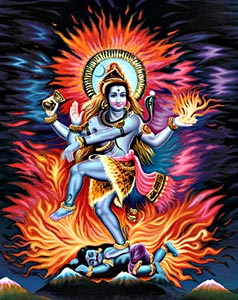
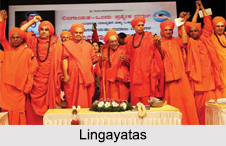
 Lingayatas is a religion that was founded in the 12th century by saint-philosopher Guru Basavanna who was a "Brahmin by birth". He had rejected ritualistic worship and pre-eminence of the Vedas. The Lingayatas regard Lord Shiva as supreme and must worship only Him, hence they are called "Veerashaivas". The Veerashaivas sect of the community also worships Shiva idols and practises other Hindu customs. The Lingayats consider the Veerashaivas to be part of Hinduism as they follow Hindu customs while the Veerashaivas think the community was an ancient religion established by Shiva and Basavanna was one of its saints.
Reverence is paid by the Lingayatas to the 63 Nayanars of the Tamil country whom they regard as elders. They also honour 770 later saints among whom are included Basava and his chief disciples.
Religious Beliefs of Lingayatas
According to the Shiva, the world, animate and inanimate, passes through a cycle of three phases. These three can be mentioned as evolution, maintenance and dissolution. Of the three phases dissolution is primary because all evolution is the manifestation of the inherent potentialities of the unresolved or dissolved. The purpose of the periodic reproduction is to free souls from the impurity born together with the soul by association with which souls have been enveloped in the darkness of unconsciousness from eternity. This release is affected by providing for souls the earthly experience in the midst of which they may receive by divine grace the light of the knowledge of their oneness with God and their dependence upon Him.
 The soul, which is neither real nor non-real can depend on and identify itself with either. In association with the non-real it can by its help know the real. It is Shakti or power of Shiva, not karma that provides souls with the condition of finite experience. But karma is the principle of action and reaction determines the form and quality of the experience. When God comes as a guru and teaches the soul, the soul is made to see that the world of experience evolved from Maya is non-real. Jnana or knowledge follows upon Charya i.e. menial service in a temple, Kriya, is acts of worship and Yoga is inward spiritual worship. In all cases of divine it is not human in origin, but the inner in which it is imparted varies according to the class of soul. Shiva is the source of all enlightenment. Sole embodiment of intelligence and hence the true object of all devout aspirations. The system transcends caste and ritual, and calls for inner devotion.
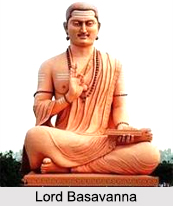
Basavanna, Founder of Lingayat
Basavanna was a 12th century social reformer. He and his contemporary Sharanas launched a very strong spiritual, social and religious rebellion against Brahminical hegemony. Basavanna declared that "work is worship". He gave women equal status in his movement through the vachanas.
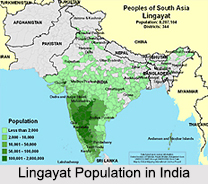 Lingayat Population in India
Shaivism attaches great importance to the practices, especially to asceticism, but it values Bhakti or devotion with less importance. It leans towards asceticism. It was Shaivism that gained the firmest foothold in Eastern Asia and produced a vast body of speculative literature principally in old Javanese. The Lingayat community has a strong presence in the state especially in the north. Lingayats constitute 17 percent of the total population in Karnataka.