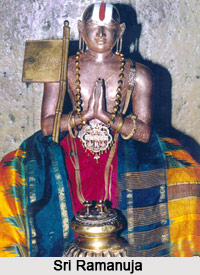
 Sri Ramanuja Temple of Sevelimedu is one of the noteworthy temples of Kanchipuram. The temple itself and its surrounding areas are closely associated with the lives of many of the Vaishnava saints (Azhvars) and preceptors (Acharyas). Hence the temple precinct is considered a sacrosanct for the devotees. While separate shrines for preceptors like Tirukkacchi Nambi, Kurattazhvan and Vedanta Desika are found in the heart of Chinna Kanchi and are often visited by devotees, not many are aware of a similar temple for Vaishnavism`s most famous preceptor, Ramanujacharya near Kanchipuram. But the temple in its feature reflects traditionality and a rich cultural heritage.
This shrine for Ramanuja is situated in the tiny village of Sevelimedu, approximately three kilometers from L.Periya Kanchi. It is indeed a fitting environment for this temple as this holy place is closely associated with an important incident in the life of this great Acharya.
The tradition followed in the temple reflects the heritage of the ancient temple. Very near to this temple is located the holy and ancient well to which Ramanuja was directed by the divine couple and from which he fetched water for them. Subsequently, when Ramanuja became the disciple of Tirukkacchi Nambi in Kanchi, the latter requested him to start his services to Lord Narayana by bringing water from this well for the tirumanjanam (abhishekam) of Varadaraja Perumal, the deity to whom he was so attached. Thus, at the order of his guru, Ramanuja used to carry water everyday to the great Vishnu temple at Kanchi. This well is maintained in good condition even today. To maintain the tradition in the same way, priests from the Varadaraja Perumal temple visit it every morning to fetch water for tirumanjanam to Lord Varadaraja, an enduring custom started in the 12th century A.D. and continued till today.
The festivals observed in Sri Ramanuja Temple reveal the traditional heritage and the religious significance. A number of festivals are performed with immense pomp and spectacular ceremony. A unique festival connected with this tiny temple dedicated to Ramanuja is held in the month of Margazhi (December-January) every year. On the day after the Iyarpa Sattumurai of the Adhyayana festival, the Anushtanakulam festival is celebrated to commemorate this important episode in the life of Ramanuja when the divine couple helped him. Lord Varadaraja and Goddess Perundevi Thayar, starting from their temple in Chinna Kanchi, dressed as a hunter couple visits this sacred well and Ramanuja`s shrine in Sevelimedu. During this festival a great gathering of devotees occurred in the temple precincts.
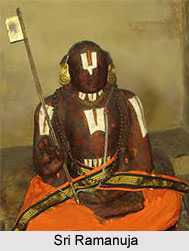 The architectural brilliance of the contemporary artists is revealed from the delicate carvings made on the temple walls. The architectural grandeur provides an additional grand magnificence to the traditional temple. The structural design of the temple testifies the architectural excellence of the contemporary period. The shrine for Sri Ramanuja is located at the very spot where Lord Narayana and Lakshmi gave darshan in disguise to this illustrious Acharya and also the presiding deity of the Temple Lord Ramanuja. The image of Ramanuja enshrined in the sanctum faces east and is placed in the posture of the anjali hasta with his staff (danda). A small eight-pillared mandapa of the Vijayanagara age is attached to this shrine and the temple tank called Anushtanakulam is situated in front. This entire structure itself bears the evidence of the architectural craftsmanship. The royal emblem of the house of Vijayanagara, depicting a Sri Ramanuja, boar (Varaha) with the sun and moon, is seen chiseled on the outer wall of the sanctum, this emblem indicates that this shrine was constructed or rebuilt or renovated during the reign of the Vijayanagara kings who rendered yeoman service to Vaishnavism.