
The erstwhile Khasi Kingdom comprised of almost 25 sovereign Khasi chiefdoms during the mid-16th century. During the year 1815 the states under the Khasi kingdom came under the control of the British Empire in India. Before the advent of the British East India Company, from the 13th to the 18th centuries, the Jaintia conquered a large number of kingdoms. At the commencement of the 16th century, Jaintia rule was extended to Sylhet, which marked the initiation of Brahmin influence on the Jaintia. By the year 1860, the British administration had annexed the entire Jaintia Hills region and imposed taxes on it as a part of British India. The Khasi states had very restricted cultural relations before the arrival of the British East India Company, which was characterized in large fraction by internal warfare between villages and states. Moreover raids, trade and commerce in the Sylhet and Brahmaputra valleys were the major features of the Khasi kingdom.
In the year 1765, the markets at Sylhet were incorporated as a part of the British dominated India for the purposes of enhancement of British colonial economy. This marked the subjugation of the Khasi kingdom in Meghalaya which became an essential part of the British Indian Empire.
During the year 1790, several raids were conducted in the Khasi territories and consequently the British authorities fortified the foothills blocked the trade of the various goods from the Khasi Kingdom in the markets of Sylhet. In 1837, the construction of a road through the state of Nongkhaw which was linked with Kolkata to the Brahmaputra Valley led to the eventual cessation of the hostilities between the Khasi Kingdom at Meghalaya and the British East India Company. The rivalry authoritatively finished by the signing of treaties between the British and all of the Khasi states in the year 1862. As a result, the Khasi states were allowed autonomy and liberation from payment taxes to the British Empire in India.
The Khasi kingdom of Meghalaya demonstrated extensive cultural change after the declaration of Shillong as the capital of Assam. These alterations included declining popularity of traditional culture, augmentation of wealth, the recognition of inter-marriage and development in educational standards. In the year 1947, a self-governing tribal district was established, which was accountable to the Governor of Assam. The Governor functioned as an agent of the Indian President.
However, the system of the native Khasi states remained uninterrupted and the various functionaries of the state system were not modified or changed. At present, the former Khasi Kingdom has been incorporated as a part of the modern Indian state of Meghalaya and the Khasis form the principal tribe.
Khasi Kingdom
Khasi Kingdom included almost 25 sovereign Khasi chiefdoms during the mid-16th century. Khasi kingdom came under the British East India Company in the year 1815.
Recently updated articles in History of India
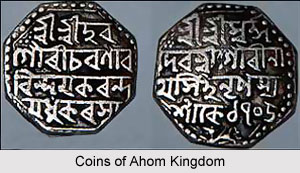
Suhungmung
Suhungmung was the fourteenth ruler of the Ahom dynasty who ruled from the period 1497 to 1539 AD. His reign was significant in terms of expansion of...
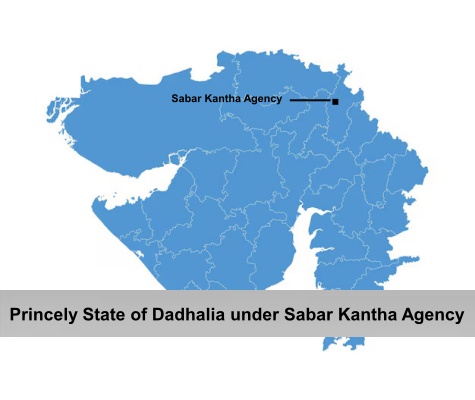
Princely State of Dadhalia
Princely State of Dadhalia was located in the present state of Gujarat. The state covered a total area of 28 sq miles and comprised of 15 villages. Th...
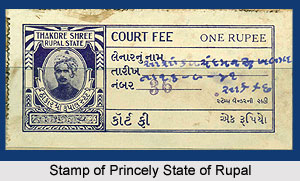
Princely State of Rupal
Princely State of Rupal was a part of the Baroda Agency, a sub division of Western India States Agency. It was under the administrative control of the...
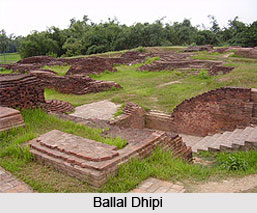
Archaeological Sites of West Bengal
Archaeological sites of West Bengal reveal several aspects of ancient India. Excavations by the Archaeological Survey of India have furnished artefact...

Princely State of Gabat
Princely State of Gabat was one of the native states of India during the Brtish period. Thakors were the native rulers of this state. After India gain...
Related articles in History of India

Mughal Architecture during Babur
Mughal architecture during Babur marked the foundation of a new architectural era in India, blending Timurid, Persian, and local influences. His reign...

Architecture during Sayyid and Lodi Dynasty
Architectures during the Sayyid and Lodi dynasty were mainly the tombs and monuments for the dead rulers. It were carefully designed and meticulously...

Brahmanical Sources of Ancient History
Brahmanical Sources of ancient history are contained in the Vedas and they constitute one of the most important literary sources of information about...

Coins of Chola Empire
Coins of Chola Empire were issued in gold, silver and copper and carried the Chola emblem.

Coins of Khilji Dynasty
Coins of Khilji Dynasty had an influential feature that was followed by the other dynasties.