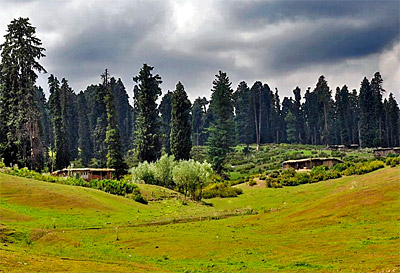
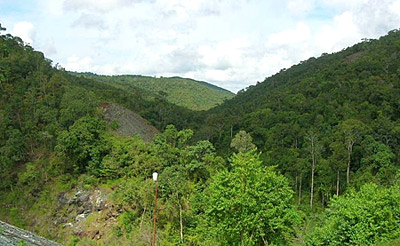
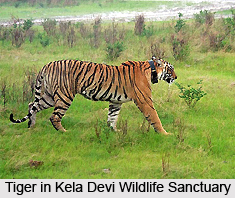
 Kela Devi Wildlife Sanctuary is named in the honour of the renowned Kela Devi Temple located nearby, and is an extended portion of the Ranthambore National Park, occupying an area measuring 676.40 square kilometres. Lush green wilderness surrounds this beautiful wildlife sanctuary, from which the high hills are clearly visible amongst dense jungles. Kela Devi Sanctuary is situated in the Karauli District, Rajasthan. Tourists will come across Banas River at the western end of the preserved area and Chambal River at the south-eastern part of the sanctuary. Deep gorges known as `khos` are present in Kela Devi Wildife Sanctuary, which create gigantic rocky walls that run down into narrow valleys. The gorges measure about hundreds of feet, and this sort of wilderness imparts the ideal ambience for being the natural habitat of wild beasts, making them impenetrable by humans. Nibhera, Ghanteshwar, Kudka, Khadi or Keri Umar and Chirmul are some of the khos in the sanctuary.
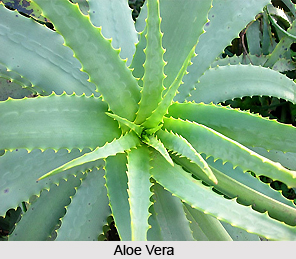
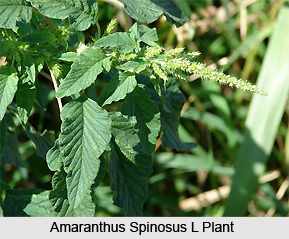
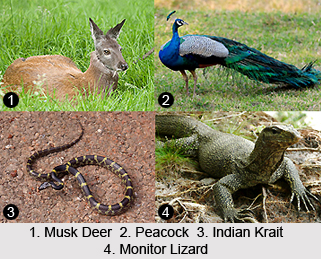
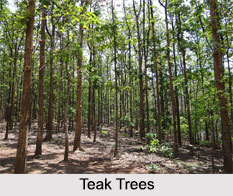
Jackal, Panther, Sloth Bear, Leopard, Chinkara, Wild Boar, Sambhar, Wolf and Hyena are only a few of the numerable wild animals who find a safe refuge in the depths of the Kela Devi Wildlife Sanctuary. One will also be able to catch sight of tigers, though it is quite a challenge to view them. As one would tread into the sanctuary, he would discover the cacophonies of the Kela Devi Temple giving way to a sense of peacefulness and rare tranquillity which is common in the dense woodlands. Starting from scrubs, herbs and ranging to tall trees, Kela Devi Sanctuary is home to a large variety of flora and fauna. As one proceeds further into the sanctuary, he would observe that the hills in the innermost portions of the sanctuary are more rugged and higher. Khair and Dhok trees are the main sources of vegetation of this region.
The ideal time to pay a visit to Kela Devi Wildlife Sanctuary is between October and February. The maximum temperature of the area during summer is 45° Celsius while the maximum winter temperature during winter hovers around 31° Celsius. The sanctuary receives nearly 700 mm of rainfall. The rugged landscape of the sanctuary presents a delightful sight to its visitors especially during the monsoons, when the nearby trees transform into a bright, emerald green. Picturesque waterfalls dot the Kela Devi Wildlife Sanctuary.