
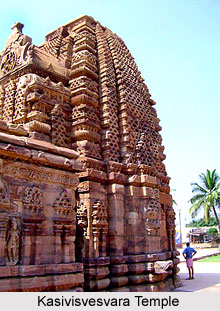
 Kasivisvesvara Temple is one of the most ornate temples in the Indian state of Karnataka. According to the inscription of 1087A.D. the temple had a simple construction and decoration was added later on. Hoyslala King Veera Ballala II annexed Lakkundi from the Senas of Devagiri and made it the capital of his kingdom around 1193 CE. There is a possibility that the temple may have been renovated during his rule.
Kasivisvesvara Temple
Kasivisvesvara temple is located in Lakkundi in Gadag district of Karnataka. This temple shows a mature phase of Western Chalukyan architecture
Introduction
Kasivisvesvara Temple is one of the most ornate temples in the Indian state of Karnataka. According to the inscription of 1087A.D. the temple had a simple construction and decoration was added later on. Hoyslala King Veera Ballala II annexed Lakkundi from the Senas of Devagiri and made it the capital of his kingdom around 1193 CE. There is a possibility that the temple may have been renovated during his rule.Architecture of Kasivisvesvara Temple
This temple has two shrines one facing east and the other one faces the west. The one facing the east is dedicated to Kasivisvesvara or Lord Shiva whose symbol, a linga, is three feet tall that is in the sanctum. The one facing the main shrine is dedicated to Lord Surya that is known as Suryanarayana. This shrine faces west. This temple also epitomizes the shift in Chalukyan artistic achievements. Mouldings, arches and decorations on door jambs and lintels have been done with special attention.
The architecture has been inspired by the architecture of northern India. Several decorative miniature towers of the Sekhari and Bhumija types, supported on plasters are features of this temple. Sculptural depictions of deities were discreet and the pillar bodies appeared as wall decorations are the other features of this temple.
The architecture has been inspired by the architecture of northern India. Several decorative miniature towers of the Sekhari and Bhumija types, supported on plasters are features of this temple. Sculptural depictions of deities were discreet and the pillar bodies appeared as wall decorations are the other features of this temple.
Sculpture of Kasivisvesvara Temple
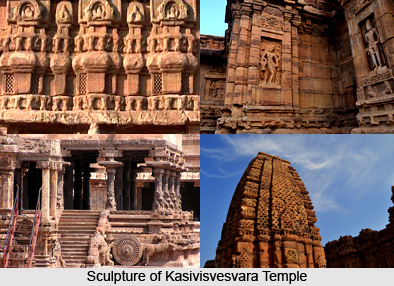 The sculpture of Kasivisvesvara Temple was one of the earliest architectural buildings to define the Karnataka dravida tradition. Kasivisvesvara Temple is a double shrined temple or `dwikuta.` There are two shrines within the temple complex. The principle shrine faces east and the presiding deity is Kasivisvesvara or Lord Shiva. The other shrine is dedicated to the sun god, Surya. The sculpture of Kasivisvesvara Temple reflects a shift in style of the Chalukyan art and architecture. In this temple the stone work is sharper and crisper. Four inner bands of scrolls decorate the southern doorway.
The lintel of the doorway is adorned with the sculpted image of Gaja-Lakshmi with elephants presented on either side. Above the lower cornice the entablature comprises smaller carved figures. The decoration of the eastern doorway lacks the grandeur of the southern one. Above the cornice the sculpted figures of a procession of men and animals are to be found. The three Hindu gods, Brahma, Vishnu and Maheshwara, are placed above the men and animals.
Inside the temple the lathe-turned pillars are sculpted with bracketed figures. These bracketed figures comprise little lions, kirthimukhas (demon faces) and scrolls. Sculptural depictions of deities were less.
Recently updated articles in Temples of India
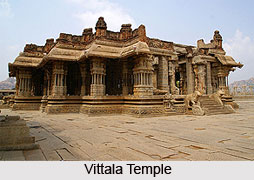
Vijaya Vittala Temple, An Architectural Masterpiece of Hampi
The Vittala Temple, located in Hampi, Karnataka, is a magnificent example of Vijayanagara architecture. Dedicated to Lord Vittala, a form of Lord Vish...
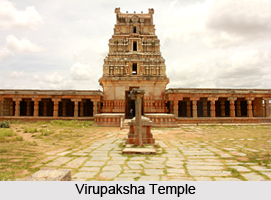
Virupaksha Temple
Virupaksha Temple, located in Hampi, Karnataka, is a historic Hindu temple dedicated to Lord Shiva. Dating back to the 7th century CE, it flourished u...
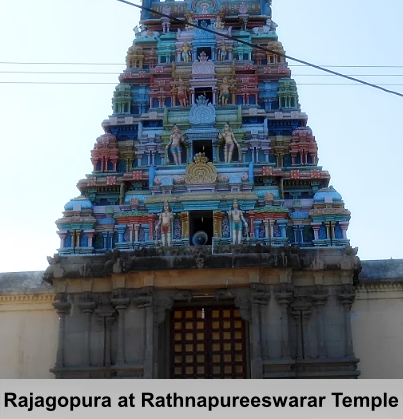
Rathnapureeswarar Temple
Rathnapureeswarar Temple in Tiruvarur district, Tamil Nadu, is a revered Shaivite shrine among the Paadal Petra Sthalams. Dedicated to Lord Shiva, it...
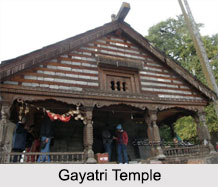
Gayatri Temple, Sirmaur
Gayatri Temple is located in Sirmaur district, Himachal Pradesh. Gayatri Temple is a sacred shrine that belongs to the medieval age.
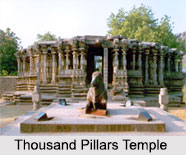
Thousand Pillars Temple
Thousand Pillars Temple, Andhra Pradesh possesses 1000 pillars built by the Kakatiya ruler Rudra Deva during 1163 AD and is adorned with beautiful scu...
Related articles in Temples of India
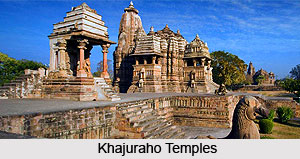
Khajuraho Temples
Khajuraho Temples are known the world over for their beauty and architectural construction. This group of temples is situated in the central Indian st...
Temples In Hampi
Temples in Hampi are the manifestations of rich religious beliefs and architectural and sculptural abundance.
Badami Cave Temples
The Badami Cave Temples, an exemplary production of Indian architecture, are situated in the town of Badami.
Temple Architecture During Rajput Period
Temple architecture during the Rajput period was inclined to the aspect of Bhakti. Rajput kings encouraged this art which is reflected in the grandeur...
Medieval Temples of India
Medieval temples of India vary from each other due to the style and architecture. The impact of the prevalent kingdom is prominent in the style of bui...