
Jajmau, an industrial suburb, is also called as Jajesmow in 19th century is a city near Kanpur in the Indian state of Uttar Pradesh. It is positioned on the banks of Ganga River. This place, it is believed, is the oldest inhabited place in the region. The primary industry of the region is the leather industry, and is home to some of the Biggest Leather tanneries in Northern India. Some of the excavations carried out suggests that it dates back to 1300-1200 BC. Earthen pottery, tools and various historical artefacts discovered by the Archaeological Survey of India are presently kept in the Kanpur Sangrahalaya
This city is located at 83 km from the city of Lucknow, near the Ganga River. The place has big market called Lal Bangla. Though Muslims form the bulk of the population at Jajmau, Hindus are also found in some areas.
Flora and Fauna of Jajmau
The place, Jajmau is home to many trees like - Mango, Orange, Guava and Banana which are mainly found in suburb of city at a nursery in Tagore Avenue. There are several nursery that offer common plants and flowers. The best place to see animals are at Allen Forest Zoo or Kanpur Zoo at Nawabganj which is 20 km from town. The zoo offers variety of animals to see.
Tourist Places in Jajmau
One of the oldest cities near Ganges River is Jajmau. Going farther down from the uphill there is the famous shrine of Hazrat Makhdoom Shah Ala based on which the areas is named as Makhdoom Nagar. Feroze Shah Tughlaq built the tomb of this famous Sufi saint in 1358. A mosque built by Kulich Khan in 1679 also stands here.
Also in the shrine there are two ancient carved inscribed stone tablets grafted in wall which are in Arabic and inform that Sultan Feroze Shah Tughlaq had visited the mausoleum and got built the shrine i.e. Mazar of Hazrat Qazi Alaulhaq Waddeen Yusuf in the year 761 Hijri, and Masjid (mosque) inside the Dargah campus in 762 Hijri. Every Thursday lots of people belonging to every religion assemble in the dargah sharif to seek blessings to succeed. Issueless and those having no male issue get benefited most.
The archaeological site of Jajmau is a huge mound situated on the banks of Ganga River, known as the Jajmau Ka Tila. Copper hoard artefacts and Painted Grey Ware (PGW) shreds were found from the surface deposits of this mound. In 1956, at the time of the construction of the national highway and Jajamu Bridge, remains of an ancient settlement were discovered here. Excavations were carried out by the Archaeological Survey of India and the Uttar Pradesh State Archaeology Department in 1956-58 and 1973-78.
Jajmau
Jajmau is located on banks of Ganga and has numerous histories attached to it.
Recently updated articles in Temples of India
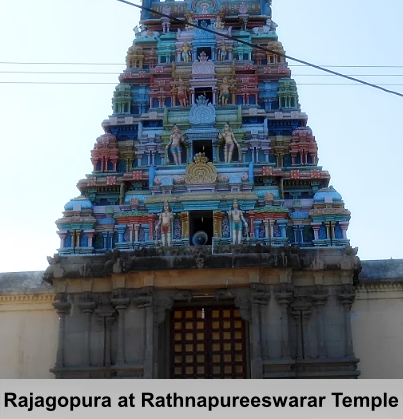
Rathnapureeswarar Temple
Rathnapureeswarar Temple in Tiruvarur district, Tamil Nadu, is a revered Shaivite shrine among the Paadal Petra Sthalams. Dedicated to Lord Shiva, it...
Gayatri Temple, Sirmaur
Gayatri Temple is located in Sirmaur district, Himachal Pradesh. Gayatri Temple is a sacred shrine that belongs to the medieval age.
Thousand Pillars Temple
Thousand Pillars Temple, Andhra Pradesh possesses 1000 pillars built by the Kakatiya ruler Rudra Deva during 1163 AD and is adorned with beautiful scu...
Triloknath Temple, Mandi District
Triloknath Temple is built in the Shikhara style of architecture, situated in Mandi, HP.

Shiv Temple at Mooni, Jammu & Kashmir
Ideally seated at the Billawar taluk of Kathua, Shiv Temple is a holy shrine.
Related articles in Temples of India
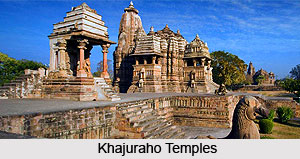
Khajuraho Temples
Khajuraho Temples are known the world over for their beauty and architectural construction. This group of temples is situated in the central Indian st...
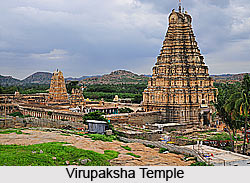
Temples In Hampi
Temples in Hampi are the manifestations of rich religious beliefs and architectural and sculptural abundance.
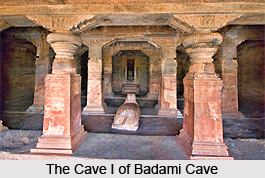
Badami Cave Temples
The Badami Cave Temples, an exemplary production of Indian architecture, are situated in the town of Badami.
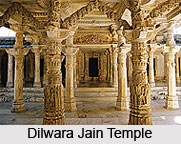
Temple Architecture During Rajput Period
Temple architecture during the Rajput period was inclined to the aspect of Bhakti. Rajput kings encouraged this art which is reflected in the grandeur...
Medieval Temples of India
Medieval temples of India vary from each other due to the style and architecture. The impact of the prevalent kingdom is prominent in the style of bui...