Indo-Pak Wars
Since 1947,there have been four Indo- Pak wars, out of which the reason for three wars was over the status of Jammu and

Share this Article:

About Indo-Pak Wars

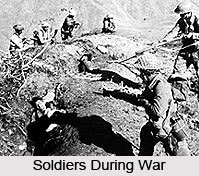
Indo-Pak WarsIndia and Pakistan are two countries in the continent of Asia, which have been at war four times in their sixty years of Independence. The main cause of the conflict has been the Kashmir region with the only exception of the war of 1971, where the conflict zone was East Pakistan.

The first War was in 1947, then in 1965, 1971 and the last one in 1999. The conflict between India and Pakistan has always been over the valley of Kashmir. Discussions over the status of Kashmir continued between the two countries following the partition in 1947, which did not have a satisfactory finishing. At that time a Hindu ruler Hari Singh administered Kashmir, which had been one of the five hundred and sixty two princely states in the British Indian empire. However, with the invasion by Pakistani tribals Hari Singh ceded his territory to India. This was not agreed by Pakistan and the First war broke out between the two countries. The war continued for one year where both nations made significant advances into each other`s territory. The war ended after a UN ceasefire.
Indo-Pak Wars
The Second War in 1965 began with Pakistani infiltration, which had a serious outburst in Jammu and Kashmir. This ignited a war between India and Pakistan.

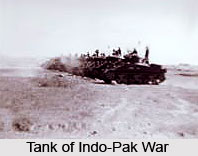
The Third war in 1971 between the two countries did not involve the status of Kashmir. It involved Indian military intervention in a civil war in Pakistan. The Eastern province of Pakistan was speaking the language of secessionism. India intervened and this took the shape of a war between India and Pakistan, which resulted in the creation of a sovereign nation of Bangladesh. Indo-Pak WarsThis war, which lasted for only a fortnight, saw the highest number of casualties that had ever occurred in an Indo- Pak war.
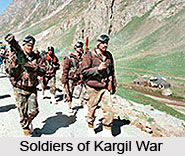
The most recent war between India and Pakistan was the Kargil War in 1999, which is often considered a small conflict because fighting was limited to a single front in Kashmir. It was the first war after the two powers had become nuclear powers.

The status of Kashmir still remains undecided and is a matter of concern in the foreign relations between the two countries as well as in international politics.
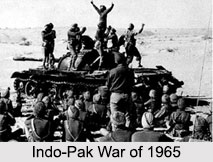

Indo Pak War 1965

Indo Pak War, 1965Indo Pak War was against the Pakistani forces in 1965. The Chhamb sector was attacked by the Pakistanis. It was the second war fought between India and Pakistan and saw an unprecedented engagement of troops in the disputed regions. This military operation was named as "Operation Riddle". Pakistan posed a grave threat to Indian forces on the ground and so, in response to urgent requests for air strikes against Pakistani armour advancing in the Chhamb-Jaurian sector. 28th Aug 1965, the day India captured Haji Pir Pass was the turning point in the Indo-Pak War of 1965 and is considered as victory day, though the war ended with a ceasefire.
Beginning of the Indo Pak War, 1965
The first inklings of the war began with the dispute over the Rann of Kutch. In April 1965, intermittent attacks and war broke out between the two nations. Pakistan attempted to annex the territory which was originally controlled by India. In June 1965, there was a ceasefire and subsequently a tribunal, following the intervention of Britain. The success of Pakistan in this combat along with the disastrous losses faced by India in the 1962 Indo-Sino War convinced Pakistani military officials that they could successfully launch a campaign to capture the state of Jammu and Kashmir.

In August, "Operation Gibraltar" launched by Pakistan was a strategy to infiltrate Jammu and Kashmir and provoke a rebellion against Indian rule. The operation, however, was unsuccessful and Indian troops retaliated by launching a full-scale attack on Pakistan on August 15th. Initially, the conflict was confined to the regions of Kashmir and Punjab. By the end of August, both countries seemed to have equal footing with Pakistan controlling the regions of Tithwal, Uri and Poonch and Indian recapturing Haji Pir Pass.

In September, Pakistan launched "Operation Grand Slam", following which the Battle of Chhamb was fought, marking a huge success for Pakistan in Akhnoor. In September, Indian troops crossed the International Border on the West, marking the official start of the war. The attack followed a three point invasion by Indian troops towards the city of Lahore. The Indian forces pushed an offensive towards Sialkot, while the Pakistani forces pushed towards Khem Karan. This battle was a turning point of the war and proved a win for India.

The Soviet Union and the U.S. grew wary of the rising conflict and pressurised the countries to sign a ceasefire. With the heavy casualties and declining ammunition along with international pressure, the former Prime Minister of India, Lal Bahadur Shastri and the President of Pakistan Ayub Khan, signed the Tashkent Agreement. The battle eventually ended in a standstill. India witnessed casualties of about 3000 soldiers, 150 tanks and nearly 70 aircrafts.


Indo- Pak War 1971

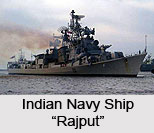
Indo- Pak War, 1971Warfare broke out between India and Pakistan on 03 Dec 1971. The dusk hours of 03 December turned out to be the beginning of a new era for the Indian Navy. On the very night the aggression began, with Pakistan bombing several airfields. Indian Navy Ships `Rajput` and `Akshay` were leaving Vishakapatnam harbour when they obtained a sonar contact. They fired several vigorous charges, and proceeded on their mission when there was no further evidence of a submarine`s presence. Thereafter a loud explosion was heard rattling windows panes off the Vishakapatnam beach. The Pakistani submarine Ghazi had come to misery.
The Indian Navy`s aircraft carrier and her aircraft played a decisive role in the Eastern theatre of the war. The Seahawk and Alize squadrons ruined chaos on vital installations in East Pakistan. Very shortly, the Indian Navy`s Eastern task force was in complete control of the sea and the surrounding air space. Pakistani troops, desperate to escape, sought to use merchant ships for military purposes. Four Pakistani tugs, the merchant ship Baquir, and a Liberian ship were hijacked and escorted to Indian ports. Many others were captured. Moonless nights were selected for the missile boat attack on Karachi harbour. The attack was one of the historic moments of the Indian Navy`s victory and remains engraved in naval memory. The only Indian ship lost during the 1971 operations was the frigate INS Khukri. Lieutenant General Niazi signed the Instrument of Surrender on 16 December 1971.

Indo- Pak War, 1971 Role of Indian Air force
For some weeks in November, both Indian and Pakistan governments protested violations of national airspace along the western border, but above ground conflict between the respective air arms began in deep on 22 November, above full-scale warfare between India and Pakistan by 12 days. At 14:49 hours, four Pakistani Sabres strafed Indian and Mukti Bahini positions in the Chowgacha MOR area, and 10 minutes later, while occupied on a third strafing run, four Gnats from No. 22 Squadron, a detachment of which was operating from Dum Dum Airport, Calcutta, intercepted the Sabres.

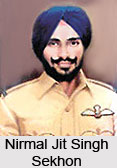
The IAF had good reason for satisfaction with its showing during the December 1971 conflict. Although Pakistan had initiated the war with preventive air strikes against major forward air bases, the IAF rapidly gained the idea and had thereafter dominated the skies over both fronts. The December 1971 war also meant the gaining of India`s highest award for bravery to the IAF. Flying Officer Nirmal Jit Singh Sekhon, flying Gnats with No. 18 Squadron from Srinagar, was posthumously awarded the Param Vir Chakra.


Share this Article:

More Articles in History of India


History of Uttar Pradesh
The state was the heart of Mahabharata war and the history of Uttar Pradesh is very much the history of India. The place finds its mentions in Hindu epics Ramayana and Mahabharata.
History Of Archaeology In India
History of archaeology in India contributes a lot to define the past history and the social life of India.
Mughal Architecture during Babur
Mughal architecture during Babur marked the foundation of a new architectural era in India, blending Timurid, Persian, and local influences. His reign emphasized garden design, notably the Charbagh layout, and modest yet elegant structures. As the first Mughal emperor in India who introduced this architecture during 16th century Babur’s creations reflected symmetry, functionality, and a deep appreciation for nature.
Princely State of Patdi
The Princely State of Patdi was one of the many princely states under the British Raj, ruled by local Kadva Patidar leaders under indirect British control. Known for its strategic location near the Little Rann of Kutch, Patdi played an important role in salt production and regional trade. Princely State of Patdi or Patri was incorporated as a part of the Baroda Agency, which was a sub division of Western India States Agency.
Architecture during Sayyid and Lodi Dynasty
Architectures during the Sayyid and Lodi dynasty were mainly the tombs and monuments for the dead rulers. It were carefully designed and meticulously constructed.
Brahmanical Sources of Ancient History
Brahmanical Sources of ancient history are contained in the Vedas and they constitute one of the most important literary sources of information about ancient India.
Female Education In British India
The over brimming enthusiasm among zealous Hindu reformers welcomed female education in British India.
Revenue System of Mauryan Empire
Revenue system of Mauryan Empire can be divided into eight categories. The principal revenue of the state was the land revenue, taxes from traders, artisans and professional taxes were also collected.
Mughal Architecture During Jahangir
Mughal architecture during Jahangir`s period was relative dull in comparison to that of Akbar dynasty.
Princely State of Satlasna
Princely State of Satlasna was amongst the former native states of India that was appointed as one of the Indian princely states during the early 19th century.
Coins of Chola Empire
Coins of Chola Empire were issued in gold, silver and copper and carried the Chola emblem.
Social Life during the Pala Period
Religious toleration and simple living were the characteristics of social life during the Pala period.
Coins of the Chalukya Dynasty
Coins of the Chalukya Dynasty was reintroduced in the South India after a brief break of coinage less period of nearly three century. Chalukyas issued coins only in gold and they exhibit a brilliant artistic skill of the engraver.
Costumes of Indus Valley Civilisation
Costumes of Indus valley Civilization have been considered as the basis for Indian clothes. Sophisticated ornaments and make up were used during that age.
Development of Science under Gupta Empire
Development of Science under Gupta Empire was progressive and it had attained considerable perfection. Mathematics, astronomy, medicine, chemistry, physics and metallurgy were the most prominent of the sciences at that time.
Culture under Delhi Sultanate
Culture under Delhi Sultanate had enduring aspects to it. It included the society, the religious condition, literature and art and architecture of that period.
Princely State of Hapa
Princely State of Hapa was incorporated as a part of the Baroda Agency, which was under the administrative control of the Western India States Agency.
Economy Under Chola Dynasty
Economy under Chola dynasty was strong and well developed. The economic life of the people of the Chola Kingdom was well balanced with their social life.
Coins of Khilji Dynasty
Coins of Khilji Dynasty had an influential feature that was followed by the other dynasties.
Religion During Mauryan Dynasty
Religion during Mauryan dynasty became a considerable episode in Indian history with an esteemed lineage of rulers.