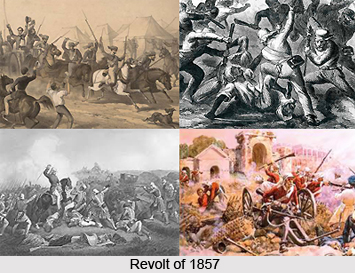
 From the end of the year 1857, the British East India Company had begun to expand the power again. Lucknow was retaken in March 1858. On 8 July 1858, a peace treaty was signed and the rebellion in the Lucknow ended. The last rebels were defeated in Gwalior State on 20 June 1858. By 1859, rebel leaders Bakht Khan and Nana Sahib had either been slain or had fled.
The rebels` murder of women, children and wounded British soldiers at Kanpur, and the subsequent printing of the events in the British newspapers, left many British soldiers seeking revenge. Most of the British press, outraged by the reports of rape and the killings of civilians and wounded British soldiers, did not advocate clemency of any kind. Governor General Canning ordered moderation in dealing with native sensibilities and earned the scornful sobriquet "Clemency Canning" from the press and later parts of the British public.
The ultimate effect concluded was that, British rule was not based on moral superiority but on armed forces, ruthlessly handled. The immediate consequence of the Sepoy mutiny was reorganisation of the military. Europeans troops were proportionally kept at safely a high level. The mutiny made English realise the extent of dissatisfaction among Indians thus leading to transfer of power and rule from hands of East India Company to the British government. In 1858, the Queen issued a proclamation saying that all were her subjects and that there would be no discrimination, appointments would be made on the basis of merit, and that there would be no interference in religious matters.
The Sepoy Mutiny was, however, an epoch making event in the history of the Indian Subcontinent, and hence, by their non involvement in it, they were not left immune of its far reaching consequences. Rather the Muslim community of Bengal, who had so far remained aloof from modernist trends, after the passing of Mutiny, began to take the educational modernism seriously, and Muslim boys started going to the modern school as their Hindu counterpart started doing so over half a century age.