 On 29th October 1919, the Legislative Council of the Government of India named an investigatory committee to be led by Lord William Hunter (1865-1957) and assisted by five Englishmen and four Indians. This was named as the Hunter Committee. The Hunter Committee was charged with the examination of the violence which had occurred in Amritsar and elsewhere in Punjab, in consequence of the catastrophic Jalianwalabagh Amritsar massacre.
Execution of Hunter Committee
In November, the Hunter Committee convened in Delhi and then took further testimony in Ahmedabad, Bombay and Lahore over a period of forty-six days. On 14th November, the Indian National Congress appointed a Punjab subcommittee w Mahatma Gandhi at its head. He was to conduct his own investigation of events in Punjab and at Amritsar in April 1919. As a counter measure to the Hunter Committee, its works also possessed some shortcomings.
Revelation of Evidence in Hunter Committee
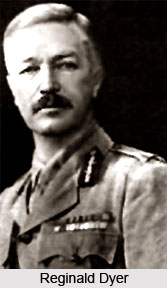
On 19th November, Brigadier-General Reginald Dyer appeared before the Hunter Committee to produce evidence. He testified that he had planned to fire in advance of arrival at the gardens and not only for the purpose of dispersing the crowd, but to produce a moral impact in order to prevent the spread of mutiny. He indicated that if possible he would have used machine guns and armoured cars. Finally, he acknowledged that he had left the wounded unattended. On 8th March 1920, the Hunter Committee`s majority reprimanded Brigadier-General Dyer in its final report for his mistaken concept of duty. Likewise, several other civil and military officials of Punjab received censor or early retirement.
Publication of Report of Hunter Committee
On 26th May, the Hunter Report was published. It concluded that the Indian gathering was not the result of a pre-arranged conspiracy. It asserted that the rioting in Amritsar had turned into rebellion. The declaration of martial law was viewed as justifiable and that its application was, in the main, not oppressive. The report concluded that Brigadier-General Dyer was justified in firing on the mob, though notice should have been given and its duration shortened. The Indian members of the Hunter Committee issued a minority report. It questioned the need for martial law to have been used and disputed the level of severity of the Indian disturbances.
Compensation to the Dependents of Victims
After the Hunter Committee completed its work, the Government of India provided 15,000 rupees for dependents of those killed at Jalianwala Bagh living in Amritsar and with 12,000 rupees for those killed living in outlying villages.
Brigadier-General Dyer"s Cancellation of Employment
On 8th July, the House of Commons debated the Dyer issue. It supported the decision of the Army Council that no further employment should be offered to Brigadier-General Dyer. So, House of Lords concorded to this decision through the course of debates on July 19 and 20 in 1920. In the same year, in London, The Morning Post raised a public fund of 26,000 pounds for Brigadier-General Dyer calling him "The Saviour of India". One-third of the total was collected from contributors located in India.