 History of Indian administration traces its earliest known form to the monarchical system. Since the earliest times, the monarchical system was used in public administration in the execution of governmental functions. In the long history of Indian administration, a number of administrative organisations rose and fell. However, there are two basic features of the Indian administrative system which continued right down the ages- the importance of the villages as a primary unit and co-ordination between the two opposite trends of centralisation and decentralisation. To put it in a nutshell the present administration is a developed form of the old administrative system.
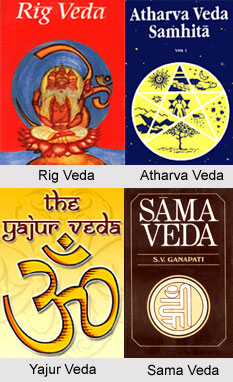
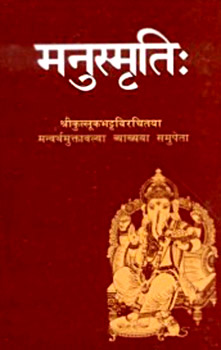
Abundant sources are available to get a clear picture of the history of Indian administrative system. A lot of information regarding the organisation and functions of Indian administration is obtained from Vedic literature, Buddhist treatises, Jain literatures, Dharmasastras, Indian Puranas, Ramayana, Mahabharata, Manu Smriti, Sukra Niti and Arthashastra.
The powers of administering the states were centralised in the hands of the king during the ancient period in India. During the Vedic period the king was assisted in his work by many officers. He was surrounded by a circle of his friends and principal officers. There is a reference regarding this in the two epics of Ramayana and Mahabharata. A similar reference is also to be found in Manu Smriti and Sukra Niti. In Kautilya`s Arthashastra is obtained a detailed account about the offices of the state for the first time in the history of India.
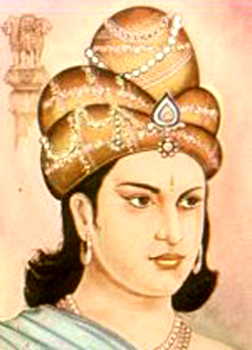 By this time administrative system was fully developed. Thus the development of the ancient Indian administration had reached its peak during the reigns of Chandragupta Maurya and Ashoka. Mauryan administrative institutions were further developed during the period of the Guptas. Their period witnessed multifarious activities in the field of excellent administration.
The decentralisation process had started in ancient India. As a result of this, empires were divided into provinces, provinces into districts and districts into urban and rural centres from administrative angle. During the ancient period state administration was divided into numerous departments. In Vedic times the number of such departments was limited. Gradually, the number of such departments increased and their jurisdiction extended. For this we get many references can be obtained from Vedic literatures and subsequent sources. In ancient Indian administration there is also found a description of the principles of public administration. Thus, the principle of hierarchy had been given a practical shape and seeds of co-ordination were present between different departments. Such a full-fledged administrative system existed in the reigns of Chandragupta Maurya and Ashoka. Great emphasis was placed on observation and inspection along with the principle of hierarchy.
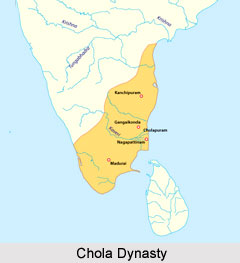
Like the present day personnel system mention is made in ancient administration system of the recruitment, qualifications, salaries, leave, pension etc., of government employees. At that time merit, efficiency and being a member of the elite group were given special emphasis. During the time there existed the organisation of a central office where all the government records were kept. This was like the secretariat of the government, in which various government functionaries, including officers worked. Mention of such an office is found in Mauryan times and Chola kingdom. The king appointed personal secretary as well. In brief, the main function of the central office was the control and inspection of provincial, regional and local government.
In brief, it can be said that the present Indian administration is the result of a rich legacy and continuity. It is true to say that the steps of its evolution are someway or the other connected with the past. However, the existing administrative system in India may be said to be the contribution of the British government.
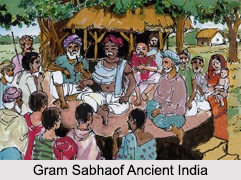 In the Indian Administrative System in ancient period, different systems of administration are found to have existed at different periods. The earliest reference can be traced to the
 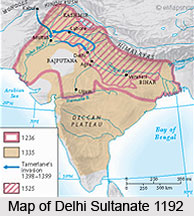 Indian administrative system in Muslim period brought about a change in the indigenous system of administration. The Muslim rule in India was established and consolidated by the
 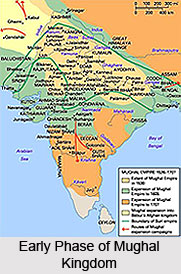 The Sultan had five main sources of revenue. They were as follows:
 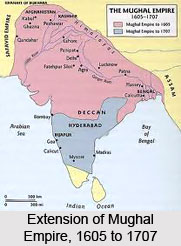 The empire was divided into three varieties of provinces. The first category consisted of the Iqtar which were under the command of Muqti. The second category was composed of newly conquered provinces under military Governors known as Walis. The last variety comprised of the suppressed and subdued Hindu kingdoms. The Delhi Sultanate had 23 provinces during the apex of its glory under