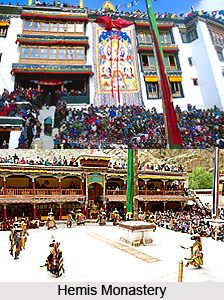
 Hemis Monastery also known as Chang Chub Sam Ling or `the lone place of the compassionate person` is the popular and noted Tibetan Buddhist monastery or gompa of the Drukpa Lineage, located in Hemis, Ladakh. It falls within the Indian state of Jammu and Kashmir. It is situated at a distance of 40km from Leh which is the second largest district in the country. Hemis Monastery is regarded as the largest monastic institution in Ladakh district. It has more than 200 branches with more than 1,000 monks in the Himalayan region.
History of Hemis Monastery
The Hemis monastery was founded in the year 1630 by the first incarnation of Stagsang Raspa Nawang Gyatso and was built by Palden Sara. It was re-established in the year 1672 by the Ladakhi king Sengge Namgyal. Hemis Monastery is one of the highest settlements of the world.
Architecture of Hemis Monastery
Hemis Monastery is designed in Tibetan style architecture. It is divided into two parts. One part is used as an assembly hall known as Dukhang and the other part is the temple which is called Tshogs-khang.
 The Dukhang possesses the throne of the Rimpoche and offers seats for the lamas. The walls of the Dukhang are adorned with paintings of Sakyamuni or the historical Buddha. It also features paintings of other Buddha figures and Tantric deities like Hevajra and Samvara.
While the Tshogs-khang houses a giant gilded image of the Sakyamuni Buddha. The image is embellished with various semi-precious stones. Right in front of this image is a lacquered wood throne whereas on the right side is a stock of Buddhist canonical volumes.
The monastery has a huge courtyard used for various public functions. It also includes a nunnery that is situated below the monastery which is known as Chomoling (abode of nuns).
Hemis Festival
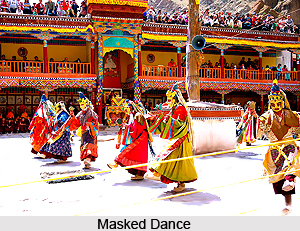
Hemis Monastery is popular for its annual festival called the Hemis festival which attracts lots of tourist from across the world. This festival is organised to celebrate the victory of Guru Padmasmbhava over the evil forces. It is held on the tenth and eleventh day of fifth Tibetan month as the birthday of Padmasambhava, the founder of Tibetan Buddhism. The festival showcases masked dance with themes showing fight against evil and infidel and consequent win of good and Buddhism.
Once every twelve year, the `Thangka` of Hemis Monastery is displayed which is said to give good health and spiritual strength. The Thangka is decorated with various semi precious stones and depicts Guru Padmasambhava. The last unfurling took place in 2004.