
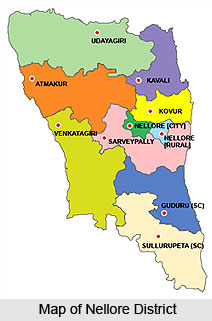
 Nellore or Amarajeevi Potti Sri Ramulu Nellore District is one of the 23 districts of Andhra Pradesh. The administrative head of the district is the Nellore city. The district is located towards the south-eastern part of Andhra Pradesh. The district is famous for its paddy fields and hence had got its name from the word `nelli` the meaning of which is paddy. The district was called Nellore till June 2008 but soon after that the district got the name of Amarajeevi Potti Sri Ramulu Nellore District after one of the famous freedom fighters of the district. For the sake of proper administration the district has been divided into 46 mandals under 3 Revenue Divisions.
Nellore District
Nellore District, located in the south-eastern part of Andhra Pradesh, is renowned for its paddy fields.
Introduction
Nellore or Amarajeevi Potti Sri Ramulu Nellore District is one of the 23 districts of Andhra Pradesh. The administrative head of the district is the Nellore city. The district is located towards the south-eastern part of Andhra Pradesh. The district is famous for its paddy fields and hence had got its name from the word `nelli` the meaning of which is paddy. The district was called Nellore till June 2008 but soon after that the district got the name of Amarajeevi Potti Sri Ramulu Nellore District after one of the famous freedom fighters of the district. For the sake of proper administration the district has been divided into 46 mandals under 3 Revenue Divisions.History of Nellore District
Nellore was known by the name of Vikrama Simhapuri till 13th century.
As far as history of the district is concerned, the district had an important role during the emergence of Telugu language and the formation of the state of Andhra Pradesh. It had been under the rule of Maurya Dynasty, Satavahana Kings, Kakatiyas, Pallavas, Cholas, Telugucholas, Pandyas and other dynasties.
Before the district was taken over the British it was ruled by the Nawabs. During the British rule the district was at peace and did not undergo any major political changes.
The period after Indian independence brought about major political changes in the district. For instance till 1st October 1953, the district was part of the Madras (now Chennai) state but on 1st November, 1956 when the states were recognised on the basis of linguistic differences, the state of Andhra Pradesh came into existence. During that time Nellore had played an important role in the formation of the state and Potti Sriramulu, a Telugu patriot and activist had given a lot of effort to set up Andhra Pradesh.
Before the district was taken over the British it was ruled by the Nawabs. During the British rule the district was at peace and did not undergo any major political changes.
The period after Indian independence brought about major political changes in the district. For instance till 1st October 1953, the district was part of the Madras (now Chennai) state but on 1st November, 1956 when the states were recognised on the basis of linguistic differences, the state of Andhra Pradesh came into existence. During that time Nellore had played an important role in the formation of the state and Potti Sriramulu, a Telugu patriot and activist had given a lot of effort to set up Andhra Pradesh.
Geography of Nellore District
 Nellore district is one of the 9 coastal districts of Andhra Pradesh and it is the Southern most one. The district lies between 13-30` and 15-6` of the Northern latitude and 70-5` and 80-15` of the Eastern Longitude and extending over an area of 13076 Sq.Kms, accounting for 4.75% of the total area of the state. It is bounded on the north by Prakasm District, on the East by Bay of Bengal on the South by Chittoor District and Chengalpattu District of Tamil Nadu, and on the West by Veligonda Hills which separate it from Kadapa District. The district is famous for high quality paddy and so got its name from "Nelli", an equivalent word for paddy in Tamil.
The district is broadly classified into 2 natural divisions from North to South. The eastern Half of the District adjoins the coastal belt and is fairly fertile and the western half of the district has low elevation towards the west with large track of low shrub jungles diversified with rocky will stony plains.
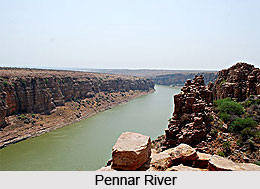
The principal rivers flowing through the Nellore district are the Pennar River Gundlakamma River and the Swarnamakhi River. They are not navigable and are mainly used for irrigation purposes. Besides this there are a number of smaller streams like the Kandaleru and Boggeru.
The climate of Nellore town is generally dry and salubrious. April and May are the hottest months and the hot winds generally last till the end of the June. As the Bay of Bengal is at a distance of 15 miles from the city, the sea breeze renders the climate of the city moderate both in winter and in summer. The hottest day falls in May with a shift to June during some years. The coolest day falls between the months of December and February. The southwest Monsoon is not very important for this town. Winds are from west and North - West during this season. This town and region depends mainly on the North - East monsoon. The North - East monsoon occurs along the East Coast of India during the month of October and continues till December. This period gives about 60% annual rainfall.
About one half of the total area is cultivated and the rest is waste land because it is rocky land, sandy coast line or covered with scrub jungles. The total Geographical area of the District is 13.16 lakh Hectares. Of this 41.3% alone is erable and 18.7% is forest area. The rest is distributed among Barren and Uncultivable Land (13.8%) and Land put into Non Agricultural uses (16.5%) out of the erable area. The net area sown forms 23.8% while cultivable waste and fallow (current and old) lands Constitute 11%.
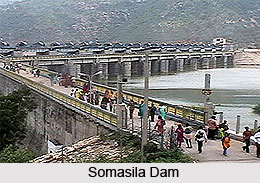 Nellore is famous for its high quality rice production and the district is particularly renowned for a particular variety of paddy, "Molagolukulu". The main crops grown are paddy and sugarcane. Aqua culture is also taken up in the district. A breed of sheep named "Jodipi" is reared by the farmers and is famous for its high quality meat. Somasila Dam and Gandipalem Reservoir supply irrigation water to many villages in the district. Also Telugu Ganga Project supports agriculture in the dry lands of the district.
The area is endowed with a number of major and minor minerals, such as mica, silica etc. It is rich in particular kind of flint called quartzite.
Administratively the District is divided into 46 Mandals, covering three Revenue Divisions with Head Quarters at Nellore, Gudur and Kavali. 46 Revenue Mandals with an equal number of Mandal Parishads are found existing in the district. There are three Municipalities namely Nellore, Gudur and Kavali and in addition there are two Census Towns i.e. Kovurpalli, Venkatagiri. The district has 11 State Assembly constituencies.
Nellore district has off late emerged as an industrial hub. Formerly the handloom sector industry and a couple of industries were located in the district. Venkatagiri and Patur are important handloom centres noted for their traditional hand crafted fine cotton and silk sarees, embroidered with pure zari.
The Sriharikota high altitude range (SHAR) of the Indian Space Research Organisation has emerged as a leading space port in the world and has successfully entered the space launch business to its credit.
Demography of Nellore District
Recorded by the census of 2001, the district has a population of 2,668,564. Most of the people in the area are rural based. The density of population in the district is 203 persons per square kilometer. The number of literates in the district is 1546252 which equals to almost 58 percent of the total population.
Culture of Nellore District
As most of the people in Nellore dwell in villages, their way of life is more traditional in nature. Although the males of the district are seen in pants and shirts, more number of male prefers dhotis and lungis. The women, on the other hand, limit themselves to sarees.
Telugu is the most common language that is spoken in Nellore district. Besides Telugu the other languages that are spoken in the region are Tamil. Hence it can be said that the people of Nellore district are more traditional in nature and love to adhere to their roots.
As far as art and literature is concerned, Nellore has produced many great poets and literary personalities of fame. The major form of entertainment in the district is movies. People in the region love watching movies of various kinds.
Telugu is the most common language that is spoken in Nellore district. Besides Telugu the other languages that are spoken in the region are Tamil. Hence it can be said that the people of Nellore district are more traditional in nature and love to adhere to their roots.
As far as art and literature is concerned, Nellore has produced many great poets and literary personalities of fame. The major form of entertainment in the district is movies. People in the region love watching movies of various kinds.
Economy of Nellore District
The factors which have aided the economy of Nellore to flourish are proximity to the sea and fertile land towards the eastern part of the district. The district has a cultivable area equal to 41.3 percent. The predominant occupation of the people of Nellore is agriculture and the crops which are most commonly grown in the district are Paddy, Jowar, Bajra along with Tobacco, Chillies, Groundnut and sugarcane. Based on these crops a number of agro based industries have come up in the district like rice bran oil plants, rice and paraboiled rice mills and sugar factories.
Aqua culture in the district is also of prime importance. It includes prawn and fish culture. Many people in the district depend on aqua culture for their subsistence.
The handloom sector of the district is also a major small scale industry of the district and a large number of people depend on it for living. Some of the important industries of the region are Mica Mines and thermal power plant. The Krishnapatnam port which is located 20 kilometers from the district serves as a major center for economic activity of the district.
Aqua culture in the district is also of prime importance. It includes prawn and fish culture. Many people in the district depend on aqua culture for their subsistence.
The handloom sector of the district is also a major small scale industry of the district and a large number of people depend on it for living. Some of the important industries of the region are Mica Mines and thermal power plant. The Krishnapatnam port which is located 20 kilometers from the district serves as a major center for economic activity of the district.
Education of Nellore District<
Nellore district has a number of schools, degree colleges and also engineering colleges. Even many medical colleges which include dental colleges are also present in the region. In fact the district has a heritage of being an important educational center right from the early dates which dates back to the period of formation of Andhra Pradesh.
Tourism In Nellore District
Nellore has some awesome tourist spots which have immensely contributed to the tourism potential of the district. The region has a combination of religion, nature and history in its expanse of tourism. Some of the famous temples of the region are Ranganayaka Temple, Jonnawada, Penchalakona and a lot more. The places in Nellore district which are a treat for the eyes of a traveller are Somasila Dam, Kandaleru Dam, Pulicat Lake and the Nelapattu Bird Sanctuary. The Udaygiri fort which is at a distance of 100 kilometers from Nellore stands as a historical testimony of the region.
Pilgrimage Tourism In Nellore District :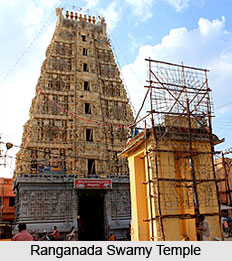 Pilgrimage tourism in Nellore District is a packed ride as a number of places of religious significance are found dotting the entire region. A number of ancient temples as well as a venerated Dargah are found among the various places of tourism in Nellore district.
Sri Talapagiri Ranaganatha Swamy Temple is located in Nellore city at the banks of the river Pennar and is about 5kms away from Nellore Bus stand. Ranganada Swamy Temple in Nellore is more than 600years old. It is marked by a huge 29 Mts tall Galigopuram lying on the east, with seven gold kalasams and is resplendent in its architectural splendour. On the south lies the Sri Ranganayaki Lakshmi Devi temple and beautiful mirror dias, west is sacred Pennar River and north is the Sri Andal Ammavari temple. The annual Rath Yathra of the God is a much awaited ritual in Nellore. A grand festival called the Brahmotsavam is celebrated here every year during the month of March-April.
The destination is also well connected for Railway station at Nellore. The famous Sri Mallikarjuna Swamy Kamakhsi Tai temple is located on the bank of River Pennar, 12 Km from Nellore. It attracts many pilgrims. The Village is part of Buchireddipalem Mandal. This temple was constructed in the year 1150. The goddess Kamakshi is believed to be an incarnation of Shakti. A `Sri Chakram` was installed here by Sri Jagadguru Sankaracharya. Pilgrims take a holy dip in the lake known as Kachpateertham, near the temple, which is believed to wash away their bad karma. There is bus service from Nellore to Jonnawada. For the convenience of the pilgrims there are choultries of the Devastanam and TTD and also private choultries. Every year, during the celebration of Brahmotsavam in the month of Vaisaka, lakhs of devotees throng the holy centre to worship the goddess to attain salvation. A bathing ghat has been built on the bank of the Pennar, for the convenience of the pilgrims.
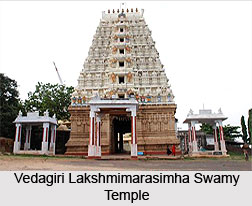 The Vedagiri Lakshmimarasimha Swamy temple located on the summit of the Narsimhakonda, came into being nearly 500 years ago. It was built by the Pallava King Narsimha Varma in the ninth century. Legend goes to show that the sage Kasyapa established the temple on the bank of the Pinakini, and the seven sages (Saptarishis) performed. The seven (Koneru) tanks were renovated with Mandapas on the hilltop. The holy place lies 15Km. away from Nellore, on the southern bank of the river Pinakini. Every year "Brahmotsavams" are celebrated here in the month of May. Jonnawada is to the north of the river.
A very ancient sacred place of pilgrimage located here is the Penchalakona. Lord Narasimha manifested Himself here as a huge of rock in "Yoga mudraand" hence it acquired the name of "Penusila" (huge rock) and in course of time became famous as "Penchalakona". The Lord here goes by the name of Somasila Narasimhaswamy and has become one of the Nava Narasimhas (nine manifestations). The temple is believed to have been renovated in the 10th century. Narasimha Jayanthi is celebrated every year in the month of May and devotees flock especially on Saturday. The Devastanam choultries provide facilities to the pilgrims and there is bus service too.
The Alghu Malluru Krishna Swamy temple is situated in the Mannarpoluru village, dating back to the time of the Telegu Chola rulers. The village is located at a distance of 103 km from Nellore. It was built in the 17th century by Bangaru Yadama Nayudu, the living place of mallayodas or wrestlers. According to a legend, it was here that Lord Krishna defeated Jambavantha in a duel and married his daughter Jambavati. Apart from the idol of Satyabhama and Jambavati, the two consorts of Lord Krishna, the idol of Jambavantha creating the illusion of shedding tears is an amazing sight.
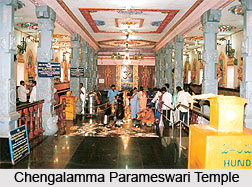 The Chengalamma Parameswari temple, in the Village of Sullurupet, lies 100km away from Nellore on the banks of the Kanlangi River. The temple was built sometime in the fourth and fifth centuries. The Village goddess who was called Tankali gained reputation as Sullurupet Chengalamma Thalli and her idol in the temple faces the sea. Devotees from different parts of the State visit the place and fulfil their vows, referring to the goddess as the mother who grants boons liberally. The naturally-formed image of the goddess adorning the hanging roots (vooda) of the banyan tree is really an awe-inspiring spectacle.
The Temple of Sri Mulasthaneswara Swamy was built, 1400 years ago, to the west of Nellore. As the Lord manifested Himself under a "Nelli" tree, a temple was built there itself. Manumasidhi rulers constructed the "Raja Gopuram" (Royal tower of the temple).
The Sri Subramanya Swamy Temple was constructed by the rulers of the Chola dynasty of the 10th and 11th Centuries. The "Vasantala Mandapam" here, with a total of 64 pillars, is a shining example of sculpture of excellence. It lies in the Malla village which is 96 km away from Nellore. The "Vasantala Mandapam" is strikingly sculpted in the form of a chariot drawn by a pair of horses. Episodes and events from the epic of Ramayana and Siva puranam have been sculpted splendidly on the pillars of the Mandapam. The "Veera Kallulu" of the veera saivas are also found here. Many lovely sculptures adorn the sides and lower part of the Mandapam.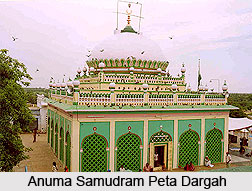 The temples of the consorts of Subramanyaswamy - Sri Valli, Her entourage and Devaseba lie in the inner Prakaram (compound wall) and opposite the "Dwaram" (entrance) of Subraanyaswami Idol.
The Bhagavan Sri Venkaiahswamy Mandiram is a popular pilgrimage site in the district. It is located at about 15 Km. from Nellore City, and is a part of the Venkatachalam Mandal. A renowned sage called Venkaiah lived here sometime during the middle of the 20th century and got Mahasamadhi at this place. People worshiped him as Baghavan Venkaiah Swamy. Every Saturday there is a gathering at the temple to worship the Swamy. Similarly, during August every year "Aradhana" or an annual function is celebrated where a large number of devotees gather.
The Anuma Samudram Peta Dargah, also known as the A.S. Peta, is the site of a big Dargah located about 60 km from Nellore city. It is an ancient Dargah known as the Khwaja Rahamutalla Dargah, and is visited and revered by both Hindus and Muslims alike. Devotees from different parts of the country come to the Dargah to offer their respects. The ornamental work of the dome is worth seeing. Every year Urusu is celebrated here and is attended by a large number of devotees.
The tomb of Syed karimulla Khadiri lies in Kasumuru village, which is situated on the west of Venkatachalam Mandal 35 km.away from Nellore. Devotees refer to him as kasumuru Masthanayya, a great `Fakir` supposed to have belonged to 18th century. Every year, on the 26th day of the auspicious period of "kabbiul-aval", "Urusu" (fair) is celebrated with fervour. One can reach the place by bus from Nellore.
Thus mentioned are the various places of pilgrimage tourism available to the travellers visiting Nellore district.
Leisure Tourism In Nellore District :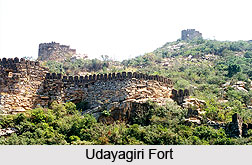 Leisure tourism in Nellore district involves visiting a number of different places of varied interest. There are a number of places of historical interest, parks and places of natural beauty which encompass the entire gamut of pleasure tourism in Nellore district.
Udayagiri Fort, located about 100 kms from Nellore, stands majestic at a height of 3079 feet. The entire area boasts of great natural beauty. The hill side has lush vegetation and beautiful waterfalls. The ruined fort is a major attraction for tourists. The access to the fort is only by means of steps as there is no road to the fort. The ruins of 365 Temples found in the Town reflect the sculpture and architecture of various periods. Other structures include Chinna Masjid and Pedda Masjid. Every year the Sandal Festival is celebrated on the 26th of Rabi-UI-Aval month. The Hill of Udayagiri is also popularly known a Sanjeevi Hills as there are so many medicinal plants on the hill.
The ruins of Prabhagiripatnam lie on the Podalakuru Mohammadapuram at a distance of 45km away from Nellore. The ruins of the temple of Lord Shiva and Perumallaswamy, which belonged to 1512 A.D., remind the tourists of their former glory and excellence. An inscription denoting the royal gift (1512AD) of the Vijayanagara king Venkataryalu, is gathering dust at a place close to the temple of Perumallaswamy. This inscription enjoins that the income derived from the agricultural lands of the neighbourhood should be spent for the upkeep of the temple. The sculptural and artistic pieces strewn around here have been recognised as the idols of Veerabhadraswamy, and Shanmugaswamy is that six heads, instead of being in a row are sculpted differently -there in the front and three in the rear.
 Somasila Dam is one of the biggest Irrigation Projects in the District, and a place of great natural beauty being located as it is in the Eastern Ghat mountain range. It is constructed across River Pennar and is situated near Somasila Village of Ananthasagaram Mandal, Nellore District. There is a temple in the village called Someswara Temple said to be blessed by the Lord Siva on the other side of River Pennar an Ashram is situated.
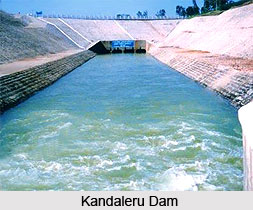
Kandaleru Dam is located about 60 kms away form Nellore. The destination is also well connected for State Highway from Nellore to Kadapa via Rapur and Rajampet. The dam is the world`s biggest earth dam with 68 TMC water storage spread over 11 kilometres and it supplies drinking water to Tamil Nadu. It was constructed across the Kandaleru River. The site of the dam is a picturesque spot with Hillocks and Forest around. A Government Guest house has been constructed with 4 suites, Meeting hall and a Dining hall with kitchen for official purposes.
Pulicat Lake is the second largest brackish water lagoon in India spread over the two States of Andhra Pradesh and Tamil Nadu adjacent to the Bay of Bengal. It extends over six hundred squire kilometres in Andhra Pradesh covering the five Mandals of Tada, Sullurupet, Doravari Satram, Chittamur, and Dugarajupatnam of Nellore District. It is a bird watchers paradise. Water birds and other birds like Flamingoes, Painted storks, Egrets, Grey Pelican, Grey herons, pintails, Black winged stilts, Shovelers, Terns etc., Visit this lake. These migratory birds visit during winter as the lake offers food and protection from predators. The lake is a notified bird sanctuary.
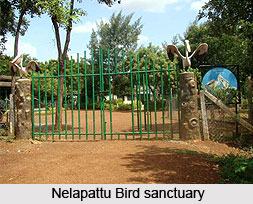 Nelapattu bird sanctuary is one of the largest Pelicanary in South East Asia with more than 1500 pelicans and other birds visiting every year. The Sanctuary is very near to the National High way -5.The big fresh water tank of Nelapattu Bird Sanctuary and the presence of good number of "Barringtonia Acutangula" trees make this sanctuary a haven for a broad spectrum of Bird species for both breeding and roosting purposes. Many winter migratory birds from Siberian countries have been visiting this sanctuary since a long time. It is a breeding ground for some of the rare and endangered species like Grey Pelicans, Open-billed storks, little cormorants, Spoonbills etc. There is an Environmental Education Centre in the Sanctuary with a Museum, Library and Auditorium with audio Visual Equipment for screen slides, Films etc., on wild life watch towers which are also available to watch the birds at the Sanctuary.
One of the major attractions of Nellore district is at Sriharikota Island. It is situated on the National Highway No.5 and a forest -like area to the east of Sullurupet in between Pulicat Lake and Bay of Bengal. Under the stewardship of Dr. Vikram Sarabhai the Indian Space Research Organisation of rocket lauching space Centre was established at Sriharikota in 1968. The launching of a missile helps streamlining the study of tele-communications, TV, lights and environmental relationships.
Nellore District has 165k.m coastal line. A number of different beaches are found dotting the district like Krishnapatnam, Ramayapatnam, Ramatheertham, Kodur, Mypadu, Thupilapalem etc., are some of the beaches.
These are therefore the various places of tourist interest in Nellore district which are well worth a visit.
Pilgrimage Tourism In Nellore District :
Pilgrimage tourism in Nellore District is a packed ride as a number of places of religious significance are found dotting the entire region. A number of ancient temples as well as a venerated Dargah are found among the various places of tourism in Nellore district.
Sri Talapagiri Ranaganatha Swamy Temple is located in Nellore city at the banks of the river Pennar and is about 5kms away from Nellore Bus stand. Ranganada Swamy Temple in Nellore is more than 600years old. It is marked by a huge 29 Mts tall Galigopuram lying on the east, with seven gold kalasams and is resplendent in its architectural splendour. On the south lies the Sri Ranganayaki Lakshmi Devi temple and beautiful mirror dias, west is sacred Pennar River and north is the Sri Andal Ammavari temple. The annual Rath Yathra of the God is a much awaited ritual in Nellore. A grand festival called the Brahmotsavam is celebrated here every year during the month of March-April.
The destination is also well connected for Railway station at Nellore. The famous Sri Mallikarjuna Swamy Kamakhsi Tai temple is located on the bank of River Pennar, 12 Km from Nellore. It attracts many pilgrims. The Village is part of Buchireddipalem Mandal. This temple was constructed in the year 1150. The goddess Kamakshi is believed to be an incarnation of Shakti. A `Sri Chakram` was installed here by Sri Jagadguru Sankaracharya. Pilgrims take a holy dip in the lake known as Kachpateertham, near the temple, which is believed to wash away their bad karma. There is bus service from Nellore to Jonnawada. For the convenience of the pilgrims there are choultries of the Devastanam and TTD and also private choultries. Every year, during the celebration of Brahmotsavam in the month of Vaisaka, lakhs of devotees throng the holy centre to worship the goddess to attain salvation. A bathing ghat has been built on the bank of the Pennar, for the convenience of the pilgrims.
The Vedagiri Lakshmimarasimha Swamy temple located on the summit of the Narsimhakonda, came into being nearly 500 years ago. It was built by the Pallava King Narsimha Varma in the ninth century. Legend goes to show that the sage Kasyapa established the temple on the bank of the Pinakini, and the seven sages (Saptarishis) performed. The seven (Koneru) tanks were renovated with Mandapas on the hilltop. The holy place lies 15Km. away from Nellore, on the southern bank of the river Pinakini. Every year "Brahmotsavams" are celebrated here in the month of May. Jonnawada is to the north of the river.
A very ancient sacred place of pilgrimage located here is the Penchalakona. Lord Narasimha manifested Himself here as a huge of rock in "Yoga mudraand" hence it acquired the name of "Penusila" (huge rock) and in course of time became famous as "Penchalakona". The Lord here goes by the name of Somasila Narasimhaswamy and has become one of the Nava Narasimhas (nine manifestations). The temple is believed to have been renovated in the 10th century. Narasimha Jayanthi is celebrated every year in the month of May and devotees flock especially on Saturday. The Devastanam choultries provide facilities to the pilgrims and there is bus service too.
The Alghu Malluru Krishna Swamy temple is situated in the Mannarpoluru village, dating back to the time of the Telegu Chola rulers. The village is located at a distance of 103 km from Nellore. It was built in the 17th century by Bangaru Yadama Nayudu, the living place of mallayodas or wrestlers. According to a legend, it was here that Lord Krishna defeated Jambavantha in a duel and married his daughter Jambavati. Apart from the idol of Satyabhama and Jambavati, the two consorts of Lord Krishna, the idol of Jambavantha creating the illusion of shedding tears is an amazing sight.
The Chengalamma Parameswari temple, in the Village of Sullurupet, lies 100km away from Nellore on the banks of the Kanlangi River. The temple was built sometime in the fourth and fifth centuries. The Village goddess who was called Tankali gained reputation as Sullurupet Chengalamma Thalli and her idol in the temple faces the sea. Devotees from different parts of the State visit the place and fulfil their vows, referring to the goddess as the mother who grants boons liberally. The naturally-formed image of the goddess adorning the hanging roots (vooda) of the banyan tree is really an awe-inspiring spectacle.
The Temple of Sri Mulasthaneswara Swamy was built, 1400 years ago, to the west of Nellore. As the Lord manifested Himself under a "Nelli" tree, a temple was built there itself. Manumasidhi rulers constructed the "Raja Gopuram" (Royal tower of the temple).
The Sri Subramanya Swamy Temple was constructed by the rulers of the Chola dynasty of the 10th and 11th Centuries. The "Vasantala Mandapam" here, with a total of 64 pillars, is a shining example of sculpture of excellence. It lies in the Malla village which is 96 km away from Nellore. The "Vasantala Mandapam" is strikingly sculpted in the form of a chariot drawn by a pair of horses. Episodes and events from the epic of Ramayana and Siva puranam have been sculpted splendidly on the pillars of the Mandapam. The "Veera Kallulu" of the veera saivas are also found here. Many lovely sculptures adorn the sides and lower part of the Mandapam.
The temples of the consorts of Subramanyaswamy - Sri Valli, Her entourage and Devaseba lie in the inner Prakaram (compound wall) and opposite the "Dwaram" (entrance) of Subraanyaswami Idol.
The Bhagavan Sri Venkaiahswamy Mandiram is a popular pilgrimage site in the district. It is located at about 15 Km. from Nellore City, and is a part of the Venkatachalam Mandal. A renowned sage called Venkaiah lived here sometime during the middle of the 20th century and got Mahasamadhi at this place. People worshiped him as Baghavan Venkaiah Swamy. Every Saturday there is a gathering at the temple to worship the Swamy. Similarly, during August every year "Aradhana" or an annual function is celebrated where a large number of devotees gather.
The Anuma Samudram Peta Dargah, also known as the A.S. Peta, is the site of a big Dargah located about 60 km from Nellore city. It is an ancient Dargah known as the Khwaja Rahamutalla Dargah, and is visited and revered by both Hindus and Muslims alike. Devotees from different parts of the country come to the Dargah to offer their respects. The ornamental work of the dome is worth seeing. Every year Urusu is celebrated here and is attended by a large number of devotees.
The tomb of Syed karimulla Khadiri lies in Kasumuru village, which is situated on the west of Venkatachalam Mandal 35 km.away from Nellore. Devotees refer to him as kasumuru Masthanayya, a great `Fakir` supposed to have belonged to 18th century. Every year, on the 26th day of the auspicious period of "kabbiul-aval", "Urusu" (fair) is celebrated with fervour. One can reach the place by bus from Nellore.
Thus mentioned are the various places of pilgrimage tourism available to the travellers visiting Nellore district.
Leisure Tourism In Nellore District :
Leisure tourism in Nellore district involves visiting a number of different places of varied interest. There are a number of places of historical interest, parks and places of natural beauty which encompass the entire gamut of pleasure tourism in Nellore district.
Udayagiri Fort, located about 100 kms from Nellore, stands majestic at a height of 3079 feet. The entire area boasts of great natural beauty. The hill side has lush vegetation and beautiful waterfalls. The ruined fort is a major attraction for tourists. The access to the fort is only by means of steps as there is no road to the fort. The ruins of 365 Temples found in the Town reflect the sculpture and architecture of various periods. Other structures include Chinna Masjid and Pedda Masjid. Every year the Sandal Festival is celebrated on the 26th of Rabi-UI-Aval month. The Hill of Udayagiri is also popularly known a Sanjeevi Hills as there are so many medicinal plants on the hill.
The ruins of Prabhagiripatnam lie on the Podalakuru Mohammadapuram at a distance of 45km away from Nellore. The ruins of the temple of Lord Shiva and Perumallaswamy, which belonged to 1512 A.D., remind the tourists of their former glory and excellence. An inscription denoting the royal gift (1512AD) of the Vijayanagara king Venkataryalu, is gathering dust at a place close to the temple of Perumallaswamy. This inscription enjoins that the income derived from the agricultural lands of the neighbourhood should be spent for the upkeep of the temple. The sculptural and artistic pieces strewn around here have been recognised as the idols of Veerabhadraswamy, and Shanmugaswamy is that six heads, instead of being in a row are sculpted differently -there in the front and three in the rear.
Somasila Dam is one of the biggest Irrigation Projects in the District, and a place of great natural beauty being located as it is in the Eastern Ghat mountain range. It is constructed across River Pennar and is situated near Somasila Village of Ananthasagaram Mandal, Nellore District. There is a temple in the village called Someswara Temple said to be blessed by the Lord Siva on the other side of River Pennar an Ashram is situated.
Kandaleru Dam is located about 60 kms away form Nellore. The destination is also well connected for State Highway from Nellore to Kadapa via Rapur and Rajampet. The dam is the world`s biggest earth dam with 68 TMC water storage spread over 11 kilometres and it supplies drinking water to Tamil Nadu. It was constructed across the Kandaleru River. The site of the dam is a picturesque spot with Hillocks and Forest around. A Government Guest house has been constructed with 4 suites, Meeting hall and a Dining hall with kitchen for official purposes.
Pulicat Lake is the second largest brackish water lagoon in India spread over the two States of Andhra Pradesh and Tamil Nadu adjacent to the Bay of Bengal. It extends over six hundred squire kilometres in Andhra Pradesh covering the five Mandals of Tada, Sullurupet, Doravari Satram, Chittamur, and Dugarajupatnam of Nellore District. It is a bird watchers paradise. Water birds and other birds like Flamingoes, Painted storks, Egrets, Grey Pelican, Grey herons, pintails, Black winged stilts, Shovelers, Terns etc., Visit this lake. These migratory birds visit during winter as the lake offers food and protection from predators. The lake is a notified bird sanctuary.
Nelapattu bird sanctuary is one of the largest Pelicanary in South East Asia with more than 1500 pelicans and other birds visiting every year. The Sanctuary is very near to the National High way -5.The big fresh water tank of Nelapattu Bird Sanctuary and the presence of good number of "Barringtonia Acutangula" trees make this sanctuary a haven for a broad spectrum of Bird species for both breeding and roosting purposes. Many winter migratory birds from Siberian countries have been visiting this sanctuary since a long time. It is a breeding ground for some of the rare and endangered species like Grey Pelicans, Open-billed storks, little cormorants, Spoonbills etc. There is an Environmental Education Centre in the Sanctuary with a Museum, Library and Auditorium with audio Visual Equipment for screen slides, Films etc., on wild life watch towers which are also available to watch the birds at the Sanctuary.
One of the major attractions of Nellore district is at Sriharikota Island. It is situated on the National Highway No.5 and a forest -like area to the east of Sullurupet in between Pulicat Lake and Bay of Bengal. Under the stewardship of Dr. Vikram Sarabhai the Indian Space Research Organisation of rocket lauching space Centre was established at Sriharikota in 1968. The launching of a missile helps streamlining the study of tele-communications, TV, lights and environmental relationships.
Nellore District has 165k.m coastal line. A number of different beaches are found dotting the district like Krishnapatnam, Ramayapatnam, Ramatheertham, Kodur, Mypadu, Thupilapalem etc., are some of the beaches.
These are therefore the various places of tourist interest in Nellore district which are well worth a visit.
Recently updated articles in States of India
Bandare Waterfalls, Meghalaya
Bandare Waterfalls in South Garo Hills, Meghalaya, is a secluded natural attraction surrounded by dense subtropical forests and rugged mountain terrai...
History of Thissur District
Early History of Thissur District explains flourishing of the port cities. Now these port cities are transformed into archaeological sites.
Tippi Orchid Research Centre, Arunachal Pradesh
Tippi Orchid Research Centre in Arunachal Pradesh is renowned for its rich collection of exotic and endangered orchids. Surrounded by lush rainforest...
Tourism in Nashik District
Pilgrimage tourism in Nashik district involves visiting the various places of Hindu and Jain worship located here. Some of the holiest sites for Hind...
Mangadu, Kerala
Mangadu in Kerala’s Kollam district is a significant megalithic site known for its urn burials, cist burials, menhirs, and stone circles. Excavations...
Related articles in States of India
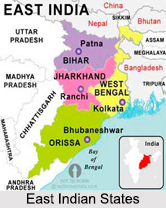
East Indian States
East Indian States comprises of Bihar, Jharkhand, West Bengal, Odisha and also the Union Territory of Andaman and Nicobar Islands. It defines the cult...
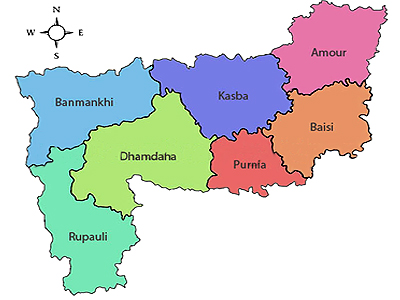
Purnia District in Bihar
Purnia District is located in Bihar and extends from River Ganga to Nepal. The district has a rich Hindu history and glorious past.
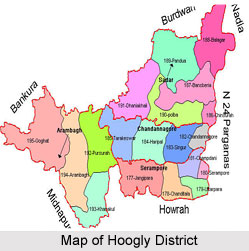
Hooghly district
Hooghly District along the bank of the river Hooghly is one of the principal trading ports of West Bengal.
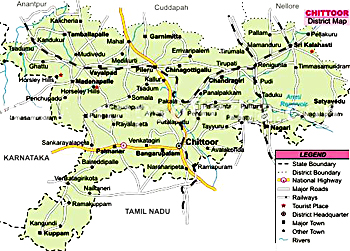
Geography Of Chittoor District
Geography of Chittoor district is spread along the topography of the land which is divided into two natural divisions; Chittoor has a dry and healthy...
Districts of West Bihar
Districts of West Bihar is comprised of medieval monuments that were built by the different governors of Mughal era.