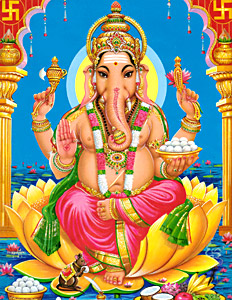
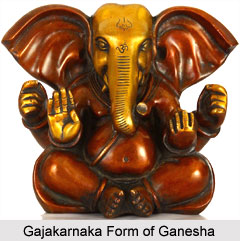
 Gajakarnaka is the fourth of the twelve Forms of Lord Ganesha. The other forms are Sumukha, Ekadanta, Kapila, Lambodara, Vikata, Vighnanasa, Vinayaka, Dhumraketu, Ganadhyaksa, Bhalachandra and Gajanana. The 12 forms or names of Ganesha are generally recited by the worshippers for the successful and positive completion of new projects and ventures. Lord Ganesha, the son of Lord Shiva and Parvati (Uma), is extensively venerated by Hindus, Buddhists and Jains throughout India.
In the Gajakarnaka form, Lord Ganesha is portrayed with elephant ears. It signifies that Ganesha is filled with intelligence and wisdom.
In this embodiment, the Lord has elephant-like ears, which signifies that He listens to all the prayers of his devotees. This denotes that only those individuals who have acquired a high degree of wisdom and intellect can achieve great things. People who do not possess good character hear about trifle issues that do not lead to any benefit for mankind. Thus, the Gajakarnaka form with long flat ears teaches his devotees not to listen to cheap matters. Several kinds of individuals or ill-wishers may speak various fake and cheap words but the devotees of Ganesha should avoid such things and should not pronounce any ill words.
As Lord Ganesha has long ears, His intelligence is increased and the deity is filled with wisdom and knowledge. Following this tradition, most of the statues of Lord Gautama Buddha and the Jain Tirthankaras are portrayed with long ears, which signify enhanced intelligence and wisdom.
This article is a stub. You may enrich it by adding more information to it. You can send your write-up at content@indianetzone.com