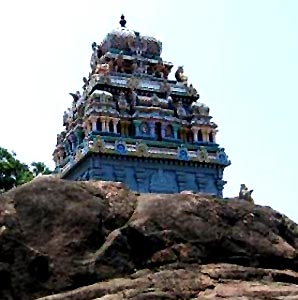
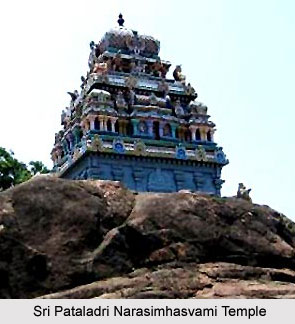
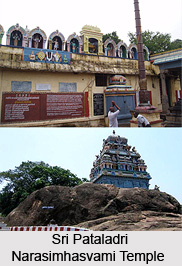
 Sri Pataladri Narasimhasvami temple is one of the significant temples in the small village of Singaperumal Kovil. Situated approximately forty-five kilometers from Chennai on National Highway 45 leading to Tiruchirapalli, is located the ancient and celebrated village now known as Singaperumal Kovil. The small village is so named as there is a temple for Lord Narasimha (Singa Perumal), which is situated in the heart of this place. This temple houses the imposing image of Pataladri Narasimhasvami, who is venerated as the presiding deity of the temple. The shrine is actually a rock-cut shrine belonging to the era of the Pallava monarchs who ruled from their capital-city Kanchi (Kanchipuram) over large parts of northern Tamil Nadu. As the historical researches reflect it was from the time of Mahendravarman I Pallava (600-630 A.D.), that the tradition of creating cave-temples for various deities came into vogue in the ancient Tamil country. Mahendravarman`s successors continued with this tradition and the rock-cut Narasimha cave-temple, like many others in the northern parts of Tamil Nadu, thus came into existence during the Pallava era. These rock cut shrine was the specimen of the superb architecture, which was in vogue in the Pallava era.
Singaperumal Kovil is a legendary place and is known by the name of the deity. The name of the deity is derived from the Sanskrit name Pataladri as this hillock (adri) into which the cave-temple has been carved is reddish (patala) in appearance. Although the principal deity here is now known as Pataladri Narasimhasvami and this place is called Singaperumal Kovil, the ancient inscriptions found in this shrine reveal that this deity was known by various other names in the distant past. The names with which the deity was known in the ancient times are Azhvar Narasinga Vinnagar Deva and Narasinga Vinnagar Azhvar. This sacred place where the temple is erected was originally known as Chengunram (red hillock) and was part of the territorial sub-division called Chengunra Nadu situated in the region of Kalattur-kottam. Pataladri is thus the Sanskrit variant of Chengunram, the ancient Tamil name for this sanctified spot.
However a legendary story associated with this temple has pointed to a significant fact about the temple. The ancient Sanskrit text, Brahmanda Purana, mentions that this temple and its surrounding area were once surrounded by dense forest where Jabali Maharishi, a consecrated sage performed strong penance to have a vision of Lord Perumal. The Lord, pleased with his arduous penance, appeared before this sage in the disguise of Ugra Narasimha. Immediately after this incident He had destroyed the demon (asura) Hiranyakashipu. The temple of Sri Pataladri Narasimhasvami Temple at Singaperumal Kovil is a legendary temple and the specimen of the Pallava art and architecture.
Architecture of Sri Pataladri Narasimhasvami Temple, Singaperumal Kovil: - the architectural trappings of the temple reveal the essence of the Pallava era as its essential feature. The beautiful images with their charming architectural carvings reveal the excellence of the contemporary era. The structure of the temple is no less fascinating, which bears the evidence of the contemporary style of art and architecture.
Inscriptions of Sri Pataladri Narasimhasvami Temple, Singaperumal Kovil: - the inscriptions enhanced the legendary greatness of the temple. The inscriptions provide information about the chronology of the temple. Most of the inscriptions belong to the Chola age, which depicts the achievements of the great kings and their benevolent contribution.
 The legendary greatness of Sri Pataladri Narasimha temple is enhanced by the exceptional architectural trappings of the contemporary Pallava era. A stately magnificence is attached with the antiquity of the temple by the unusual architectural craftsmanship of the contemporary artists. The main sanctum of Lord Pataladri Navasimhasvami bears the clear evidence of the contemporary art. The entrance to the main sanctum is flanked by door-keepers (dvarapalakas) is a rock-cut shrine and has the flavor of the architecture, which was in vogue in the 7th century A.D. Immediately in front of this sanctum, which faces east, is erected a mandapa supported by many pillars of the Chola age as is evident from the architectural features as well as the presence of many important Chola inscriptions datable to the 10th century A.D.
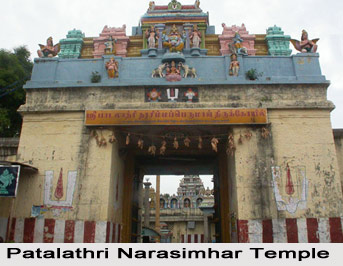 The inscription provides an added grandeur to the legendary greatness of Sri Pataladri Narasimhasvami Temple. There are a number of ancient, historical inscriptions written in Tamil, found etched in various parts of this temple. These inscriptions clearly points to the chronology and thereby points to the magnificence of the temple. The earliest of these, according to the historical researches dated 990 A.D. It has been discovered on the right pillar of the central facade of this rock-cut shrine, which belongs to the reign of Rajaraja I (985-1014 A.D.), the illustrious Chola emperor who ruled from his capital-city of Tanjavur over a large part of South India. This inscription moreover records the donation of twenty-six sheep for the maintenance of Azhvar Narasinga Vinnagar Devar by a person named Senda-Kutti.
 There are a number of festivals celebrated almost every month at the Pataladri Narasimhasvami