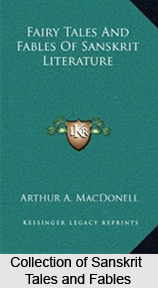
 Fairy Tales and Fables in Sanskrit Literature are the first-ever luminous instances in ancient Indian literature that still hold their legendary admirability for Indians of all generations. Sanskrit literature was perhaps the first instance in ancient Indian literary scenario, which was initiatory to introduce fairy tales and the concept of fables to Indian populace. Sanskrit fairy tales and fables bear their chief characteristics of serving as "ethical reflections and proverbial philosophy". The Fairy Tales and Fables in Sanskrit Literature comprise more than 22,000 shlokas, corresponding to nearly one-fourth of the Mahabharata.
Themes of Fairy Tales and Fables in Sanskrit Literature
Borrowing the central theme of "never-land" or the element of "fantasia" to some extent from the western countries, the Indianised version of fables and fairy tales liberally instilled their dose of the mystical and unimaginable subjects in the ancient Sanskrit language.
Influence of Fairy Tales and Fables in Sanskrit Literature
Sanskrit literature, meanwhile also had begun influencing the Persian fairy tales and folklores, with their prolific bunch of highly unearthly characters like gorgons, demons, spectres, lifetime curses, hidden palaces laden with gold, the animal world gifted with Godly powers and being able to talk like humans and the likes. In fact, such was their appeal that they have been translated into umpteen regional languages in India. The collections of Fairy Tales and Fables in Sanskrit Literature possessed its individualistic style, marked by the introduction of a number of different stories within the outline of a single narrative. And this individualistic style successfully made its way to Persian and Arabic literatures, wielding a decisive influence upon works like "One Thousand and One Nights" (also admired as the "Arabian Nights").
Famous Tales from Fairy Tales and Fables in Sanskrit Literature
The two most important collections within this fairy tales and fables in Sanskrit literature framework are "Panchatantra" and "Hitopadesha". During its initiation, they were strictly designated as manuals to instruct the kings in domestic and foreign policies. Panchatantra and Hitopadesha belong to that class of literature which the Hindus refer to as "Niti Shastra" or the "Science of Political Ethics".
Other noteworthy prose works in Sanskrit literature comprise a collection of pretty and nifty fairy tales, inclined towards being touted as doused with much of oriental emblazoning. The "Vetala Panchavimsati" or "Twenty-Five Tales of the Vetala†(a demon reckoned to possess corpses), the "Simhasana Dvatrimcika" or "Thirty-Two Stories of the Lion-Seat" (i.e. throne), which also are also much popular by the name of "Vikrama Charita" or "Adventures of Vikrama" and the "Sukasaptati" or "Seventy Stories of a Parrot" absolutely fall under this category. These three compilations of fairy tales have all been penned in prose and are relatively short as compared to other scholarly treatises in Sanskrit literary works. Somadeva"s "Kathasaritsagara" or "Ocean of Rivers of Stories" commands attention of special importance, having been authored in verse and also maintaining an equal substantial size.
Fairy Tales and Fables in Sanskrit Literature, initially functioning as the handbooks of "practical moral philosophy", rendered a luxuriant resource of ethical dictums. This become so popular, that works comprising exclusively poetical aphorisms began to flood the literary domain. The principal and persisting theme in these works and in the new ethical poetry style, is the doctrine of vanity of human life, which had germinated before the ascension of Buddhism, and has since, reigned over Indian thought process.