
 The Panchatantra is a unique contribution of Ancient India to the world, particularly to the world literature, that has equally delighted the young and the old, educated and uneducated, rich and poor, high and low - for over two thousand years. It has triumphed over the greatest obstacles of language, custom and religion, and made an unparalled progress from its native land to all the civilized parts of the globe - as it continues to delight everyone to this very day. This Indian collection of fables, reveals the basic knowledge of wisdom that makes one`s life "richer, happier, and fuller". Because of its elegant style in which it packages the wisdom of the ages, it has the most profound influence on the world literature - amongst all works of Indian literature.
Panchatantra
The Panchatantra is a compilation of inter-woven series of tales in prose and poetry, mostly animal fables. It was compiled in Sanskrit (Hindu) and Pali (Bhuddhist).
Introduction
The Panchatantra is a unique contribution of Ancient India to the world, particularly to the world literature, that has equally delighted the young and the old, educated and uneducated, rich and poor, high and low - for over two thousand years. It has triumphed over the greatest obstacles of language, custom and religion, and made an unparalled progress from its native land to all the civilized parts of the globe - as it continues to delight everyone to this very day. This Indian collection of fables, reveals the basic knowledge of wisdom that makes one`s life "richer, happier, and fuller". Because of its elegant style in which it packages the wisdom of the ages, it has the most profound influence on the world literature - amongst all works of Indian literature.Life and career of Gautam Bhatia
Born in 1952, Gautam Bhatia graduated in fine arts and did his post-graduate studies in Architecture at the University of Pennsylvania. Gautam Bhatia is a famous name in the field of writing. He is the recipient of several national and international awards for his architectural work and study. He is the author of Laurie Baker: Life, Works, Writings; Punjabi Baroque and Other Memories of Architecture; Silent Spaces and Other Stories of Architecture; Malaria Dreams and Other Visions; Panchatantra: Parables for the 21st Century and a Short History of Everything. He lives and practices in New Delhi as well.
History of Panchatantra
Panchatantra has served as a source, directly or indirectly, for many works of modern literature, which can be traced to Geoffrey Chaucer, John Gower, Giovanni Boccaccio and even William Shakspeare`s works. In 1800 AD, Jonathan Scott epitomized the Bengal manuscript as `Tales, Anecdotes and Letters`. Most people in modern world may not have heard of the Panchatantra. But anyone with any claim to literary education would be familiar to commonly used titles like `Fables of Bidpai` or the `Tales of Kalila and Dimna` - which are merely translations or adaptations of Panchatantra. The fact that even before 1888, there were at least 20 English translations of this great Eastern Classic - makes one wonder how widely circulated this book was. As a matter of fact, no other book, other than the Bible, has ever enjoyed such intensive worldwide circulation.
Although the original texts of the Panchatantra are long lost, it survived through numerous commentaries and recessions, most notable of them being the Hitopadesha by Narayana, Durgasimha`s Kannada translation of 1031 AD, Purnabhadra`s recension of 1199 AD, and Franklin Edgerton`s 1924 reconstruction of the Sanskrit text of the original Panchatantra.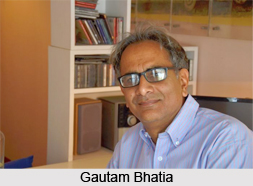
It is evident from history that Panchatantra had an unprecedented impact on early scholars, as it travelled to Persia, Arabia, Greece and Europe. During the Sassanid reign of Khosru I Anushiravan, Burzoy, the court physician to the Emperor of Iran, translated the Panchatantra into Pahalvi (Middle Persian) language, as early as 570 AD. His work was further translated by Buda Abdul Inu, a priest, into Syriac `Kalilag and Damnag`. The title of this work was derived from Karataka and Damanaka, two jackals in a frame story of the Panchatantra. The manuscript of this work survives, and remains preserved. Burzoy`s work was also translated by Rudaki into Persian verses.
Although the original texts of the Panchatantra are long lost, it survived through numerous commentaries and recessions, most notable of them being the Hitopadesha by Narayana, Durgasimha`s Kannada translation of 1031 AD, Purnabhadra`s recension of 1199 AD, and Franklin Edgerton`s 1924 reconstruction of the Sanskrit text of the original Panchatantra.
It is evident from history that Panchatantra had an unprecedented impact on early scholars, as it travelled to Persia, Arabia, Greece and Europe. During the Sassanid reign of Khosru I Anushiravan, Burzoy, the court physician to the Emperor of Iran, translated the Panchatantra into Pahalvi (Middle Persian) language, as early as 570 AD. His work was further translated by Buda Abdul Inu, a priest, into Syriac `Kalilag and Damnag`. The title of this work was derived from Karataka and Damanaka, two jackals in a frame story of the Panchatantra. The manuscript of this work survives, and remains preserved. Burzoy`s work was also translated by Rudaki into Persian verses.
Synopsis of Panchatantra for 21st Century
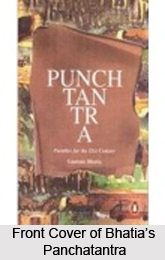
This book `Panchatantra - Parables for 21st Century` is written by Gautam Bhatia Inspired by James Finn Garner`s politically Correct Bedtime Stories, best-selling author Gautam Bhatia takes the men, women and animals of the Panchatantra and relocates them in contemporary India with its newly acquired notions of political correctness. This book is very interesting in sense that this book explains the total thing in a beautiful manner.
The original text, now lost may have been written down between 100 BC and AD 500.
Inspired by James Finn Garner`s Politically Correct Bedtime Stories, best-selling author Gautam Bhatia takes the men, women and animals of the Panchatantra and relocates them in contemporary India with its newly acquired nations of political correctness. So we have the fiercely vocal lesbian feminist, Yajnadatta, who leaves her husband for a woman; the expatriate dog Chitranga who flees racial persecution in the West; and a mongoose with an Oedipus complex, armed with a .45 Colt. As these characters engage with the burning issues of the day unemployment, oppression, environmental pollution, sexual incompatibility they lay bare the hilarious absurdities of this muddled world.
The original Panchatantra by Pandit Vishnu Sharma was a collection of fables intended to inspire courage and selflessness; Bhatia reinvents them to reflect the amoral paradoxes of the 20th century.
The sacred rivers and banyan dotted landscape of Vishnu Sharma`s Vedic Age have been replaced by nuclear reactors, sluggish streams and the psychedelic flash of fluorescent lights. The wily jackals, clever crows and naive Brahmins give way to repugnant and rapacious creatures: an oedipal mongoose, a lesbian feminist, an expatriate dog, an environment-conscious tortoise, a battery of monstrously greedy Brahmins.
In each of these stories, Bhatia writes with a rapier pen and sabre eyes, lancing in unforgiving way at every preposterous detail of modern life: unemployment, sexual incompatibility, environmental pollution, hypocrisy and corruption.
The characteristic relish for the absurd is there but the indulgent affection is absent. "I didn`t intend to paint a grim picture," says Bhatia. Unwittingly, he has - because even the most excessive leap of his imagination is still only a disturbing approximation of reality.
Inspired by James Finn Garner`s Politically Correct Bedtime Stories, best-selling author Gautam Bhatia takes the men, women and animals of the Panchatantra and relocates them in contemporary India with its newly acquired nations of political correctness. So we have the fiercely vocal lesbian feminist, Yajnadatta, who leaves her husband for a woman; the expatriate dog Chitranga who flees racial persecution in the West; and a mongoose with an Oedipus complex, armed with a .45 Colt. As these characters engage with the burning issues of the day unemployment, oppression, environmental pollution, sexual incompatibility they lay bare the hilarious absurdities of this muddled world.
The original Panchatantra by Pandit Vishnu Sharma was a collection of fables intended to inspire courage and selflessness; Bhatia reinvents them to reflect the amoral paradoxes of the 20th century.
The sacred rivers and banyan dotted landscape of Vishnu Sharma`s Vedic Age have been replaced by nuclear reactors, sluggish streams and the psychedelic flash of fluorescent lights. The wily jackals, clever crows and naive Brahmins give way to repugnant and rapacious creatures: an oedipal mongoose, a lesbian feminist, an expatriate dog, an environment-conscious tortoise, a battery of monstrously greedy Brahmins.
In each of these stories, Bhatia writes with a rapier pen and sabre eyes, lancing in unforgiving way at every preposterous detail of modern life: unemployment, sexual incompatibility, environmental pollution, hypocrisy and corruption.
The characteristic relish for the absurd is there but the indulgent affection is absent. "I didn`t intend to paint a grim picture," says Bhatia. Unwittingly, he has - because even the most excessive leap of his imagination is still only a disturbing approximation of reality.
Recently updated articles in Indian Literature
Gadyakarnamrita
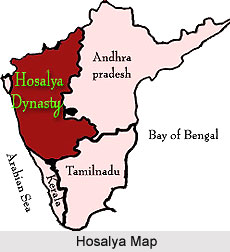
Gadyakarnamrita is a 13th-century Sanskrit literary work written mainly in prose. It describes the ninety-day battle at Srirangam between the Hoysala...
Women Writers in Malayalam Literature
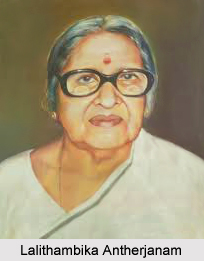
Women writers in Malayalam literature have worked incessantly to make a place for their literary works. In the earlier periods, they were completely o...
Comrade Kirillov, Novel by Raja Rao
Comrade Kirillov, a distinctive creation of Raja Rao, is presented as a brief yet incisive novelette that offers an ironic portrayal of the self-contr...
The Foreigner, Novel by Arun Joshi
“The Foreigner” is a book authored by Arun Joshi and published by Vision. It is an illustrious creation in the entire career of Arun Joshi, the famous...
Short Story in Telugu Literature
Short Story in twentieth century Telugu Literature was extremely popular and growing in and developing in a major way. Their popularity was greatly fa...
Related articles in Indian Literature
Mythological Themes in Indian Literature
Mythological themes in Indian literature have been integral to every ancient and contemporary writer and their path to f
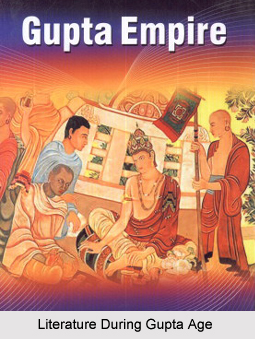
Literature During Gupta Age
It is during the Gupta Age literature in the form of poetry, epos and drama gained a colossal importance.
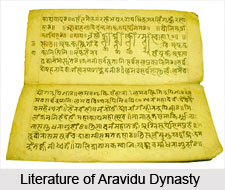
Literature of Aravidu Dynasty
Sanskrit and Telugu were the popular literary medium of communication during Aravidu dynasty.
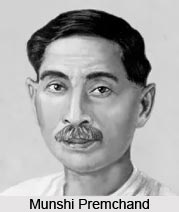
Munshi Premchand
Munshi Premchand was a legendary Indian writer notable for his modern Hindustani literature. A writer of a very high caliber, Premchand`s writings hav...
Sanskrit Poets
The names of some of the Sanskrit Poets are Bharavi, Devarshi Ramanath Shastri, Jayadeva and Srinivas Rath.