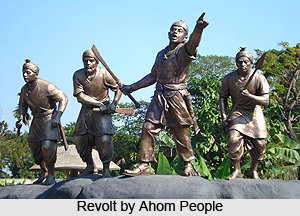
 Dundiya Revolt was amongst the numerable rebellions which shook Kamrup during the reign of the Ahom ruler Suklingphaa. According to certain historians, this revolt was instigated by the improper administration tactics of the then viceroy of the area of Guwahati named Badan Chandra Borphukan, who controlled Lower Assam. It is believed that the subordinate officers of this viceroy and even himself used to offend the local people of Upper Assam frequently, addressing them as `Dhekeri` mainly due to their unique local dialect. The residents of Lower Assam were forced to tolerate several forms of insults and abuses by the administrative officials who were recruited from Upper Assam. The local inhabitants complained to Purnananda Burhagohain and the new king Suklingphaa against Badan Chandra`s torturous regime.
However, during that time the Central Administrative department of Ahom was too busy to interfere in their political matters, since they were pre-occupied in reinstalling the lost glory of Ahom, restoring it from the Moamoria revolt. They underestimated the gravity of the turmoil. Bir Datta Choudhary and Har Datta Choudhary gradually assembled a group of Kacharis, Hindustani and Punjabi centenaries who ultimately broke free from the administrative control of Ahom regime. They were the former officers under the Guwahati viceroy. Finally, the entire North Kamrup slipped into the hands of the rebels. The Koch kings of Bijni and Cooch Bihar had secretly assisted the brothers in the sole wish of restoring Kamrup from the kings of Ahom which was once part of the erstwhile Koch kingdom. While local people are of the view that the two rebel brothers made a bold attempt to gain freedom for them, against the faulty and abusive administration of Badan Chandra Borphukan, some Ahom historians claim that they were quite mean who loved spending time in petty quarrels and fights, creating unnecessary unrest in the kingdom. They termed them as `Dundiyas`.
Kalia Bhomora was appointed the new `Borphukan` of Sandikai family as Badan Chandra was not capable of controlling the rebellion. The rebels were subdued by the strong practices embraced by Kalia Bhomora who was a resourceful man. He restored Ahom rule by assembling a few Hindustani mercenaries derived from Ahom rulers, the Raja of Dimarua and Raja of Beltola. Armed with this strong military force, Kalia Bhomora crossed Brahmaputra River and won victory against the rebel forces. Several people were discontented by the dictatorship of Har Datta Choudhary and his brother Bir Datta Choudhary and therefore caught hold of him, killing him. The Hindustani mercenaries crossed to the southern bank of Brahmaputra River under the supervision of Jamadars Bajusing and Alosing. A large quantity of Hindustani mercenaries lost their lives in this rebellion. Ultimately the rebellion concluded and Kalia Bhomora was awarded a wicker-hat umbrella or `japi` with a streak of gold by Purnananda Burhagohain and Suklingphaa. Suklingphaa was also pleased and so granted him the title `Pratap-Ballabh`, which means `one whose friend is valour`.