
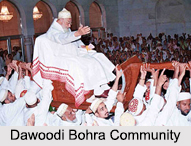
 Dawoodi Bohra Community comprises the main branch of the Bohras, a Mustaali sub-sect of Isma"ili Shia Islam. The Bohras comprise a small but close-knit community of the Muslims. They believe in an obscure interpretation of the Holy Quran behind the manifest meaning. Since they lost political rule in Egypt in the 12th century and Yemen in the 16th century, they have kept their strange faith intact from the persecuting Sunni rulers by practising the doctrine of "Taqqiya". It permits them to deny their identity to outsiders when under extreme pressure.
Dawoodi Bohra Community
Dawoodi Bohra Community is a small community of Muslims who have keen business acumen and organization is a key feature of their society.
Introduction
Dawoodi Bohra Community comprises the main branch of the Bohras, a Mustaali sub-sect of Isma"ili Shia Islam. The Bohras comprise a small but close-knit community of the Muslims. They believe in an obscure interpretation of the Holy Quran behind the manifest meaning. Since they lost political rule in Egypt in the 12th century and Yemen in the 16th century, they have kept their strange faith intact from the persecuting Sunni rulers by practising the doctrine of "Taqqiya". It permits them to deny their identity to outsiders when under extreme pressure.Origin of Dawoodi Bohra Community
The Dawoodi Bohras call themselves "Fatimid", the followers of Fatemi Imamat. They have a continuation from the Fatimid era of Egypt, Yemen. The word "Bohra" itself is derived from the word in the Gujarati language "Vehwahar", which is interpreted as “tradingâ€.
History of Dawoodi Bohra Community
It is said that the First Ismaili missionary arrived probably in Gujarat, in 1067 AD and practised jihad by persuasion, not by force. The seat of the Dai Tyyabi was shifted from Yemen to India in 1539. Subsequently the sectarian split between the Khojas and Bohras (both Ismailis originally) took place. Probably, it was the Vaishya caste which supplied the bulk of the converts since the word `vohra` means trader in Gujarati. Some Hindu customs, particularly those associated with marriage, were adopted by them. These include the breaking of a coconut at the wedding reception by the bridegroom.
With the advent of the British their business aptitude came to the forefront. They had no inhibitions against overseas travel and had the virtues of thrift, sobriety, the ability to do hard work and a traditional desire to remain self-employed.
From their places of origin in Gujarat the Dawoodis and Sulaimanis both began to migrate to Mumbai early in the 19th century. Surtis soon achieved a dominant position in the ship chandling business. Others followed the Parsis into the lucrative import-export trade and travelled to far ports of the Indian Ocean, the Persian Gulf, East Africa, Sri Lanka, Burma, Thailand, Hong Kong, and Japan. Later migrants to Mumbai plied the more traditional Bohra trades in hardware, glass, paints, soap, leather, plumbing, stationery and soda water. Often their occupation and business is reflected in the Dawoodi `walla` suffix of the surname.
With the advent of the British their business aptitude came to the forefront. They had no inhibitions against overseas travel and had the virtues of thrift, sobriety, the ability to do hard work and a traditional desire to remain self-employed.
From their places of origin in Gujarat the Dawoodis and Sulaimanis both began to migrate to Mumbai early in the 19th century. Surtis soon achieved a dominant position in the ship chandling business. Others followed the Parsis into the lucrative import-export trade and travelled to far ports of the Indian Ocean, the Persian Gulf, East Africa, Sri Lanka, Burma, Thailand, Hong Kong, and Japan. Later migrants to Mumbai plied the more traditional Bohra trades in hardware, glass, paints, soap, leather, plumbing, stationery and soda water. Often their occupation and business is reflected in the Dawoodi `walla` suffix of the surname.
Society of Dawoodi Bohra Community
Organisation is the important characteristic of Bohras and Khojas compared to other Muslims. Salvation for them is obtainable only through the intercession of a hierarchy which reaches down from Allah to Mohammad to Ali to the imams to the Hujjats (all in seclusion with the imam) to the Dai-Mutlaq. Next to the Dai (called Syedna or Mullaji) are the Mazoon (usually his heir apparent), the Mukasir, the Shaikhs and the Mullas. Amils or representatives of the Syedna in various cities are chosen from the ranks of the Shaikhs.
They officiate at ceremonies and collect taxes. Loyalty is assured by a mishaq or ritual bath which has to be taken by all Bohras at teenage years. There are positive rewards and psychological benefits for continued membership of the community: advice and consolation, business credit, a system of titles, Anjuman Shiat-e-Ali, social, educational and business organisations, scholarships, student hostels, hospitals, musafirkhanas (traveller`s rest houses), a cooperative bank and various forms of patronage. All these are financially supported by a system of private taxation or tithes which is somewhat heavier than the usual Muslim `zakat.`
The Bohras of the present day, who live mostly in Maharashtra and Gujarat, were once all Hindu Brahmins and were converted to Islam about 900 years ago. During the time of the eighteenth dai in Yemen, two missionaries, Maulai Ahmad and Maulai Abdullah were sent to India and landed at Cambay. It is said Abdullah gained the confidence of the local inhabitants by his miracles.
The tombs of these two missionaries in Cambay and of their first converts, the owner of the well, Kaka Akela and his wife Kama Akeli, are revered and visited by the Bohras of India.
More recently, the dissident progressives, who call themselves the Pragati Mandal, have abandoned this issue and have concentrated their efforts on democratising the organization and obtaining popular control over its expenditure so that more of the income from endowments, charities and tithes will be spent on the welfare and education of the poorer members.
They officiate at ceremonies and collect taxes. Loyalty is assured by a mishaq or ritual bath which has to be taken by all Bohras at teenage years. There are positive rewards and psychological benefits for continued membership of the community: advice and consolation, business credit, a system of titles, Anjuman Shiat-e-Ali, social, educational and business organisations, scholarships, student hostels, hospitals, musafirkhanas (traveller`s rest houses), a cooperative bank and various forms of patronage. All these are financially supported by a system of private taxation or tithes which is somewhat heavier than the usual Muslim `zakat.`
The Bohras of the present day, who live mostly in Maharashtra and Gujarat, were once all Hindu Brahmins and were converted to Islam about 900 years ago. During the time of the eighteenth dai in Yemen, two missionaries, Maulai Ahmad and Maulai Abdullah were sent to India and landed at Cambay. It is said Abdullah gained the confidence of the local inhabitants by his miracles.
The tombs of these two missionaries in Cambay and of their first converts, the owner of the well, Kaka Akela and his wife Kama Akeli, are revered and visited by the Bohras of India.
More recently, the dissident progressives, who call themselves the Pragati Mandal, have abandoned this issue and have concentrated their efforts on democratising the organization and obtaining popular control over its expenditure so that more of the income from endowments, charities and tithes will be spent on the welfare and education of the poorer members.
Religion of Dawoodi Bohra Community
The Bohras offer prayers 3 times a day instead of five by combining the afternoon and evening prayers. Unlike other followers of Islam, they have no sermon on Friday. They use the astronomical lunar calendar to determine the beginning of each month and place a special paper (raqqa) in the hands of the dead person.
Recently updated articles in Religion in India
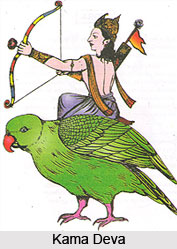
Kusumayudha
Kusumayudha is a name of Kamadeva, the Hindu God of Love. Depicted with a sugarcane bow and flower-tipped arrows, he represents attraction and longing...
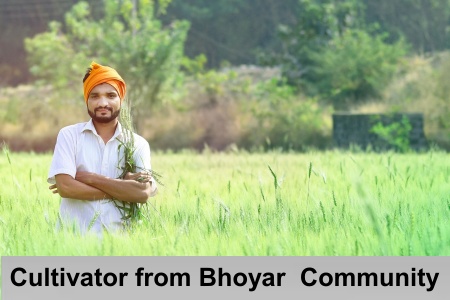
Bhoyar Caste
Bhoyar Caste is largely found in the Central Provinces of the country. Traditional occupation of Bhoyars is agriculture. They are good cultivators and...
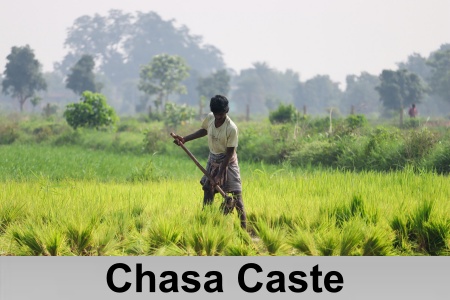
Chasa Caste
Chasa caste is a prominent agrarian community native to Odisha. Traditionally associated with cultivation and farming, Chasas have historically played...
Vigneswara, A Form of Lord Ganesha
Lord Vigneswara is another form of Lord Ganesha or Vinayaka, prominently worshipped as the God of intelligence and good luck in the Indian subcontinen...
Maheswara
Maheswara, meaning “the Great Lord,” is a revered name of Lord Shiva in Hindu tradition. It represents Shiva’s supreme authority over creation, preser...
Related articles in Religion in India
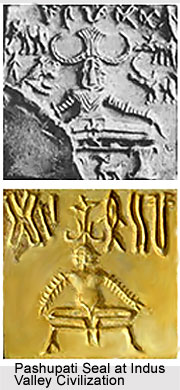
Religion in Indus Valley Civilization
Religion in Indus Valley Civilisation included Hinduism, Buddhism and Jainism. Details about the religion in Indus Valley Civilization have been gathe...
Iyer Brahmin
Iyer Brahmins are originally from Tamil Nadu of South India. They are known for their adherence to Advaita philosophy and Smarta traditions. Tradition...
Kumbhakar / Kumhar Caste
Kumbhakar or Kumhar caste is a traditional artisan community in India known for pottery making. Derived from Sanskrit word Kumbhakar, meaning potter,...

Gujjars in Mughal Era
Gujjars in the Mughal era enjoyed great power. Further their power increased with the decline of Aurangzeb, Mughal emperor.
Gotra in Hinduism
In Hinduism, gotra refers to a lineage system tracing descent from ancient sages, primarily through the paternal line. Originating from Vedic traditio...