
Dahait community also spelled as Dahayat community is prominent in central India. This community is having a mixed structure mainly comprising members, who are working as watchmen. This community is mostly found in Jabalpur District and Mandla District. It is said that Dahait caste has been derived from the associated caste of Khangars and several forest tribes. Outside the Central Province of the country, they are found in Bundelkhand. Several legends suggest the origin of Dahait caste. According to one legend, the Dahaits and the Khangars had a common ancestor. The members also claim that their ancestors were known as Chhadidar or Darwan; and they moved to Mandla around 200 years back, during the time of Raj-Gond dynasty and Raja Nizam Shah of this place.
In Mandla region, the names of the sub-divisions of Dahait community are given as Rawatia or Rautia, Mawasi, Sonwani, Kol, and Rajwaria. Of these sub-divisions, Kol and Rajwar are separate tribes; Mawasi is generally used as a synonym for Korku, which is another tribe; Sonwani is a sept most commonly found among several primitive tribes; while Rawat is a title borne by the Gond tribe. Further, the titles Rautia and Rajwaria are also found as sub-divisions of Kol caste and it is also quite possible that Dahaits have originated from this tribe. Some scholars suggest that the actual name Dahait is a subdivision of the Kols, and it means a `villager,` from Dehat, meaning village. It has been stated that formerly, the Dahaits were a class of personal attendants of the Raja or king. Eventually, these servants formed themselves into a caste and came to be known as the Dahaits. Dahait caste is also known as Bhaldar and Kotwar.
The caste also has a number of exogamous groups, which are being named after animals and plants. The members worship the trees or the animals after which they have been named and they will refrain from cutting the tree, or killing that particular animal. In their community, widow re-marriage and divorce are permitted. They have several indigenous beliefs and funeral rituals. The Dahait caste is religious and worships several Hindu as well as their local deities. Dahaits also work as navvies and stonebreakers in some places of Central India.
Dahait Community
Dahait Community in Central Provinces of the country has a mixed structure. Dahaits have been mostly employed as village watchmen. Majority of the members of the Dahait Community reside in Jabalpur District and the rest are found in Bilaspur, Damoh and Seoni districts.
Recently updated articles in Religion in India
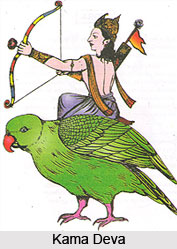
Kusumayudha
Kusumayudha is a name of Kamadeva, the Hindu God of Love. Depicted with a sugarcane bow and flower-tipped arrows, he represents attraction and longing...
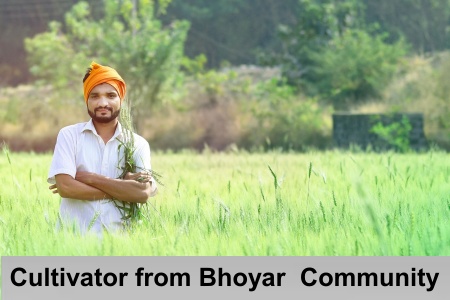
Bhoyar Caste
Bhoyar Caste is largely found in the Central Provinces of the country. Traditional occupation of Bhoyars is agriculture. They are good cultivators and...
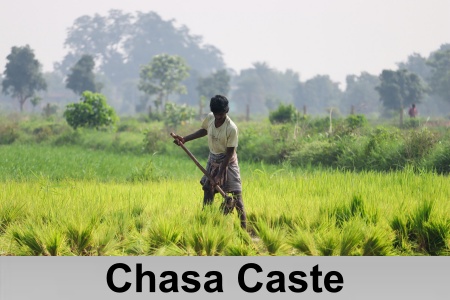
Chasa Caste
Chasa caste is a prominent agrarian community native to Odisha. Traditionally associated with cultivation and farming, Chasas have historically played...
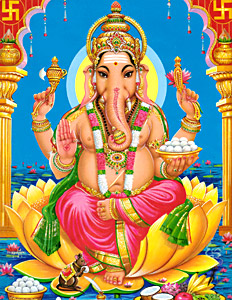
Vigneswara, A Form of Lord Ganesha
Lord Vigneswara is another form of Lord Ganesha or Vinayaka, prominently worshipped as the God of intelligence and good luck in the Indian subcontinen...
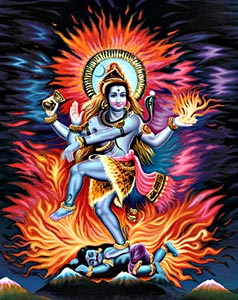
Maheswara
Maheswara, meaning “the Great Lord,” is a revered name of Lord Shiva in Hindu tradition. It represents Shiva’s supreme authority over creation, preser...
Related articles in Religion in India
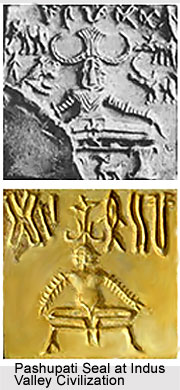
Religion in Indus Valley Civilization
Religion in Indus Valley Civilisation included Hinduism, Buddhism and Jainism. Details about the religion in Indus Valley Civilization have been gathe...
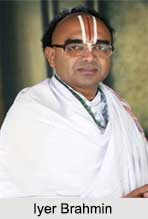
Iyer Brahmin
Iyer Brahmins are originally from Tamil Nadu of South India. They are known for their adherence to Advaita philosophy and Smarta traditions. Tradition...
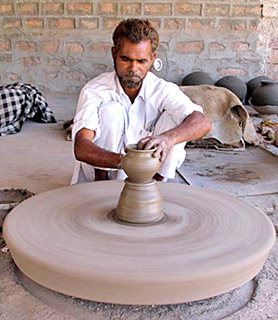
Kumbhakar / Kumhar Caste
Kumbhakar or Kumhar caste is a traditional artisan community in India known for pottery making. Derived from Sanskrit word Kumbhakar, meaning potter,...

Gujjars in Mughal Era
Gujjars in the Mughal era enjoyed great power. Further their power increased with the decline of Aurangzeb, Mughal emperor.
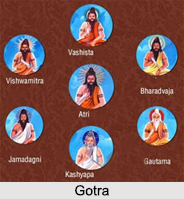
Gotra in Hinduism
In Hinduism, gotra refers to a lineage system tracing descent from ancient sages, primarily through the paternal line. Originating from Vedic traditio...