
Cultural Renaissance in Bengal
Cultural Renaissance in Bengal was evident in the city of Kolkata which became the epicentre of this cultural flowering.

Share this Article:

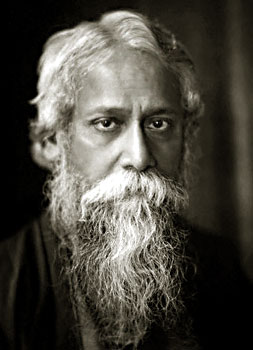
Rabindranath TagoreCultural Renaissance in Bengal took place in the beginning of the twentieth century. Kolkata was enjoying a commercial boom at that time as the bulk of India`s trade passed through this city. Kolkata was dotted with an increasing number of factories and mansions; it came alive with song, dance and street theatre that created a mood of excitement. For the first time Indians, Bengalis in particular, began to take a missionary-like look at India to reform it and make it progressive. Western education brought Western-style reasoning and being critical of superstition and dogma. Institutions of social reform, such as Brahmo Samaj, founded by Raja Ram Mohan Roy began to `modernize` Hindu society.

Schools and colleges grew making the Bengalis discover the riches of their language. Printing presses flourished that brought a constant flow of new literature. On a pan India basis there was a quick expansion in all sectors. At the fountain-head of this enthusiasm was a single Bengali family the multi-talented Tagores. They composed poetry, staged plays, sang and painted. The most celebrated being the poet Rabindranath Tagore who went on to become the first Indian to win the Nobel Prize for Literature. His nephews, the brothers Gaganendranath and Abanindranath Tagore distinguished themselves as the first `modern` Indian artists. They later proved to be the most influential Indian artist of the early decades of the twentieth century and they also emerged as the leaders of the so-called school of Revivalists.

The subject matter varied from the exotic Indian flora and fauna to local social types and customs to give the public back home a glimpse of the lifestyles of the people who Britain had ruled. The British rather considered the art of the Indian artists as a straightforward visual record. The artists depicted what moved them and what was true to their lives - folklore, mythology and court life.

As far as sculpture was concerned, wood carving in South India and marble work in Rajasthan needs a mention. The Muslim conquerors had smashed stone imagery depicting such themes wherever and whenever they could. All Muslim conquerors in India had destroyed Hindu temples and the great works they housed. The noble Indian sculptural tradition of the Mauryas, Kushans, the Gupta dynasties; the Chola period, and the temples of Khajuraho and Konark died. However the Mughals were great builders and Mughal Architecture had influenced Indian architectural style as a whole. At Rabindranath Tagore`s university at Shantiniketan there was a serious attempt to breathe new life into Indian sculpture under the leadership of one of its visionary teachers, Ramkmkar Vaij now hailed as modern India`s first and foremost practitioner of sculpture. There have been other eminent sculptors since 1947 like Amarnath Sehgal, Somnath Hore and Sankho Chaudhury.


Share this Article:

Related Articles

More Articles in History of India


History of Uttar Pradesh
The state was the heart of Mahabharata war and the history of Uttar Pradesh is very much the history of India. The place finds its mentions in Hindu epics Ramayana and Mahabharata.
History Of Archaeology In India
History of archaeology in India contributes a lot to define the past history and the social life of India.
Mughal Architecture during Babur
Mughal architecture during Babur marked the foundation of a new architectural era in India, blending Timurid, Persian, and local influences. His reign emphasized garden design, notably the Charbagh layout, and modest yet elegant structures. As the first Mughal emperor in India who introduced this architecture during 16th century Babur’s creations reflected symmetry, functionality, and a deep appreciation for nature.
Princely State of Patdi
The Princely State of Patdi was one of the many princely states under the British Raj, ruled by local Kadva Patidar leaders under indirect British control. Known for its strategic location near the Little Rann of Kutch, Patdi played an important role in salt production and regional trade. Princely State of Patdi or Patri was incorporated as a part of the Baroda Agency, which was a sub division of Western India States Agency.
Architecture during Sayyid and Lodi Dynasty
Architectures during the Sayyid and Lodi dynasty were mainly the tombs and monuments for the dead rulers. It were carefully designed and meticulously constructed.
Brahmanical Sources of Ancient History
Brahmanical Sources of ancient history are contained in the Vedas and they constitute one of the most important literary sources of information about ancient India.
Female Education In British India
The over brimming enthusiasm among zealous Hindu reformers welcomed female education in British India.
Revenue System of Mauryan Empire
Revenue system of Mauryan Empire can be divided into eight categories. The principal revenue of the state was the land revenue, taxes from traders, artisans and professional taxes were also collected.
Mughal Architecture During Jahangir
Mughal architecture during Jahangir`s period was relative dull in comparison to that of Akbar dynasty.
Princely State of Satlasna
Princely State of Satlasna was amongst the former native states of India that was appointed as one of the Indian princely states during the early 19th century.
Coins of Chola Empire
Coins of Chola Empire were issued in gold, silver and copper and carried the Chola emblem.
Social Life during the Pala Period
Religious toleration and simple living were the characteristics of social life during the Pala period.
Coins of the Chalukya Dynasty
Coins of the Chalukya Dynasty was reintroduced in the South India after a brief break of coinage less period of nearly three century. Chalukyas issued coins only in gold and they exhibit a brilliant artistic skill of the engraver.
Costumes of Indus Valley Civilisation
Costumes of Indus valley Civilization have been considered as the basis for Indian clothes. Sophisticated ornaments and make up were used during that age.
Development of Science under Gupta Empire
Development of Science under Gupta Empire was progressive and it had attained considerable perfection. Mathematics, astronomy, medicine, chemistry, physics and metallurgy were the most prominent of the sciences at that time.
Culture under Delhi Sultanate
Culture under Delhi Sultanate had enduring aspects to it. It included the society, the religious condition, literature and art and architecture of that period.
Princely State of Hapa
Princely State of Hapa was incorporated as a part of the Baroda Agency, which was under the administrative control of the Western India States Agency.
Economy Under Chola Dynasty
Economy under Chola dynasty was strong and well developed. The economic life of the people of the Chola Kingdom was well balanced with their social life.
Coins of Khilji Dynasty
Coins of Khilji Dynasty had an influential feature that was followed by the other dynasties.
Religion During Mauryan Dynasty
Religion during Mauryan dynasty became a considerable episode in Indian history with an esteemed lineage of rulers.






