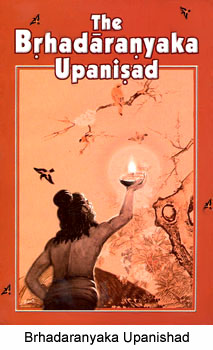
The Brhdaranyaka Upanishad is the secondary extraction of the Brahamana text. It is one of the oldest texts among the Upanishadas and is known as a commentary on Purush Sukta of the
Vedas. Brhadaranyaka Upanishad is related to the Shukla
Yajur Veda. This Upanishad is known for its philosophical statements and is ascribed to Yajnavalkya. It contains metaphors, symbolism and imagery for describing the nature of reality. The Brhadaranyaka Upanishad has been divided into six parts each being further sub divided into chapters.
Part One of Brhadaranyaka Upanishad
First Chapter of Part One : In the first chapter the Universe is represented as as a sacrificial horse. The dawn is ascribed as the head of the sacred horse. Its eye is the sun; the wind the breath; the back is the heaven; the body of the sacrificial horse is the year; the belly is the atmosphere; the footstool is the earth; the sides are the quarters; the side bones are the intermediate quarters; the members are the seasons; the joints are the months and half months; the feet are the day and night; the bones are the constellations; the muscles are the sky; the arteries and veins are the rivers; the liver and spleen the mountains; the various kinds of hair are the herbs and trees. The sun, as long as he rises, is the fore-part of the body; the sun as long as he descends, is the hind part of the body.
Second Chapter of Part One : The second Brahmana of the chapter one of Brihadaranyaka Upanishad discusses about the process of Creation. Initially there was nothing and death enveloped everything. Later Water was created which was followed by
prana.
Third Chapter of Part One : The third chapter deals with prana, its splendour and positive power. It discusses about the two classes of Prajapati`s sons: the gods i.e. the devas and the demons or asuras.
Fourth Chapter of Part One : The fourth chapter deals with the Creation and its cause. Formerly the universe was thought to be the Self. Later several other creations also evolved.
Fifth Chapter of Part One : The fifth chapter discusses about the Manifestations of
Prajapati. It mentions the seven kinds of food produced through meditation and rites.
Sixth Chapter of Part One : The sixth chapter discusses the three Aspects of the Universe i.e. the name, form and work.
Part Two of Brhadaranyaka Upanishad
First Chapter of Part Two : The first chapter of the second part deals with the relative aspects of
Brahman. It states about the conversation of Yajnavalkya and Maitreyi on the Absolute Self.
Second Chapter of Part Two : The second chapter deals with the description of the prana.
Third Chapter of Part Two : The third chapter states about two types of Brahman, mortal and immortal, gross and subtle, definite and indefinite and limited and unlimited.
Fourth Chapter of Part Two : The fourth chapter deals with the conversation between Yajnavalkya and Maitreyi.
Fifth Chapter of Part Two : The fifth chapter discusses about the interdependence of created objects. According to it earth, water, fire, air, sun, moon, lightning, thunder, cloud, sky, dharma, truth, mankind are all honey i.e. effect.
Sixth Chapter of Part Two : The fifth chapter tells about the line of teachers through whom the honey, or the madhu doctrine, has been transmitted.
Part Three of Brhadaranyaka Upanishad
First Chapter of Part Three : The first chapter of the third part deals with the conversation between
Yajnavalkya and Asvala.
Second Chapter of Part Three : The second chapter deals with the conversation between Yajnavalkya and Artabhaga.
Third Chapter of Part Three : The third chapter talks about the conversation between Yajnavalkya and Bhujyu
Fourth Chapter of Part Three : The fourth chapter describes about the conversation between Yajnavalkya and Ushasta.
Fifth Chapter of Part Three : The fifth chapter discusses about the conversation between Yajnavalkya and Kahola.
Sixth Chapter of Part Three : The fifth chapter tells about the conversation between Yajnavalkya and Gargi.
Seventh Chapter of Part Three : The seventh chapter talks about the conversation between Yajnavalkya and Uddalaka.
Eighth Chapter of Part Three : The eighth chapter also tells about the conversation between Yajnavalkya and Gargi.
Ninth Chapter of Part Three : The ninth chapter describes about the conversation between Yajnavalkya and Vidaghdha
Part Four of Brhadaranyaka Upanishad
First Chapter of Part Four : The first chapter of the fourth part deals with the partial definitions of Brahman.
Second Chapter of Part Four : The second chapter deals with the matters concerning the Self.
Third Chapter of Part Four : The third chapter talks about the investigation of the three states.
Fourth Chapter of Part Four : The fourth chapter describes the ultimate, death and thereafter.
Fifth Chapter of Part Four : The fifth chapter discusses about the conversation between Yajnavalkya and Maitreyi.
Sixth Chapter of Part Four : The fifth chapter tells about the line of teachers imparting knowledge about the self.
Part Five of Brhadaranyaka Upanishad
First Chapter of Part Five : The first chapter of the fifth part deals with the infinity of Brahman.
Second Chapter of Part Five : The second chapter deals with the three great disciplines, gods, men and demons.
Third Chapter of Part Five : The third chapter talks about the Brahman as the heart.
Fourth Chapter of Part Five : The fourth chapter describes about the meditation on `Satya Brahman.`
Fifth Chapter of Part Five
The fifth chapter has been written in praise of `Satya Brahman.`
Sixth Chapter of Part Five : The fifth chapter tells about the meditation on Brahman as the mind.
Seventh Chapter of Part Five : The seventh chapter talks about the meditation on Brahman as the lightning.
Eighth Chapter of Part Five : The eighth chapter also tells about the meditation on the
Vedas as a cow.
Ninth Chapter of Part Five : The ninth chapter describes about the meditation on the vaisvanara fire.
Tenth Chapter of Part Five : The tenth chapter talks about the path of the departing soul.
Eleventh Chapter of Part Five : The eleventh chapter deals with the supreme austerities.
Twelfth Chapter of Part Five : The twelfth chapter talks about the meditation on food and the vital breath as Brahman.
Thirteenth Chapter of Part Five : The thirteenth chapter describes about the meditation on the vital breath.
Fourteenth Chapter of Part Five : The Fourteenth chapter discusses about the sacred Gayatri Mantra.
Fifteenth Chapter of Part Five : The fifteenth chapter tells about the prayer of a dying person.
Part Six of Brhadaranyaka Upanishad
First Chapter of Part Six : The first chapter of the sixth part deals with the supremacy of the prana.
Second Chapter of Part Six : The second chapter deals with the process of rebirth.
Third Chapter of Part Six : The third chapter talks about the rites for the attainment of wealth.
Fourth Chapter of Part Six : The fourth chapter describes about the conception and birth as religious rites.
Fifth Chapter of Part Six : The fifth chapter has been written about the line of teachers imparting knowledge about the self.

 Brhadaranyaka Upanishad is the ancient and elementary or `Mukhya` part of Upanishad. Shatapatha Brahmana contains the Brhadaranyaka Upanishad and as Upanishad it has an independent status. The Brhdaranyaka Upanishad is the secondary extraction of the Brahamana text. Thus Brhadaranyaka Upanishad is one of the old texts among the Upanishadas. It is believed to be written on eighth to seventh century BC.
 The Part Five of Brhadaranyaka Upanishad deals with the infinity of Brahman, the real Self. It states about the connectivity of Brahman with the heart and the ways of meditating on Satya Brahman. Part Five of Brhadaranyaka Upanishad has been divided into fifteen chapters that have been described below: