
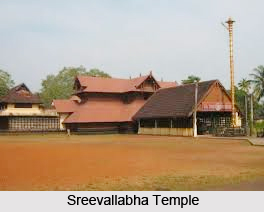
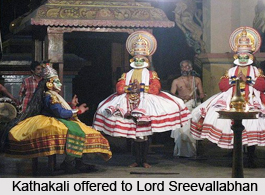
 Sreevallabha Temple is a Hindu Temple located in Pathanamthitta district of Kerala. This temple is now also maintaining the strict discipline from ancient era. Kathalkali is played here to please the Lord Vishnu. Not only that, inside the Sreevallabha Temple, there one can find numerous mural paintings made by the Alvars. The architecture and sculpture of Sreevallabha Temple allures the tourists of both national and international level. Sreevallabha Temple is dedicated to Purusha as Lord Sreevallabhan, who is one among the oldest and biggest temples of Kerala and a major destination for devotees all over India for centuries. Sreevallabha Temple is one of the orthodox Hindu temples, which is well known for its architectural grandeur and unique customs that can be found in no other temples.
Sreevallabha Temple
Sreevallabha Temple is an ancient temple in Pathanamthitta district of Kerala having the mythological and Puranic legends associated with Hindu Gods.
Introduction
History of Sreevallabha Temple
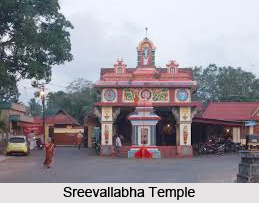 History of Sreevallabha Temple dignifies the legend behind Lord Vishnu. This place in South India is one of the earliest settlements in India.
Thiruvalla was once a village among 64 Namboothiri villages in Kerala. Since this place is situated at the mouth (vai) of Manimala River (Valla River) it had been known as "vallavai" and later transformed into "thiruvalla".
Early History of Sreevallabha Temple : The historical evidences point out the place had been populated by humans before 3000 BC. Tiruvalla inscriptions say the temple for Sudarshana Chakra was built in 2998 BC. Another opinion is that the place was named after Sreevallabha Temple as Sreevallabhapuram and Thiruvalla in colloquial Malayalam. The temple for Sudarshana Chakra was built by Sreedevi Antherjanam of Sankramangalathu Illam and it was elaborately rebuilt by Queen Cherumthevi in 59 BC. Sreevallabha temple flourished to a major spiritual and educational centre by AD 1100. The temple had governed a Vedic school (Thiruvalla Sala) with around 1500 students and 150 teachers. Veda, Vedanta, Tarka, Mimamsa, Jyotisha, Ayurveda, Kalaripayattu were taught here.
 Medieval History of Sreevallabha Temple : Sreevallabha Temple also owned an ayurvedic hospital with facilities to admit and treat 100 patients at a time. Addressing lord Sreevallabhan by names Kolapiran, Thiruvazhmarvan and Sundarayan, the Tamil vaishnavite saints Nammalvar of the 5th century AD (2612-2622 in Divya Prabhandham) and Thirumangai Alvar of the 9th century AD (paasurams 1806-1817 in Divya prabhandham) had praised glory of the temple. Famous Sanskrit poet Dandin (7th century AD) of Kanchi mentioned the temple in his works. The first ever prose work in Malayalam is the Thiruvalla inscriptions dated first half of the 12th century AD, which was obtained from the temple during 1915. The famous Unnuneeli Sandesam of the 13th century AD highlighted the grandeur, beauty, serenity, fame and status of the temple during its time.
Modern History of Sreevallabha Temple : Sreevallabha Temple was under control of Thiruvalla Pattillathil Pottimar (Brahmins of ten families) till 1752-1753. Sreevallabha Temple emerged out as a major spiritual destination for devotees all over India centuries before. It had 15 major priests (melsanthi) and 180 sub-ordinate priests (keezhsanthi) all the time and another 108 for only daily noon pooja. Sreevallabha Temple provided staying and food facilities for all visitors, students, teachers etc. and also used to conduct annadanam (serving food to the poor) daily. Naivedyam of Lord Sreevallabhan for a single time used to be made from 45 para (one para can feed approx 100 persons) rice.
Architecture of Sreevallabha Temple
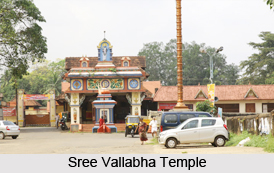 Sreevallabha Temple was built in the silent and picturesque land on the banks of Manimala river. This icon of Kerala temple architecture covers an area of 8.5 acres and ranks first among the temples of old Travancore state in terms of area inside the compound wall.
Surrounding of Sreevallabha Temple : Sreevallabha Temple is surrounded on all sides by 12 feet, tall 566 feet long, 4.5 feet thick red granite compound walls with a two-storied gopuram (gate tower) on each side. This huge wall was built in 57 BC and is believed that it was completed in a single night by bhoothagana (servants) of The Lord. Outside eastern wall a big pond covering 1.5 acres is seen in north-eastern direction with a copper flagstaff on its southern bank. A platform for performing kathakali is seen just in front of the eastern entrance. Inside the wall pradakshina veethi or outer circumambulation path is seen with four small aankottils (places where the deity is taken out and kept for worship inside temple wall) and a big one on south-eastern corner. South-east to this is an oottupura or dining hall is seen which is built in all other temples only on northern side and this is unique to Sreevallabha temple only.
Complex of Sreevallabha Temple : The temple auditorium and administrative offices can be seen next to this. Smaller shrines for lord Ganapathy and Ayyappan and another auditorium are seen in south-western side. The position of kshethra palan or temple guard which is strictly built in all temples on northern side is found here just in front of Ganapathy"s shrine i.e. on southern side which is also another peculiarity found here and nowhere else.
Holy Tress in Sreevallabha Temple : The sacred fig and mango trees beneath which sage Durvasa meditated is found near Ayyappan shrine. Just outside the western gopuram, Sankaramangalth Illam where Sreedevi Antharjanam lived is seen well preserved for the initiation of any pooja in the temple. Northern gopuram is closed always and is opened only for Uthra Sreebali festival. North east to pradakshina veethi, a self originated pond called Jalavanthi or Khandakarna theerthem which is believed to contain 64 hidden idols of the Lord. It is for only the use of priests. Spot where sage Vedavyasa and sage Durvasa disappeared is found on its eastern bank and resting building for the priests on southern side. North to the temple a roofless shrine dedicated to kurayappa swamy is seen. No pooja is done here, but only banana as naivedyam. The bahir bali vrutham or outer circle of sacrificial stones is built inner to bahir pradakshina veethi. The temple koothambalam (stage) was destroyed by fire in 1915.
Cynosure of Sreevallabha Temple : The most highlighted construction of the temple is the Garuda dhvaja sthambam or flagstaff of Garuda, the majestic eagle mount of Lord Vishnu. This monolithic structure is completely built from black granite and elevated to 53.5 feet above the ground with its lower end touching water table. Constructed in 57 BC, Sreevallabha Temple was also built in a single night along with the outer wall. And an amazing fact is that no black granites can be found in an area ten miles around the temple. A 3 feet massive idol of Garuda is placed on the top of it facing the main sanctum. Since this flagstaff started slanting and reached its current position, a three tiered copper roofed construction has been made all around it to prevent further slanting. West to this, currently used golden flagstaff can be seen. West to the third flagstaff, balikkalpura (room of the major sacrificial stone) is built around a ten feet tall balipeetha (main sacrificial stone). Vallyambalam (building attached to naalambalam at its main entrance and between naalambalam and balikkalpura) is a double storied copper sheet roofed building standing on 16 stone pillars. These pillars and the roof are noted for their exquisite and minute carvings demonstrating the excellence of those who built it.
Central Corridor of Sreevallabha Temple : The central corridor of Sreevallabha Temple leads to naalambalam (double walled building constructed around sanctum-sanctorum at a distance) with thidappalli or holy kitchen, navakappura or room for navaka pooja etc.
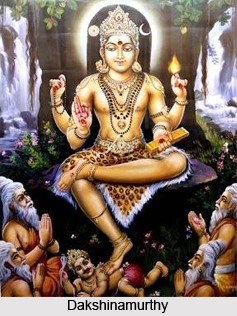
Naalambalam of Sreevallabha Temple : The 150 feet long, 11 feet Broad square naalambalam is completely made out of black stones and supported by 54 stone pillars beautifully carved with the image of a Salabhanjika on each. Outside naalambalam, a deepasala (galaxy of bronze lamps) is built on teak wood. The western part of naalambalam is adorned with some murals and a small shrine for vadakkum thevar i.e., the idols of Vishnu, Shiva, Parvati, Murugan and Nrithaganapathy worshipped by Sreedevi Antherjanam. Two namaskara mandapam (prostration building) are built against both doors of Sreekovil (sanctum-sanctorum) and only Brahmins are allowed there. The eastern mandapam is 24 feet long square building with copper sheeted roof and stand on 12 wooden and 4 stone pillars. All these are well known for their fine carvings. The western mandapam is small and also square shaped. The circular, copper roofed, golden domed sreekovil is adorned with finely etched murals of Matsya, Kaaliyamardana, Kurma, Dakshinamurthy, Varaha, Venu Gopala, Maha Ganapathy, Narasimha, Vamana, Sudarshana, Parashurama, Sree Rama, Purusha Sukta, Balarama, Sreekrishna, Lakshmi, Kalki and Garuda in clockwise manner.
Tourism in Sreevallabha Temple
Recently updated articles in Temples of India
Rathnapureeswarar Temple
Rathnapureeswarar Temple in Tiruvarur district, Tamil Nadu, is a revered Shaivite shrine among the Paadal Petra Sthalams. Dedicated to Lord Shiva, it...
Gayatri Temple, Sirmaur
Gayatri Temple is located in Sirmaur district, Himachal Pradesh. Gayatri Temple is a sacred shrine that belongs to the medieval age.
Thousand Pillars Temple
Thousand Pillars Temple, Andhra Pradesh possesses 1000 pillars built by the Kakatiya ruler Rudra Deva during 1163 AD and is adorned with beautiful scu...
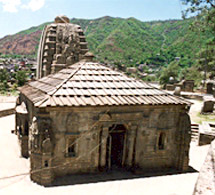
Triloknath Temple, Mandi District
Triloknath Temple is built in the Shikhara style of architecture, situated in Mandi, HP.

Shiv Temple at Mooni, Jammu & Kashmir
Ideally seated at the Billawar taluk of Kathua, Shiv Temple is a holy shrine.
Related articles in Temples of India
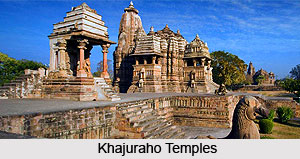
Khajuraho Temples
Khajuraho Temples are known the world over for their beauty and architectural construction. This group of temples is situated in the central Indian st...
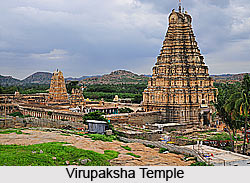
Temples In Hampi
Temples in Hampi are the manifestations of rich religious beliefs and architectural and sculptural abundance.
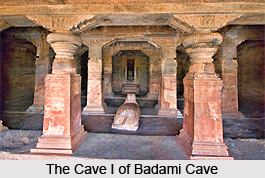
Badami Cave Temples
The Badami Cave Temples, an exemplary production of Indian architecture, are situated in the town of Badami.
Temple Architecture During Rajput Period
Temple architecture during the Rajput period was inclined to the aspect of Bhakti. Rajput kings encouraged this art which is reflected in the grandeur...
Medieval Temples of India
Medieval temples of India vary from each other due to the style and architecture. The impact of the prevalent kingdom is prominent in the style of bui...