 Architecture of Deorkothar involves the design of the various stupas present in this historical site which are of different sizes of bricks, which are existent in the central Indian state of Madhya Pradesh. Early Buddhist art-forms have been observed on these stupas which include motifs of a regular flower-pot, conical lotus bud, curved lotus and the grandest of these stupas possess a height of about 30 feet. The friezes boast of a stencil-carved appearance, coupled with ordinary ornamentation and meagre patterns of animals and humans which indicate that these stupas were some of the earliest instances of stone railing art. Therefore it probably bears testimony to the fact that these stupas at Deorkothar were erected much prior to the renowned stupa at Sanchi.
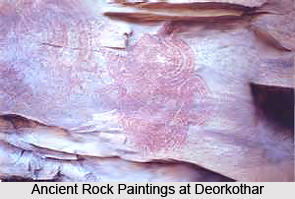
Deorkothar complex also involves 30 stone stupas, several monasteries, regular pottery-wares of daily utility belonging to the period between 700 and 300 BC, pottery sherds of superior quality northern black polished ware, a system of water channel and much more. Sanchi lacks such kinds of pottery sherds which reinstates the fact that this site dates to a much older date. The complex of Deorkothar contains 63 rock-shelters, most of which include artworks belonging to the 1st century BC which were utilized by monks for the purpose of meditation. One such painting displays a tree flanked by a railing and a stupa. Weapons, hunting scenes, patterns of women and men, animals, etc. are the other art-forms present here.
Regional sandstone was employed in the construction of these stupas rather than the Chunar sandstone which has been used in the Ashokan sculpture. Pieces of beautifully polished bangles, copper particles, some terracotta beads and terracotta toys, certain punch-marked coins, a coiled ear stud, several stone caskets, clamps, iron nails and pottery-wares have been discovered from this site. Innumerable pieces of Mauryan polished `chattra` or multi-shaded umbrella are available here. White nodules of lime, iron slag, lump of iron ore are amongst the other artefacts found here.
This article is a stub. You can enrich by adding more information to it. Send your Write Up to content@indianetzone.com