
Mainly performed by the Yadava clan, who are the descendants of Lord Krishna, the folk dance of Raut Nacha originated from the state of Chhattisgarh. This amorous dance form of Raut Nacha has a close resemblance to Krishna"s dance or the "Ras Leela". Raut Nacha acts as a symbol of worshipping Lord Krishna and as per the Hindu calendar it is believed to be the time of awakening the Gods.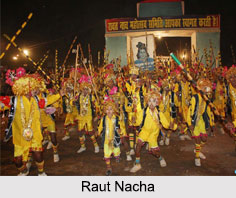
Raut Nacha
Raut Nacha is one of the renowned dance forms of Chhattisgarh. The dance is generally recognized as the dance of the cowherds presented by ‘Yaduvanshis’ who are the descendents of Lord Krishna.
Introduction
History of Raut Nacha
The Raut Nacha dance form holds a holy mythical and spiritual hint worshipped from generations with itself. The dance is generally known as the dance of cowherds performed by the Yadava clan. As per popular folklore, the folk dance form of Raut Nacha was created to commemorate the victory of Lord Krishna and the Yadava clan over the evil king Kansa.
It is said that during the end of the auspicious festival of Diwali, when the Gods are believed to be stirring, the Yadavas present this sacred dance to worship the Lord of cowherds, Krishna or "Gopinath". The dance imitates Lord Krishna"s dance or "Rasa Leela" with "Gopis" and is believed as a devotional performance.
Performance of Raut Nacha
The extremely creative and expert dance drama Raut Nacha is a popular form of entertainment for 7 days of the Diwali festival. The performances earnestly represent the mythical stories in the form of battle, dance, and music. Performed generally in groups, the dancers in Raut Nacha wear bright and colourful dresses and dance with the beat of music and songs sung by other group members.
Dancers provide themselves with the sticks, the metal shields and with bells tied to their waist and ankles so that they can perform the ancient battles honouring the heroic warriors and the eternal triumph of good over evil. The dance symbolizes the mythological battle between evil king Kansa and Lord Krishna who lead the Yadavas to the battle. The Yadavas thus celebrate their victory in the form of mock duel. Raut Nacha is therefore celebrated after the magnificent "Diwali" festival standardized with music and performance of the cowherds who played the historical battle.
The performers perform the roles with full devotion and eagerness which is reflected in their perfect performance. The contemporary dance drama characterizes the enriched cultural life of the modern era of the original local residents of Chhattisgarh.
Recently updated articles in Indian Dances
Koli Dance
A folk-dance form of Maharashtra, the Koli dance is mainly performance by the Koli community of the region. Known for their primary profession of fish...
Folk Dances of Nagaland
Folk Dances of Nagaland reflects the naga tradition and culture of the local habitants. In most of the cases, naga dances are monopoly of men with som...
Goff Dance
Goff dance of Goa is performed during the Shigmo festival in the month of Phalgun in Hindu calendar. Goan peasants mainly practice this dance after th...
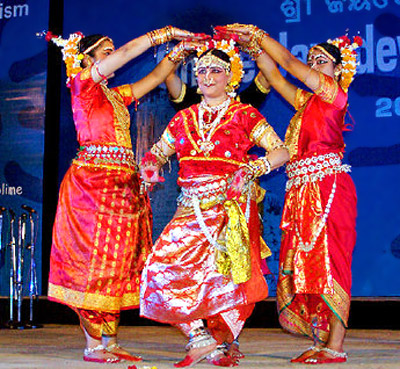
Abhinaya Chandrika
Abhinaya Chandrika is an ancient text on Odissi dance that explain every minute details of Odissi performance. The text explains about different mudra...
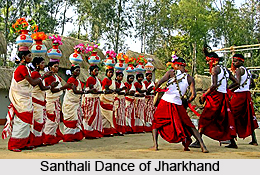
Santhali Dance
Santhali dance is a vibrant folk tradition of the Santhal tribe, reflecting the deep connection of the Santhal tribe with nature, community, and celeb...
Related articles in Indian Dances
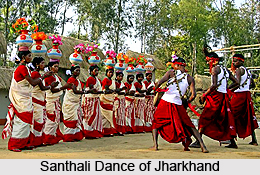
Santhali Dance
Santhali dance is a vibrant folk tradition of the Santhal tribe, reflecting the deep connection of the Santhal tribe with nature, community, and celeb...
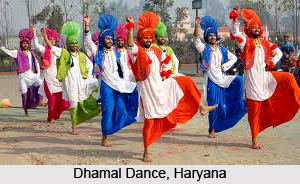
Dhamal Dance
A folk dance form of Haryana, the Dhamal Dance has its roots in the days of the Mahabharata. This dance form is primarily performed by men in the outd...
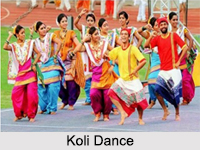
Koli Dance
A folk-dance form of Maharashtra, the Koli dance is mainly performance by the Koli community of the region. Known for their primary profession of fish...
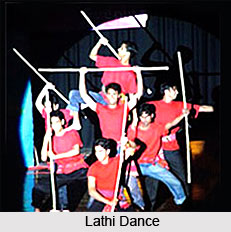
Lathi Dance
Lathi dance is a dance form of West Bengal performed on the occasion of Muharram.
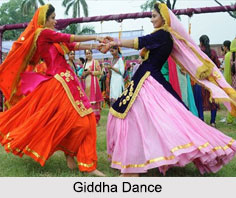
Giddha Dance
Giddha Dance of Punjab, performed only by the women, is a very popular folk art form in India. During Lohri, the Punjabi women reveal their joy throug...