 Manimekalai is considered to be one of the five great epics of Tamil literature. It was probably composed in the 6th century CE. It is an epic poem written in 30 cantos. Its story is basically a sequel to Cilappatikaram. It narrates the story of the conversion to Buddhism of the daughter of Kovalan and Madhavi. Manimekalai is the only existing Tamil Buddhist literary text. The epic Manimekalai gives much information on the history of Tamil Nadu, Buddhism and its place in earlier period, modern arts and culture, and the customs of the times.
Central Story of Manimekalai
The epic is set in the town of Kaveripattinam, in Tamil Nadu, and in Nainatheevu of Naga Nadu, a small grimy island of the Jaffna Peninsula in modern Sri Lanka. In the story, the dancer-courtesan Manimekalai is pursued by the loving Cholan prince Udyakumaran, but to a certain extent wants to set aside herself to a religious life. The sea goddess Manimekala Theivam puts her to sleep and takes to the island of Manipallavam (Nainatheevu). After waking up and travelling around the island Manimekalai came across the Dharma-seat, the seat on which Buddha had taught and settled two martial Naga princes, which was placed there by the God Indra.
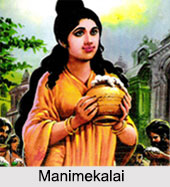 The sea goddess also forecasts that Bhikshu Aravaa Aigal in her local town will teach Manimekala further. Manimekalai then used the mantra which the sea goddess had given her. She then became a Buddhist nun or Bhikshuni and practiced to get rid from the repression of birth and death and attain Nirvana.
Significant Characters of Manimekalai
Following are the significant characters of Manimekalai:
•Manimekalai: The daughter of Kovalan and Madhavi, who was born with courageousness and virtues.
•Udayakumaran: The Chola King, who was madly in love with Manimekalai. He was an imprudent king, who wanted things to be completed only the way he wanted them to be.
•Sudhamati: Manimekalai`s most dependable and truthful friend.
•Manimegala: The sea goddess who look after Manimekalai.
•Deeva Teelakai- Guardian Goddess of the Dharma seat. She was born in the town of Puhar and got married to a merchant. Her husband once travelled to trade. Even after so many days he did not return. She was also guided by the voice to travel to the Dharma seat and protect Amirta Surabhi until she meets her destiny.