
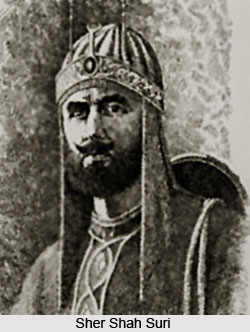
 Sher Shah Suri was an Afghan ruler who succeeded in building an Afghan empire in northern India. Sher Shah is one among those great personalities of history who had a humble beginning but succeeded in establishing powerful empire simply by his own exertions, merit and power of sword. Sher Shah did not belong to a rich family and in no way was connected with a royal family or with any well-known military commander or religious preacher. Thus, he was a man without any high connections, influence or status and he did not get any support from anybody in his career. Whatever he achieved, he achieved simply by his own efforts and capability.
Sher Shah Suri
Sher Shah Suri was an Afghan ruler who succeeded in establishing powerful empire in India simply by his own exertions, merit and power of sword.
Introduction
Sher Shah Suri was an Afghan ruler who succeeded in building an Afghan empire in northern India. Sher Shah is one among those great personalities of history who had a humble beginning but succeeded in establishing powerful empire simply by his own exertions, merit and power of sword. Sher Shah did not belong to a rich family and in no way was connected with a royal family or with any well-known military commander or religious preacher. Thus, he was a man without any high connections, influence or status and he did not get any support from anybody in his career. Whatever he achieved, he achieved simply by his own efforts and capability.Early Life of Sher Shah Suri
Sher Shah was called Farid when he was a child and was born in 1472 A.D. at the age of twenty two Sher Shah fled to Jaunpur which was the center of learning at that time, studied there for three years, acquired knowledge of Arabic and Persian and was able to impress Jalal Khan, the master of his father by his knowledge and labour. Sher Shah was appointed as the deputy of the Jagir of his father. He looked after the Jagir of his father for about twenty years (1497-1518 A.D.) and managed its administration very well. After that Sher Shah entered the service of Bahar Khan, the master of south Bihar. Here he got the title of Sher Khan after killing a tiger single-handed in a hunting excursion. Bahar than was so much pleased with his services that he appointed his deputy in the administration.
In 1526 A.D. Ibrahim Lodi was defeated at the first battle of Panipat by Babur and therefore many Afghan nobles declared their independence. Bahar Khan was also one of them. He declared himself the ruler of south Bihar and assumed the title of Sultan Muhammad. The growing influence of Sher Khan on Sultan Muhammad provoked the jealousy of certain nobles and agitated the Sultan against him. Sher Khan was forced to leave Khar. He went to Agra and took up service under the Mughal ruler Babur. But, very soon, he felt insecurity of his life and fled away from the Mughal camp. In 1529 A.D., he joined Mahmud Lodi to fight against Babur. The Afghans were defeated at the battle of Ghaghara. Nusrat Shah of Bengal attacked south Bihar but was defeated by Sher Khan who, by that time, had monopolised its administration. The Lohani nobles could not tolerate Sher Khan any more and conspired to murder him. But they failed and Sher Khan, who assumed the title of Hazrat-i-Ala, became the virtual ruler of south Bihar.
In 1526 A.D. Ibrahim Lodi was defeated at the first battle of Panipat by Babur and therefore many Afghan nobles declared their independence. Bahar Khan was also one of them. He declared himself the ruler of south Bihar and assumed the title of Sultan Muhammad. The growing influence of Sher Khan on Sultan Muhammad provoked the jealousy of certain nobles and agitated the Sultan against him. Sher Khan was forced to leave Khar. He went to Agra and took up service under the Mughal ruler Babur. But, very soon, he felt insecurity of his life and fled away from the Mughal camp. In 1529 A.D., he joined Mahmud Lodi to fight against Babur. The Afghans were defeated at the battle of Ghaghara. Nusrat Shah of Bengal attacked south Bihar but was defeated by Sher Khan who, by that time, had monopolised its administration. The Lohani nobles could not tolerate Sher Khan any more and conspired to murder him. But they failed and Sher Khan, who assumed the title of Hazrat-i-Ala, became the virtual ruler of south Bihar.
Contest for the empire by Sher Shah Suri
The success against the army of Bengal and occupation of south Bihar inflamed the ambitions of Sher Khan. He now started organising the Afghans and called them from distant places to assemble under him. In 1530 A.D. Humayun became the Mughal emperor and the Afghans decided to fight against him under Mahmud Lodi. They assembled in Bihar and Sher Khan also had to join them though he had no faith in the leadership of Mahmud Lodi. The Afghans were defeated in 1532 A.D. at the battle of Dauhria. Mahmud Lodi fled away and this provided Sher Shah the opportunity of leading the Afghans against the Mughals. Humayun had laid the siege of Chunargarh after the defeat of the Afghans in 1532 A.D. The fort was under Sher Khan and was well defended by his son Jalal Khan. After four months of siege. Humayun decided to withdraw and made peace with Sher Khan and allowed him to retain south Bihar and Chunargarh in return of acceptance of the suzerainty of the Mughals.
 While Humayun remained busy in the west for the next few years, Sher Shah utilised the opportunity to establish his power in the east. He attacked Bengal and the battle of Surajgan was fought against the army of Bengal in 1534 A.D. and complete success was by Sher Shah. He defeated Humayun in the battle of Chausa in 1539 A.D. After this battle, he assumed the title of Sher Shah Sultan-i-Adil with the consent of all his present Afghan nobles. Thereafter, he attacked Bengal and became the master of Bengal and Bihar. In 1540 A.D., he again defeated Humayun at the battle of Kannauj. He then occupied cities like Agra, Delhi, Sambhal, Gwalior, Lahore and all the territory of the Mughals. He thus, established the second Afghan Empire in India.
While Humayun remained busy in the west for the next few years, Sher Shah utilised the opportunity to establish his power in the east. He attacked Bengal and the battle of Surajgan was fought against the army of Bengal in 1534 A.D. and complete success was by Sher Shah. He defeated Humayun in the battle of Chausa in 1539 A.D. After this battle, he assumed the title of Sher Shah Sultan-i-Adil with the consent of all his present Afghan nobles. Thereafter, he attacked Bengal and became the master of Bengal and Bihar. In 1540 A.D., he again defeated Humayun at the battle of Kannauj. He then occupied cities like Agra, Delhi, Sambhal, Gwalior, Lahore and all the territory of the Mughals. He thus, established the second Afghan Empire in India.Extension of the Empire under Sher Shah Suri
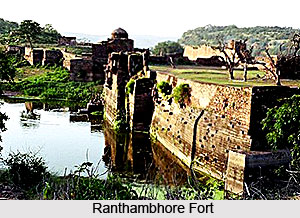
Sher Shah`s chief concern was to safeguard his empire from any fresh invasion of the Mughals. His second task was the extension of his empire and its consolidation. Therefore, he engaged himself in the double task of making further conquests and administering his empire till his death in1545 A.D. He introduced novelty in the administration of Bengal to check the possibilities of future revolt in that distant province. He divided Bengal into several districts and placed each of them under a military officer called the Shinqdar with a small force. The Shinqdars were placed under a civil officer called Amin-i-Bangla. Sher annexed a major portion of Malwa and forced the governor of the fort of Ranthambhor to surrender to him. Sher Shah was successful in capturing Multan and part of Sindh and also reduced Rajasthan to submission. After the conquests of Malwa and Rajasthan, Sher Shah decided to conquer Kalinjar and Bundelkhand. Kalinjar was of administrative and military importance to Sher Shah who was eventually successful in capturing it. Sher Shah succeeded in capturing practically entire northern India except Kashmir, Assam and Gujarat. He proved himself a capable administrator as well. Therefore, he occupies an important place among the rulers of medieval India.
Administration under Sher Shah Suri
Administration under Sher Shah Suri is regarded as one of the best during the medieval period. It constituted of an effective working of the central and provincial administration. Sher Shah concentrated all administrative powers in his own person. He practiced the Turkish theory of kingship in his administrative matters because he knew that the Afghan theory of kingship was not workable in India. Sher Shah`s administration can be divided into central and provincial administration.
In the central administration all the powers were concentrated in Sher Shah`s hand. His ministers enjoyed even less powers as compared with the ministers of the Mughals. All major decisions were taken by Sher Shah himself and the ministers and the nobles simply carried them out. There were departments whose administrate heads enjoyed the position of ministers such as the Diwan-i-wazirat where the head of this department was the wazir, the finance minister who looked after the income and expenditure of the state. The Diwan-i-arz department was under the Arz-i-Mumalii who was the army minister. He was not the commander-in-chief of the army but looked after the recruitment, organisation, discipline, disbursement of the salaries of the soldiers and officers. The Diwan-i-rasalat department was in charge of the foreign minister of the state. He received foreign envoys and ambassadors and maintained correspondence with the foreign state. The head of the department Diwan-i-insha was called Dabir-i-Khas who looked after the internal correspondence of the state.
Besides these ministers, there were two other important departments of the state whose heads were not ministers but enjoyed consideration from the Sultan. The one was the Diwan-i-Qaza whose head was the chief Qazi. The chief Qazi was the head of the administration of justice only next to the Sultan. The other was Diwan-i-Barid which was presided over by the head of the intelligence department. He looked after the news writers and spies of the state who were posted at important places in the empire.
Very little is known about the provincial administration of Sher Shah. There were Subas where military governors were appointed by Sher Shah. There were provinces called the Iqtas where military governors or Subedars were appointed. Subedars were appointed in Lahore, Malwa and Ajmer. The entire Suba was divided into Sarkars (districts), each being looked after by a military officer called the chief Shiqdar. Above all chief Shiqdars there was appointed a civilian officer with a small military force to supervise the administration f the province. Thus there was no military governor in Bengal and there was no other officer commanding a sufficiently large force so as to be in a position to revolt against the Sultan. Thus, there was no uniformity in the administration of provinces during the reign of Sher Shah. But all provinces were kept under strict discipline by Sher Shah and there occurred no revolt by any provincial governor except that in 1541 A.D. in Bengal which was quickly suppressed by the Sultan. Each Sarkar was divided into smaller units called the Parganas. There was a Shiqdar (military officer), Munsif (Civilian Judge) and two Karkuns (clerks or writers) in each Pargana.
Sher Shah left the administration of villages in the hands of their hereditary officers like Chaukidars, Patwaris etc. The village assembly also enjoyed a large measure of independence in looking after the welfare of the people. All of them assisted state officials in collecting revenue and maintaining law and order. Sher Shah introduced the system of transferring the officers to the Sarkars and Parganas every two or three years. Thus during the reign of Sher Shah, administration was at its best.
In the central administration all the powers were concentrated in Sher Shah`s hand. His ministers enjoyed even less powers as compared with the ministers of the Mughals. All major decisions were taken by Sher Shah himself and the ministers and the nobles simply carried them out. There were departments whose administrate heads enjoyed the position of ministers such as the Diwan-i-wazirat where the head of this department was the wazir, the finance minister who looked after the income and expenditure of the state. The Diwan-i-arz department was under the Arz-i-Mumalii who was the army minister. He was not the commander-in-chief of the army but looked after the recruitment, organisation, discipline, disbursement of the salaries of the soldiers and officers. The Diwan-i-rasalat department was in charge of the foreign minister of the state. He received foreign envoys and ambassadors and maintained correspondence with the foreign state. The head of the department Diwan-i-insha was called Dabir-i-Khas who looked after the internal correspondence of the state.
Besides these ministers, there were two other important departments of the state whose heads were not ministers but enjoyed consideration from the Sultan. The one was the Diwan-i-Qaza whose head was the chief Qazi. The chief Qazi was the head of the administration of justice only next to the Sultan. The other was Diwan-i-Barid which was presided over by the head of the intelligence department. He looked after the news writers and spies of the state who were posted at important places in the empire.
Very little is known about the provincial administration of Sher Shah. There were Subas where military governors were appointed by Sher Shah. There were provinces called the Iqtas where military governors or Subedars were appointed. Subedars were appointed in Lahore, Malwa and Ajmer. The entire Suba was divided into Sarkars (districts), each being looked after by a military officer called the chief Shiqdar. Above all chief Shiqdars there was appointed a civilian officer with a small military force to supervise the administration f the province. Thus there was no military governor in Bengal and there was no other officer commanding a sufficiently large force so as to be in a position to revolt against the Sultan. Thus, there was no uniformity in the administration of provinces during the reign of Sher Shah. But all provinces were kept under strict discipline by Sher Shah and there occurred no revolt by any provincial governor except that in 1541 A.D. in Bengal which was quickly suppressed by the Sultan. Each Sarkar was divided into smaller units called the Parganas. There was a Shiqdar (military officer), Munsif (Civilian Judge) and two Karkuns (clerks or writers) in each Pargana.
Sher Shah left the administration of villages in the hands of their hereditary officers like Chaukidars, Patwaris etc. The village assembly also enjoyed a large measure of independence in looking after the welfare of the people. All of them assisted state officials in collecting revenue and maintaining law and order. Sher Shah introduced the system of transferring the officers to the Sarkars and Parganas every two or three years. Thus during the reign of Sher Shah, administration was at its best.
Military Administration of Sher Shah Suri
Military administration of her Shah Suri was a huge success. He maintained a standing army at the centre like Ala-ud-din Khilji. His military strength consisted of one lakh and fifty thousand cavalry, twenty five thousand infantry and five thousand elephants. His artillery, probably, was the weakest part of his military strength while the cavalry consisted mostly of the Afghans. However, other Muslims and the Hindus, too, were employed in the army. Sher Shah took personal interest in the recruitment, training, promotion, discipline, disbursement of salary and supply of arms, clothes etc. to his soldiers. Sher Shah succeeded in maintaining a large, disciplined and effective army during his time.
Sher Shah adopted the practices of maintaining the huliya of the soldiers and that of branding of the horses. Besides the army of the Sultan, provincial governor, nobles and subordinate rulers were also allowed to maintain their separate armies which were called in for the assistance of the Sultan when needed. Soldiers were kept in all forts and military cantonments spreading all over the territory of the empire. The strength of the army which was so spread in different parts of the empire must also be in large number. Sher Shah`s administration, both civil and military, has been regarded highly successful. He infused a new spirit in the old institutions and improved it. Thus during his time Sher Shah succeeded in maintaining a strong and effective army.
Sher Shah adopted the practices of maintaining the huliya of the soldiers and that of branding of the horses. Besides the army of the Sultan, provincial governor, nobles and subordinate rulers were also allowed to maintain their separate armies which were called in for the assistance of the Sultan when needed. Soldiers were kept in all forts and military cantonments spreading all over the territory of the empire. The strength of the army which was so spread in different parts of the empire must also be in large number. Sher Shah`s administration, both civil and military, has been regarded highly successful. He infused a new spirit in the old institutions and improved it. Thus during his time Sher Shah succeeded in maintaining a strong and effective army.
Revenue System of Sher Shah Suri
Revenue system during the reign of Sher Shah Suri was quite an efficient one. The main sources of income of the state were the land-revenue, unclaimed property, trade-tax, mint, salt-tax, khams, viz. one fifth of the plunder taken during the time of war, Jizya and presents from subordinate rulers, governors, nobles, traders etc. The main items of expenditure were the expenses to maintain the army, salaries of civilian officers and the expenditure of the royal household and the Sultan. The local taxes were levied mostly on production and consumption of various trade and professions and on transport. The land-revenue, however, constituted the primary source of income of the state. Sher Shah believed that the welfare of the state could be achieved only by looking after the welfare of the peasants. Therefore, he paid personal attention towards the revenue administration and introduced certain successful measures to improve it. His revenue administration has been regarded as one of the best during the medieval period.
The system which Sher Shah introduced in most of the places was Ryotwari wherein the state kept direct relations with the peasants for the assessment and collection of the land revenue. However, the system could not be introduced in Multan, Malwa and Rajasthan where the Jagirdari system continued to exist. All cultivable land was divided into three categories on the basis of production, viz. good, middle and bad. The land was measured according to a uniform system and it was ascertained that what quality of land was possessed by each cultivator. An average of the produce was estimated in each case and then the cultivators were asked to pay one third of their produce to the state. The state preferred to collect revenue in the form of cash and for that purpose; prices of every variety of cereals were fixed at different places. The revenue on perishable articles was, however, paid by the peasants in form of cash only.
The peasants were given the facility to pay their revenue in installments in a year according to crop seasons. The peasants were given pattas (title deeds) by the state specifying the revenue which they had to pay and were asked to sign deeds of agreement signifying their acceptance to pay the required revenue. The peasants had also to pay two more taxes, named the surveyor`s fee and the tax-collector`s fee to the state. These constituted two per cent to five per cent of their produce. Besides these, the peasants had to pay two per cent of their produce in kind to be returned to them in case of any natural calamity such as flood, famine etc. According to the orders of the Sultan, the peasants were treated with generosity while fixing the revenue but once settled they were asked to pay their revenue without any mercy on behalf of the state.
The revenue administration of Sher Shah also suffered from certain defects. The peasants who possessed middle and bad quality of land had to pay more as compared to the owners of good quality land under this system. The annual settlement of the revenue was inconvenient both to the peasants and state-officials. There was corruption in the revenue department and Sher Shah failed to uproot it. That must have affected adversely the welfare of the peasants. Yet, the measures introduced by Sher Shah had largely succeeded in doing well to the peasants and increasing the income of the state. The revenue system of Sher Shah, therefore, has been regarded as fairly good as compared with the system of other rulers of medieval India.
The system which Sher Shah introduced in most of the places was Ryotwari wherein the state kept direct relations with the peasants for the assessment and collection of the land revenue. However, the system could not be introduced in Multan, Malwa and Rajasthan where the Jagirdari system continued to exist. All cultivable land was divided into three categories on the basis of production, viz. good, middle and bad. The land was measured according to a uniform system and it was ascertained that what quality of land was possessed by each cultivator. An average of the produce was estimated in each case and then the cultivators were asked to pay one third of their produce to the state. The state preferred to collect revenue in the form of cash and for that purpose; prices of every variety of cereals were fixed at different places. The revenue on perishable articles was, however, paid by the peasants in form of cash only.
The peasants were given the facility to pay their revenue in installments in a year according to crop seasons. The peasants were given pattas (title deeds) by the state specifying the revenue which they had to pay and were asked to sign deeds of agreement signifying their acceptance to pay the required revenue. The peasants had also to pay two more taxes, named the surveyor`s fee and the tax-collector`s fee to the state. These constituted two per cent to five per cent of their produce. Besides these, the peasants had to pay two per cent of their produce in kind to be returned to them in case of any natural calamity such as flood, famine etc. According to the orders of the Sultan, the peasants were treated with generosity while fixing the revenue but once settled they were asked to pay their revenue without any mercy on behalf of the state.
The revenue administration of Sher Shah also suffered from certain defects. The peasants who possessed middle and bad quality of land had to pay more as compared to the owners of good quality land under this system. The annual settlement of the revenue was inconvenient both to the peasants and state-officials. There was corruption in the revenue department and Sher Shah failed to uproot it. That must have affected adversely the welfare of the peasants. Yet, the measures introduced by Sher Shah had largely succeeded in doing well to the peasants and increasing the income of the state. The revenue system of Sher Shah, therefore, has been regarded as fairly good as compared with the system of other rulers of medieval India.
Tomb of Sher Shah Suri
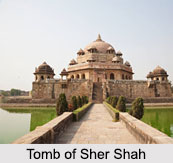 The tomb of Sher Shah Suri is located in Sasaram, Sher Shah Suri, basically a Pathan ruler, was the emperor of Suri dynasty. The most famous creation of Sher Shah is the Grand Trunk Road. He also had a refined taste in architecture; it is evident in the Rohtas Fort built by him. Humayun, on Sher Shah"s death entitled him as "Ustad-I-Badshahan", the teacher of kings. Sher Shah Suri was succeeded by his son Jalal Khan who later adopted the name of Islam Shah. Beside the tomb of Sher Shah Suri, there is located the tomb of Hasan Shah Suri his father. The astounding mausoleum inside an artificial lake mesmerizes its visitor"s eyes.
Architecture of Sher Shah Suri"s Tomb
Sher Shah"s tomb was built by the master architect Mir Muhammad Aliwal Khan. He was first commissioned to erect the tomb of Hasan Shah Suri and later he built the tomb of Sher Shah Suri. A path or a link is made between the two tombs to go from one to the other.
This three-storied mausoleum rises to a height of 122 feet and was originally planned to be a typical island tomb with no access to the mainland. There are stairways on each side of the tomb that lead to the water. There is a landing platform on the eastern side and a causeway between the tomb and the guardroom. The guardroom or the entrance porch on the edge of the northern side of the lake is flanked by two mosques and was meant to provide crew and rafts to the serious visitors willing to see the tomb. A bridge of arches linked the entrance porch and the tomb. The bridge did not last and the visitors used rafts made of earthen pots till 1881, until the present causeway was constructed.
The mausoleum appears perfectly symmetrical but its base has a slight deviation at the cardinal points. However, these have been skillfully adjusted to give the impression of perfect alignment. The mausoleum is built on a large square terrace. The corners support the octagonal pavilions with small kiosks between them. The entrance gives way to a wide verandah on all sides, which is shaded by 24 small domes supported on arches and each corner of the verandah has a cupola. The tomb chamber is plain with faded inscriptions on the western wall. The interior is well ventilated and the light comes through the large windows on the top of the walls fitted with jalis. The exterior was originally glazed and painted with a colour combination of red, blue, gold and white. Traces of these colours can still be seen on the parapets and battlements.
Visiting Information to the Suri"s Tomb
By railway the city can be reached via Sasaram railway station. By road the city is approachable by accessing the National Highway 2 or "The Grand Trunk Road". By air, one can go to the city by reaching Patna airport.
Recently updated articles in History of India
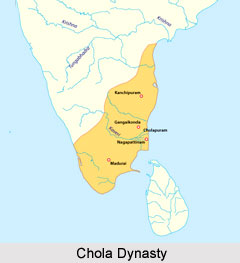
Chola Dynasty
Chola Dynasty is a Tamil dynasty and had longest duration of ruling in parts of South India. Chola dynasty had ruled South India successfully for a ex...
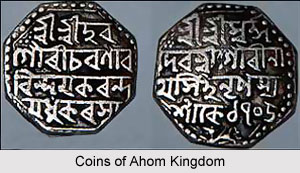
Suhungmung
Suhungmung was the fourteenth ruler of the Ahom dynasty who ruled from the period 1497 to 1539 AD. His reign was significant in terms of expansion of...
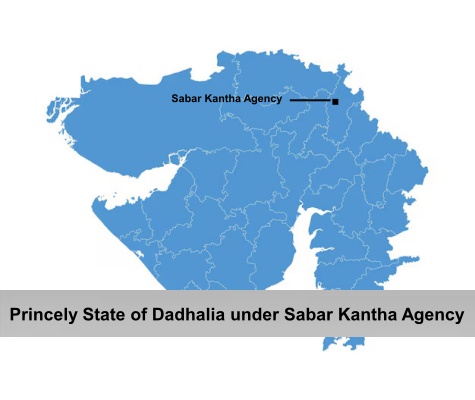
Princely State of Dadhalia
Princely State of Dadhalia was located in the present state of Gujarat. The state covered a total area of 28 sq miles and comprised of 15 villages. Th...
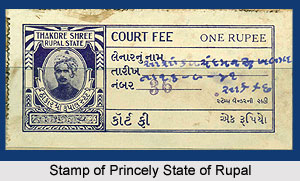
Princely State of Rupal
Princely State of Rupal was a part of the Baroda Agency, a sub division of Western India States Agency. It was under the administrative control of the...
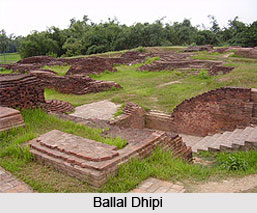
Archaeological Sites of West Bengal
Archaeological sites of West Bengal reveal several aspects of ancient India. Excavations by the Archaeological Survey of India have furnished artefact...
Related articles in History of India

Mughal Architecture during Babur
Mughal architecture during Babur marked the foundation of a new architectural era in India, blending Timurid, Persian, and local influences. His reign...

Architecture during Sayyid and Lodi Dynasty
Architectures during the Sayyid and Lodi dynasty were mainly the tombs and monuments for the dead rulers. It were carefully designed and meticulously...

Brahmanical Sources of Ancient History
Brahmanical Sources of ancient history are contained in the Vedas and they constitute one of the most important literary sources of information about...

Coins of Chola Empire
Coins of Chola Empire were issued in gold, silver and copper and carried the Chola emblem.

Coins of Khilji Dynasty
Coins of Khilji Dynasty had an influential feature that was followed by the other dynasties.