Introduction
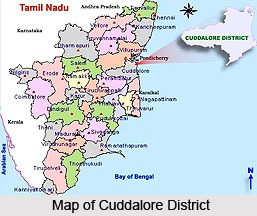 Cuddalore District is one of the administrative districts of Tamil Nadu. This is well known for the world famous Lord Natarajan Temple. Cuddalore city is the district headquarters. This is the original place of the sculpture of Nataraj. Cuddalore District is known for its unique specialties. Like for instance, Cuddalore District is considered as the abode of Cosmic Dancer. The historic importance of this District can be mentioned properly as it has played role since the time of `Idicasam`. This place is also famous for Lignite and Coal Mine. Lignite that is found in abundance is actually a treasure for the community. Like this out of Coal Mine heavy power and electricity is produced and distributed throughout the country. Cashew nut is known as the rich crop of this district. Maximum export is being done from this district and it is known as one of the important commercial crops of this district.
Location of Cuddalore District
The geographical position of Cuddalore District is north latitude between 11 degree 11 minutes and 12 degree 35 minutes and east longitude between 78 degree 38 minutes and 80 degree. The total area of Cuddalore district is 3678 sq kms. As per 2001 Census, total population of Cuddalore District is 22,85,395, out of which male population is 11,50,908 and female population is 15,31,034. Total number of literate population is 14, 20,488.
History of Cuddalore District
 Cuddalore district was consisted of the 21 Taluks of Arcot, Vellore, Thiruvathur, Polur, Arani, Wandiwash, Chetpet, Thiruvannamalai, Gingee, Tindivanam, Valudavur, Villupuram,Anniyur, Tirukoilur, Thiruvennainallur, Tiruvadi, Elavanasur, Kallakurichi, Vridhachalam, Tittagudi and Bhuvanagiri but excluded the form of Fort St. David and the territory of Pondicherry. Both of them had been separately acquired and were separately administered. In April 1805, the then Taluk of Mannarkudi which is included as Chidambaram was added from Tiruchirapalli to this huge charge.
In 1808, Arcot, Vellore, Thiruvathur, Polur, and Arani Jagir were transferred to North Arcot and Wandiwash was transferred to Cheingelput. The Fort St. David and Pondicherry villages were incorporated with the District at that time. In 1816, Pondicherry was finally restored to the French and previous South Arcot moved practically its position. Cuddalore was the District Headquarters for South Arcot District for more than a century. This has been mentioned everywhere in the history. The present Cuddalore District has been formed on 30th September 1993.
In Purana this district is described as a part of Sri. Rama Khetra. This district is regarded as a primitive one. Vridhachalam is the example where mountain once prevailed but disappeared at times. In 1962 the madras district gazetteers `South Arcot` published. In that gazette historic evidence of the district were present. In this gazette it was revealed that the name `arcot` is derived from the Tamil word `Aaru kadu`. This means six forests, which was said to be the abode of six rishis. In Tamil this district was called `Thondai Nadu`, in particular `Nadu Naadu `. It has a speciality ` Saandror udaithu`. This means that great and elite personalities possess the district.
This district is the birthplace of Vallalar Ramalingar. The famous temple of Sri Natarajan is situated in this district. It is an interesting subject to scientists and innovators to research on the dancing postage of Lord Sri. Nataraja. This is also regarded as one of the speciality of this district.
Administration of Cuddalore District
Administration of Cuddalore District include three revenue divisions, six revenue taluks, 32 revenue firkas and 896 revenue villages.
Economy of Cuddalore District
Economy of Cuddalore District is dependent on agriculture. Total cultivated area of the district is around 2, 72,159 Hectares. A huge portion of the cultivated land is used in rice production. The other important crops that are produced in the district abundantly include millets, pulses, sugarcane, groundnut, cotton, etc. There are number of fisheries present in this locality. The district has several industries including small scale cottage industries. Economy of the district also depends on animal husbandry. There are many rivers and lakes, which helps to maintain the irrigation properly in the district. The important ones are Gadilam, Pennar, Vellar, Veeranam, Perumal Eri, and Wellington Lake.
Education in Cuddalore District
The literacy rate is in a higher position here in Cuddalore District. There is one university present in the district whereas there are around eight arts and science colleges, near about one medical college, around four engineering colleges and one agricultural college. Nearly 1245 primary schools are also present in the district. Further, there are around nine teacher-training colleges present in Cuddalore District.
Temples of Cuddalore District
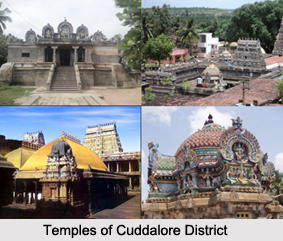 The temple of this place has created an image at the mind of the tourists. Tall and towering temples mark the landscape of Tamil Nadu. They remain as preserves of cultural heritage of the ancient India. These temples also promote the prayers to almighty God and helps in creating the religious thoughts to the mind of the young generation. The temples not only inspired promotion of art and culture, it also enhance the spirituality power in human being. Chidambaram is one such sacred place with Lord Nataraja temple for which the Cuddalore district is very famous.
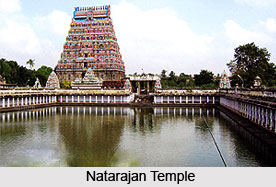
The Nataraja Temple is the most celebrated of the south India saivite Temple. This was built during the eleventh century. Lord Nataraja is the family deity of Vikrama Chola who was the ruler in 1128. His successors also used to follow this god. He spent the bulk of his revenue for construction of the walls and addition of the structure of the temple. He also made costly gifts in gold to the structure.
Chidambaram became popular due to its proximity to Gangaikonda cholarapuram built and made as the capital of the imperial Cholas by Rajendra Chola. Inscriptions and Tamil literature like Raja Raja Chola Ula and Takkayagappari give detailed accounts of the temple and the munificent contribution of the Chola kings in gold to wrap the holy place and the famous hall. The temple located in the middle of the municipal town sprawls in an area of 40 acres. Inside the walls there are four Gopurams or Towers present that are embellished with numerous sculptures. They represent various religious scenes and fables and stories. The East Gopuram, which is the main entrance, is the oldest while the West Gopuram is more attractive and outstanding. The tallest is 42.4 meters above sea level and 140 feet above the ground level.
The inner enclosure is the most sacred and has four of five Sabhas. The Nrithya Sabha, the Hall of Dance is the most beautiful and interesting part of the temple. The Sivakami temple, the sivagami tank and the Hall of thousand pillars are important features of temple. These are seen and praised by lot of tourists every year.
The presiding deity of the temple is represented by air, one of five elements and is known as Akasa Lingam. The great three Tamil saints Appar, Sundarar and Sambandar have visited the temple. Their hymns praise the temple and Divine Dancer, Lord Nataraja.
The Nataraja image in its various forms really holds the devotee as well as the tourist in exaltation. One may not believe in god but anyone who believes in art of beauty can come here and enjoy the place.
Lord Pataleeswarar : Thirupathiripuliyur in Cuddalore district is one of the ancient saivite shrines in Tamil nadu. This place is sanctified by the visit of two of the four chief nayanmars viz. Thirunavukkarasar and Thirugnanasambandhar. The former part of the name of this sacred place indicates the sthalaviruksha Pathiri Tree and the latter Puliyur indicates the tiger legged saint who made penance in this place.
The Presiding Deity Lord Pataleeswarar is also known as Thondra Thunai Nadhar and the Goddess is named Periyanayaki Amman. This holy place is a very ancient one held in high devotion by the saivites. The devotees take the place as a place of worship. According to the inscriptions found in the temple and rendered in modern Tamil by the Department of Archeology, the history of this temple could be traced to the periods of paranthaga Chola, First Rajarajan, First Rajendren, First Kulothungan, Vikrama Chola and also by the kings of Pallava and Pandiya dynasties. This Pandiya Dynasty had performed renovation works from time to time in this temple and also made grants and gifts for the upkeep of this temple.
The Philanthropic "Thee So" family of Pudukkotai Nagarathar, renovated this temple and performed Kumbhabhishekam in 1917.
Tiruvaheendirapuram : Tiruvaheendirapuram is the Sacred Abode of Lord Devanatha. This is regarded as one of the ancient Vaishnavite temples. This can also called as one of the 108 Vaishnavite shrines sanctified by the visit of the great Alwars and Acharyas, held in great respect by the devotees. The Alwar who has sung about this celestial place is Sri. Thirumangai Mannan, otherwise known as Sri. Parakala. This place is one of the two Nadunattu Tirupathis. It is situated 7 km west of Tirupapuliyur or Cuddalore New Town Railway Station. It is in the Chennai- Trichirapalli main line of the Southern Railway. This ancient temple is situated in between the sacred Oushadhagiri Hill and Garuda Nathi or River Gadilam. This river is considered to be as holy as River Ganges. The name of this river is Utharavahani. The name fits it as it flows towards North in this sacred place.
The Presiding deity of this temple is Lord Devanatha. He is known by several other names. Some of them are given below: Dasa Satyar, Deivanayagan, Achuta, and Mevoojothi etc. Lord Devanatha is in trinity form here at this place. This is because of the fact that he gave darsan to Chola king in trinity form i.e. Sri Brahma, Sri. Vishnu and Sri. Rudra. Thirumangai Alwar has sung 10 pasurams about Lord Devanatha and in one of which he refers to the Lord as `Moovarahia Oruvan`. There is legend to tell us that Lord Devanatha acted to come down and take abode in this place in response to the prayers of Lord Brahma, Lord Siva, Indra, Brugu, Markendeya, Prahlada, Boomidevi and others. Even now we can see the images of Markendeya and Booma devi in the holy place on either side of Lord Devanatha. The Presiding Deity Sri Devanatha is considered to be a twin deity of Lord Venkateswara of Tirupathi. The importance of this is narrated in Prahbandapuranam, Skandapuranam and Brahanna rathyeeyam.
The Goddess worshipped in this temple is Sengamala Thayar or Hemabujavalli Godess Lakshmi, who incarnated Herself in the midst of a lotus flower in the form of a three-year-old child. She was brought up by Brugu Munivar. She gave her appellation `Tharanga Mugua Nandhini` to indicate how she enjoyed watching the beauty of the waves of the sea nearby.
Lord Sri Rama in his grand form has been sung by Sri Desika in his Raghuweera Gadyam, as the one and only Mahaveera.
This temple is regarded as a very holy place as well as sacred one for devotees because of the special association of the great Vaishnavite Acharya Sri Nigamantha Maha Desika. He had born in 13th century. Sri. Desika chose to stay here for about 40 years. The divine beauty of the presiding Deity of this ancient temple and the place magnetized him. There is a temple to Lord Lakshmi Hayagriva i.e. Mahavishnu with horse face in the Hill which is not found anywhere else in the country.
Here the Lord gives darshan in standing posture as Devanatha, in sitting posture as Ahindrapuranatha and in Sayana Tirukolam or Lying Posture as Palli kondanathar. There are separate places of worship within this temple for Sri Rama, Sr. Rajagopalan, Sri. Venugopalan, Smt. Andal, Sri. Chakkarathalvar, Alwars and Desika.
Srimushnam : Srimushnam is located at the distance of 31 kms from Chidambaram. Srimushnam is the famous Vaishnava temple of Bhuvaraha. This is one of the eight Vaishavas shrines. The image in the temple is self-created that is known as Swayam Vyakta representing Varaha Avatar. The original image in marble was taken away by Krishna Deva Wodeyar of Mysore and installed it at Srirengapattinam. The front Mandapam is usually called as Purushasukara Mandapam. This was built in the 17th century that looks like a chariot with elegantly carved figures of warriors riding the horses and elephants. The Nayakas who built the temple are illustrated in carved royal portraits on the pillars in the center of the hall. This temple is well visited by the numerous numbers of devotees everyday.
Tourism of Cuddalore District
 There are many places, which are very enchanting to visit at times. Some of the tourist`s places that are popularly visited are given below.
Eco-Tourist Circuit
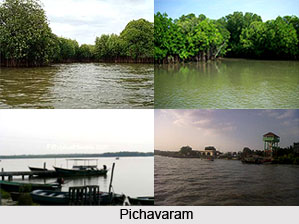
Pichavaram Forest : Pichavaram is regarded as the most exquisite scenic spot along with some other important one of the Cuddalore district. This place is packed with abundant and varied tourism resources. The Vellar and Coleroon system interconnect the backwaters. This offers abundant scope for water sports. The water sports usually include rowing, kayak and canoeing. The Pichavaram forest not only offers water scope and backwater cruises, the place is also very famous for the mangrove forest. These are the trees permanently rooted in a few feet of water.
Pichavaram mangroves are considered among the healthiest mangrove in the world. This tourist spot consists of a number of islands placing a vast expanse of water and covered with green trees. The area is about 28 acres and is separated from the sea by a sand bar. This place is a boon for a botanist. As rare species like Avicennia and Rhizophara are present here in abundance. Same n case of an ornithologist, as numerous birds like Watersnips, Cormorants, Egrets, Storks, Herons, Spoonbills and Pelicans holds great interest. All total 177 species of birds belonging to 15 orders and 41 families have been recorded at this place. Every year at the month of September to April these birds come at this place. Peak population of birds can be seen from November to January. The availability of different habitat types such as channels, creeks, gullies, mud flats and sand flats and adjacent seashore offers ideal habitat for difference species of birds. Tamil Nadu Tourism Development Corporation (TTDC) offers boating facilities to the visiting tourists. As a whole it can be said that tourists can enjoy the best of their time at this place.
 TTDC and the district administration of Cuddalore district have proposed to conduct an Eco Tourism festival namely "Dawn Fest" at Pinchavaram. This is also known as Vidiyal Vizha in local language.
The special attractions of `Dawn` fest are
• 1. Boat ride witnessing the Irula Tribals catching prawns and Crabs.
• 2. Enjoying Folk and traditional instrumental music performances on a "Floating stage" from boats.
• 3. Night dinner i.e. Seafood festival.
• 4. Viewing `sun rise` in the background of South Indian instrumental music and yoga demonstration.
• 5. Early morning Bird watching and boating through the mangroves.
Dawn fest offers a unique experience to international and domestic tourists as well. All of them enjoy a lot here. The expenditure it costs is very nominal. This rare Eco-Tourism event also offers an opportunity to written the devastation of Tsunami and the spectacular recovery. Thus international as well national tourists can come here and can get the pleasure of life to be a part of it.
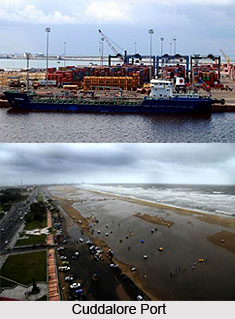
Cuddalore Port : Cuddalore Port is situated in Lat.110 43 N. and Long. 79 degree 49 minutes East. This is placed at the confluence of the rivers Gadilam and Paravanar discharging as combined river into the sea in the District of Cuddalore in Tamil Nadu. The ships anchor in midstream at a distance of about a mile from the shore and cargo is loaded and discharged at this place.
There is a bar at the mouth of the river, which maintains a depth of 5` to 6` at low water. During the months of July to September the depth over the bar is reduced to about 3 to 4 feet.
The hinterland of Cuddalore Port consists of the districts of Cuddalore and parts of Salem and Thiruchirapalli as well. The area is rich in minerals. The area named Neyveli that contains Lignite is placed at about 40 Kms from the port and iron ore deposits in Salem District. There is several oil crushing mills present in and around the port. Sugar factories are present at Nellikuppam, Pennadam and Mundiyampakkam.
All these factories and ports are well visited by the tourists.