
 Caste system in India is a composite structure of different social classes in the Hindu religion. Caste system in India has a long history dating back to the ancient past. It dates back to that era when people used to believe that people were born into a particular social status. They also believed that experiences in past lives and good deeds can actually reincarnate one into higher social strata in the next life. The Indian caste system has gone places with the changes that have taken place in the society. Education has been massively instrumental in bringing a change in the state of mind though a large section of a society, mostly the older generation is still under the curse of this social ostracism.
Caste system in India is a complex system of several distinctions, which have divided the society into the high and low strata. Lots of measures at present have been taken up by the government for the enhancement of backward castes who do not have a social standing.
Caste system in India is a composite structure of different social classes in the Hindu religion. Caste system in India has a long history dating back to the ancient past. It dates back to that era when people used to believe that people were born into a particular social status. They also believed that experiences in past lives and good deeds can actually reincarnate one into higher social strata in the next life. The Indian caste system has gone places with the changes that have taken place in the society. Education has been massively instrumental in bringing a change in the state of mind though a large section of a society, mostly the older generation is still under the curse of this social ostracism.
Caste system in India is a complex system of several distinctions, which have divided the society into the high and low strata. Lots of measures at present have been taken up by the government for the enhancement of backward castes who do not have a social standing.Caste System in India
Caste System in India traces the history of the caste system that has affected the nation as a whole since ages. In India, however the caste system was not very rigid as it turned out to be after the British era.
Introduction
Caste system in India is a composite structure of different social classes in the Hindu religion. Caste system in India has a long history dating back to the ancient past. It dates back to that era when people used to believe that people were born into a particular social status. They also believed that experiences in past lives and good deeds can actually reincarnate one into higher social strata in the next life. The Indian caste system has gone places with the changes that have taken place in the society. Education has been massively instrumental in bringing a change in the state of mind though a large section of a society, mostly the older generation is still under the curse of this social ostracism.
Caste system in India is a complex system of several distinctions, which have divided the society into the high and low strata. Lots of measures at present have been taken up by the government for the enhancement of backward castes who do not have a social standing.Caste System in Rig Veda
Caste system in Rig Veda forms the main distinguishing feature of the Hindu society. The Aryans of Central Asia and the Indo-Aryans also in the first two centuries did not follow any caste. It is only during the Rig-Vedic age that the four castes are stated. However the rigidity in the caste system as prevalent in our society or as it appears from the Code of Manu did not exist in the Vedic age.
In Central Asia the term `Brahmana` earlier meant `one expert in the religious rites`. It is assumed that sage Narayana discovered the Brahman (the Supreme Being) all the rishis and devas converted into `Brahmanas.` It is noted that from the counsels of Narada to Mandhata in the Mahabharata all were Brahmanas. The earliest distinction made by the Indo-Aryans was between themselves and the natives and it was on the basis of varna i.e. colour. The Indo-Aryans identified themselves as Svitnya meaning white and the natives Krishna-twach meaning dark.
It is believed that all traditions of the caste system originated from Prithudaka, capital of Prithu, on the sacred River Saraswati. Brahmavarta, presently Bithoor, was earlier the home of the most eminent sages. Their institutions, morality, chaste mannerisms, wisdom and perceptions were so admirable that even the `devas` of the north would descend to learn. Even Manu in his Code (twenty-eighth century BC) had recommended to imitate their morals and ethics. Thus it is significant that the Brahmans, especially those of Bithoor were considered with an eye of supremacy and veneration. Gradually the Kshatriya and Vaishyas also grew out of the Brahmanas. Kshatra or Kshatriya initially meant a saviour, a rescuer from the wrongs. The early Aryan settlers in India were often exploited by the non-Aryan dasyus or dasaa hence the Aryans would come approach to save them and thereafter punish the offenders. The class `Vaisya` originated from settlers and their main profession was trading, cattle-rearing, cultivation, and money-lending.
During 2800 BC Lord Indra, Lord Vishnu and other new Aryan leaders had left Aryavarta and established new states. During this time Society has taken a new shape. The common man no more required to follow diverse professions instead they adopted permanent professions according to their taste and ability. Hence those who followed religion and studied exclusively were termed as Brahmans. Others who were engaged in warfare became Kshatriyas. Some got involved in trade and became Vaishyas. The children of one and the same family were left free to adopt any professions according to their desire and ability. There were thus distinguished on lines of professions and not castes as yet. Inter-marriages and eating together were prevalent among them.
The Brahmanas and the Kshatriyas were fewer in numbers; the Vaishyas formed the major crowd of the Aryan community. Many freedom-loving Dravidians went eastward to Bengal and from there to Kalinga. There they established powerful kingdoms. Few of them were included among the Aryans as rishis and warriors. Many became Vaishyas and the rest were given the status of Sudras.
The first three orders were known as dwija or `twice-born`, whereas the Sudras were considered as `once-born`. The first three orders were almost equally privileged while the Sudras were barred from studying the Vedas or perform other religious sacrifices. They however had the freedom to learn by listening to discourses, or make money through service, trading or other industrial works. They were well honoured and even the elderly men were consulted.
With the passage of time these orders based on professions got framed into castes. Besides these four castes, there was a huge group termed as the Nishadas (hunters). Gradually the caste system became rigid and was asserted to be hereditary. Slowly it became established in the Indo-Gangetic Valley, among the early Aryan tribes, outside India among the Parsees and the Egyptians. Even Alexander and his generals established the caste system in Egypt (330 BC). Today there is existence of numerous castes and sub-castes that have emerged out due to intermarriages, professions and migrations.
In Central Asia the term `Brahmana` earlier meant `one expert in the religious rites`. It is assumed that sage Narayana discovered the Brahman (the Supreme Being) all the rishis and devas converted into `Brahmanas.` It is noted that from the counsels of Narada to Mandhata in the Mahabharata all were Brahmanas. The earliest distinction made by the Indo-Aryans was between themselves and the natives and it was on the basis of varna i.e. colour. The Indo-Aryans identified themselves as Svitnya meaning white and the natives Krishna-twach meaning dark.
It is believed that all traditions of the caste system originated from Prithudaka, capital of Prithu, on the sacred River Saraswati. Brahmavarta, presently Bithoor, was earlier the home of the most eminent sages. Their institutions, morality, chaste mannerisms, wisdom and perceptions were so admirable that even the `devas` of the north would descend to learn. Even Manu in his Code (twenty-eighth century BC) had recommended to imitate their morals and ethics. Thus it is significant that the Brahmans, especially those of Bithoor were considered with an eye of supremacy and veneration. Gradually the Kshatriya and Vaishyas also grew out of the Brahmanas. Kshatra or Kshatriya initially meant a saviour, a rescuer from the wrongs. The early Aryan settlers in India were often exploited by the non-Aryan dasyus or dasaa hence the Aryans would come approach to save them and thereafter punish the offenders. The class `Vaisya` originated from settlers and their main profession was trading, cattle-rearing, cultivation, and money-lending.
During 2800 BC Lord Indra, Lord Vishnu and other new Aryan leaders had left Aryavarta and established new states. During this time Society has taken a new shape. The common man no more required to follow diverse professions instead they adopted permanent professions according to their taste and ability. Hence those who followed religion and studied exclusively were termed as Brahmans. Others who were engaged in warfare became Kshatriyas. Some got involved in trade and became Vaishyas. The children of one and the same family were left free to adopt any professions according to their desire and ability. There were thus distinguished on lines of professions and not castes as yet. Inter-marriages and eating together were prevalent among them.
The Brahmanas and the Kshatriyas were fewer in numbers; the Vaishyas formed the major crowd of the Aryan community. Many freedom-loving Dravidians went eastward to Bengal and from there to Kalinga. There they established powerful kingdoms. Few of them were included among the Aryans as rishis and warriors. Many became Vaishyas and the rest were given the status of Sudras.
The first three orders were known as dwija or `twice-born`, whereas the Sudras were considered as `once-born`. The first three orders were almost equally privileged while the Sudras were barred from studying the Vedas or perform other religious sacrifices. They however had the freedom to learn by listening to discourses, or make money through service, trading or other industrial works. They were well honoured and even the elderly men were consulted.
With the passage of time these orders based on professions got framed into castes. Besides these four castes, there was a huge group termed as the Nishadas (hunters). Gradually the caste system became rigid and was asserted to be hereditary. Slowly it became established in the Indo-Gangetic Valley, among the early Aryan tribes, outside India among the Parsees and the Egyptians. Even Alexander and his generals established the caste system in Egypt (330 BC). Today there is existence of numerous castes and sub-castes that have emerged out due to intermarriages, professions and migrations.
Caste System in Ancient India
 Caste system in ancient India is defined as the hierarchical order of the social structure. The origin of caste system in ancient India and how it was conceived is not very clear. The earliest reference to it is found in the Rig Veda. It represents the hierarchy of castes - the Brahmins occupying the topmost position and the rest namely Kshatriya, Vaishya and Sudras coming in descending order. From this it has been concluded that the Sudra caste was born out of the union of Aryans and non-Aryans. In this connection, it can be said that reference to caste system in ancient India occurs in the tenth book of the Rig Veda. It is however not clear whether or not the castes had been hereditary ever since their inception. The Bhagavad-Gita is, perhaps, the earliest work to refer to the origin of castes in accordance with the qualities and occupations of the members of the respective castes. In the post Vedic times, however, the caste-system became rigid and hereditary.
Caste System in Vedic Age : Under economic life we have dealt with the occupations of different classes of people. It is needless to repeat them here. What is noteworthy is that there is no distinction between high and low occupations. There is no derogatory reference to the people pursuing occupations other than that of the sacerdotal class. The low position, accorded to people like blacksmiths, tanners, butchers in the Smriti literature, are not found in the Vedas. The term `dasa` seems to be the designation of a section of powerful non-Aryans who used to cause trouble to the Aryans. Dasas are stated to have been wealthy and lived in cities. In Atharva Veda, various classes of people of the society pursuing different vocations can be found. Dasas appear to have been engaged in agriculture.
Caste System in Age of Brahmanas :
 The Brahmanas confirm the fact that Sudras were called dasas. Those among them who did not surrender to the Aryans were termed dasyus (robbers). In the Brahmanas it has been found that Sudras were servants by occupation and that he could be ejected from a place or even slain at will. From this it appeared that he was completely at the mercy of the upper classes, and had no security in respect of property or life. It is curious that most of the Brahmanas leave out Sudra from accounts of the origin of castes. The various social disabilities of Sudras include their entrance into the place where sacrifices were performed. It is interesting to note that there are evidences, in the Brahmanas, to prove that the castes were not rigidly hereditary. Even a member of the low class could be elevated to the highest caste by dint of his special qualities and learning. It can be concluded that intellectual or spiritual attainments sometimes outweighed heredity in determining the caste of a person. As people of the lower classes were elevated to higher ranks for exceptional qualities, so those of the higher strata were relegated to lower ranks for heinous acts. The study of the Veda and the performance of Vedic sacrifices were denied to Sudras.
Kalpasutra states the disabilities of Sudras. According to these works they had no right to Vedic study. In their sacrifices, the recitation of Vedic mantras was forbidden. All Samskaras were prohibited for them. A particular section of Sudras had to live outside the village; because Vedic study was prohibited for a Brahmana living in the same village with them. However, in comparison with the earlier ages, the Kalpasutras appear to have allowed certain privileges to Sudras. In some sacrifices, the participation of Sudras was essential. Sudras also had the right to obtain property by all valid modes of acquirement. From the picture of the society, reflected in the Kalpasutras, it is clear that Sudras were not a class of slaves without any right to property or security of life. In the Kalpasutras, Sudra signifies not merely the fourth caste, but also includes various sub-castes. According to Dharma sutras the sub-castes owed their origin to inter-marriages of Sudras with the upper classes.
Caste System in Age of Epics : In the Ramayana, Sudras appear as labourers and domestic servants. They are subject to certain disabilities, for instance ineligibility for Vedic study, performance of sacrifice, etc. In certain portions of this epic, regarded as genuine, caste system does not appear to have been severely fixed by inheritance. A man of a lower caste, by impression of severe self-discipline, could attain the status of a higher caste. A number of sub-castes have been mentioned in the Mahabharata. The members of four castes were no doubt barred from inter-marriage, inter-dining and other intimate associations with these people.
Further, in Smriti sashtra too many references to Sudras and the various disabilities and derogatory treatment they were subjected to can be found. Some works in Sanskrit literature refers to people beyond the pale of the four castes. The Jatakas throw considerable light on the position of low-class people and they also testify to the fact that even low-class people were allowed to resort to mendicancy.
Caste System under Hindu Kingdoms
During the early medieval period the relations between all the castes were very cordial and marriages could also take place between them. The caste of an issue was determined according to that of his or her father. India presents a progressive society as compared with the later period of the Medieval Age.
Brahmans were respected the most. They specialised in learning and knowledge. They were also the advisers or the ministers of the king. They were engaged mainly in study, teaching, performing sacrifices and charitable functions. The spread of Buddhism reduced their power. Brahmans were now engaged in business, trade, and also worked as an artist. They enjoyed many facilities denied to other castes for instance they could not be awarded capital punishment.
Sub-castes begin to appear in greater number during this period. For instance, in the 12th century inscriptions there is a mention of sub-castes like Dikshit, Pathak, Upadhyaya and Patwardhan. The sub-castes probably originated in differences about food, professions, customs, philosophy and religious practices.
Kshatriyas occupied a high position in society and supplied the rulers of the Hindu States from amongst themselves. Their main functions were government, defence, charity, sacrifices and study. Many of them were men of learning for example Harshvardhan, Chalukya king Vinayaditya. They also began to be divided during this period into sub-castes and took to other professions.
Main functions of the Vaishyas were agriculture, cattle-rearing, charity, sacrifice, study, trade, business and money-lending. They were discarding agriculture as it was regarded a derogatory work by the Buddhists, and were adopting the profession of business. Some of them were ministers and commanders also. They had also split up into sub-castes.
The service-class was named the Shudras. They were, however, not untouchable. They had the right to Panch-Maha-Yagnas. Their main functions included agriculture, artisanship, smithy, carpentry, cloth-washing, dyeing and pottery. There were the untouchables living outside the city, chief among who were shoe-makers, hunters, butchers and weavers.
There was one special caste called the Kayasthas. During this period they began to develop into a distinct caste. This caste is, therefore, a mixture of all castes. Even now Surajdhwaj Kayasthas call themselves Shakdwipi Brahmans.
The Hindus were not completely frugal. The upper classes lived in palatial buildings with provision for music, hospitality, library and disputation. There were festivities and fairs throughout the year. There were amusements and entertainments like music, dancing, drama, animal-fighting, open-air dining, boating, swimming, chess and dice. Non-vegetarian diet prevailed among the Kshatriyas and the lower castes. Sacrifices or Yajnas were in vogue. There were slaves also maintained by the kings and the rich people. People had also developed faith in magic, ghosts and spells.
Brahmans were respected the most. They specialised in learning and knowledge. They were also the advisers or the ministers of the king. They were engaged mainly in study, teaching, performing sacrifices and charitable functions. The spread of Buddhism reduced their power. Brahmans were now engaged in business, trade, and also worked as an artist. They enjoyed many facilities denied to other castes for instance they could not be awarded capital punishment.
Sub-castes begin to appear in greater number during this period. For instance, in the 12th century inscriptions there is a mention of sub-castes like Dikshit, Pathak, Upadhyaya and Patwardhan. The sub-castes probably originated in differences about food, professions, customs, philosophy and religious practices.
Kshatriyas occupied a high position in society and supplied the rulers of the Hindu States from amongst themselves. Their main functions were government, defence, charity, sacrifices and study. Many of them were men of learning for example Harshvardhan, Chalukya king Vinayaditya. They also began to be divided during this period into sub-castes and took to other professions.
Main functions of the Vaishyas were agriculture, cattle-rearing, charity, sacrifice, study, trade, business and money-lending. They were discarding agriculture as it was regarded a derogatory work by the Buddhists, and were adopting the profession of business. Some of them were ministers and commanders also. They had also split up into sub-castes.
The service-class was named the Shudras. They were, however, not untouchable. They had the right to Panch-Maha-Yagnas. Their main functions included agriculture, artisanship, smithy, carpentry, cloth-washing, dyeing and pottery. There were the untouchables living outside the city, chief among who were shoe-makers, hunters, butchers and weavers.
There was one special caste called the Kayasthas. During this period they began to develop into a distinct caste. This caste is, therefore, a mixture of all castes. Even now Surajdhwaj Kayasthas call themselves Shakdwipi Brahmans.
The Hindus were not completely frugal. The upper classes lived in palatial buildings with provision for music, hospitality, library and disputation. There were festivities and fairs throughout the year. There were amusements and entertainments like music, dancing, drama, animal-fighting, open-air dining, boating, swimming, chess and dice. Non-vegetarian diet prevailed among the Kshatriyas and the lower castes. Sacrifices or Yajnas were in vogue. There were slaves also maintained by the kings and the rich people. People had also developed faith in magic, ghosts and spells.
Development of Caste System in India
The development of the caste system in India never seems to be having any universally accepted history as such. Though there is a general speculative faith that the earliest settlers to this land, the Indo-Aryans might have actually established the caste system, gradually placing them in the higher ladder of the society. There is a whole lot of controversy regarding the theory of the Indo-Aryan migration. The Hindu scriptures can also be taken into consideration in this regard, which has some passages that can be interpreted to sanction the caste system. This also indicates that the caste system is not an essential part of the Hindu religion. The Vedas or the most ancient `shruti` texts emphasise very less on the caste system, same is maintained in a hymn from the Rig Veda. Later scriptures like Bhagavad Gita and Manu Smriti propounds four Varnas, to be God`s creation. There is a general idea believed by scholars that may be in the initial phases the caste system was a bit flexible. Migration from one caste to the other was possible by switching jobs. Various passages from Manu Smriti and other scriptures emphasise that the caste system in India was originally non-hereditary.
Varna and Jati in India
Ancient Hindu scriptures have the citations of four varnas or colour, which is the basic social class in the caste system in India. Bhagavad-Gita says that varnas are decided on the grounds of Guna which is the amalgamation of the five elements of ether, air, fire, water and earth, and Karma which is the concept of action. In accordance with the powers of the born nature, works of Brahmins, Kshatriya, Vaishya, and Sudras differ. Four varnas that are mentioned by other shastras are the Brahmins destined as teachers, scholars and priests, the Kshatriyas as kings and warriors, the Vaishyas were the trading class and the Shudras were agriculturists, service providers, and some artisan groups. These are further classified into jatis. Another group excluded from the main society was called Parjanya or Antyaja. This is the group of former untouchables who were considered either the lower section of Sudras or beyond the caste system altogether. Varna and jati are two different concepts.
 Indian Caste and Social Status
India is a multicultural, multilingual country which adopts a liberal attitude towards its diverse religious practices. One can find the prevalence of the caste system more in Hinduism than any other religion. Caste system in India has a history and it defines how caste has evolved through the ages. Caste and social status has always been quite puzzling. In the British era, they tried to equalize the caste system in India with the class system. Castes are the divisions, into which a certain section of the community belongs, which also enjoy social status accordingly. What is generally meant by the social status is the prestige or the honour that is being attached to one`s position in the society. An individual might acquire more power and privilege due to a characteristic; this puts him among the privileged group of the people who enjoy high status. Brahmins are the priestly class, the protector of religion while the Kshatriyas hold the political power. Therefore caste and social status were inter-related. A higher caste individual was always looked with awe and reverence.
Indian Caste and Social Status
India is a multicultural, multilingual country which adopts a liberal attitude towards its diverse religious practices. One can find the prevalence of the caste system more in Hinduism than any other religion. Caste system in India has a history and it defines how caste has evolved through the ages. Caste and social status has always been quite puzzling. In the British era, they tried to equalize the caste system in India with the class system. Castes are the divisions, into which a certain section of the community belongs, which also enjoy social status accordingly. What is generally meant by the social status is the prestige or the honour that is being attached to one`s position in the society. An individual might acquire more power and privilege due to a characteristic; this puts him among the privileged group of the people who enjoy high status. Brahmins are the priestly class, the protector of religion while the Kshatriyas hold the political power. Therefore caste and social status were inter-related. A higher caste individual was always looked with awe and reverence.
British Impact over Caste System in India
Some scholars are of the view that the caste system in India was never so rigid until the British interfered in the caste related issues in India. They almost equated caste with the class system that exist in their country and in the process tampered with the long established caste system. Even among the Dalits there were the distinctions of high and low, and conflicts often took place. Caste system was seen as a pointer of social standing, intellectual ability and occupation. Hence the British wanted to include it in the census.
Recently updated articles in History of India
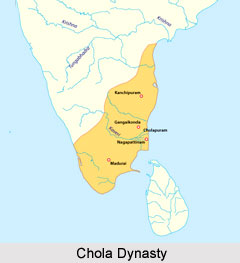
Chola Dynasty
Chola Dynasty is a Tamil dynasty and had longest duration of ruling in parts of South India. Chola dynasty had ruled South India successfully for a ex...
Suhungmung
Suhungmung was the fourteenth ruler of the Ahom dynasty who ruled from the period 1497 to 1539 AD. His reign was significant in terms of expansion of...
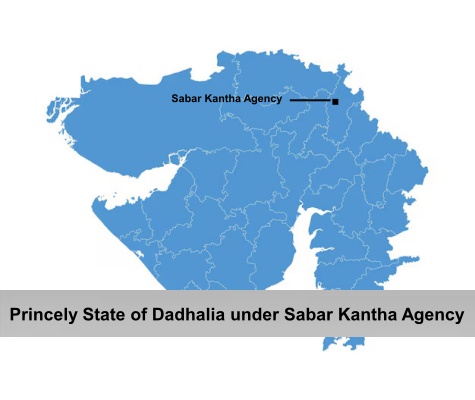
Princely State of Dadhalia
Princely State of Dadhalia was located in the present state of Gujarat. The state covered a total area of 28 sq miles and comprised of 15 villages. Th...
Princely State of Rupal
Princely State of Rupal was a part of the Baroda Agency, a sub division of Western India States Agency. It was under the administrative control of the...
Archaeological Sites of West Bengal
Archaeological sites of West Bengal reveal several aspects of ancient India. Excavations by the Archaeological Survey of India have furnished artefact...
Related articles in History of India

Mughal Architecture during Babur
Mughal architecture during Babur marked the foundation of a new architectural era in India, blending Timurid, Persian, and local influences. His reign...

Architecture during Sayyid and Lodi Dynasty
Architectures during the Sayyid and Lodi dynasty were mainly the tombs and monuments for the dead rulers. It were carefully designed and meticulously...

Brahmanical Sources of Ancient History
Brahmanical Sources of ancient history are contained in the Vedas and they constitute one of the most important literary sources of information about...

Coins of Chola Empire
Coins of Chola Empire were issued in gold, silver and copper and carried the Chola emblem.

Coins of Khilji Dynasty
Coins of Khilji Dynasty had an influential feature that was followed by the other dynasties.