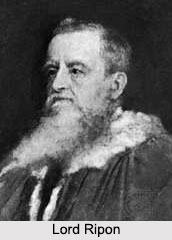
 Introduced in the year 1883, under the reign of Viceroy Lord Ripon, the Ilbert Bill was written by Sir Courtenay Peregrine Ilbert, who was a law member of the Viceroy"s Council. According to this law, the Indian judges and magistrates were given the jurisdiction to try British offenders in criminal cases at the district level.
History of Ilbert Bill
Named after the distinguished lawyer and civil servant Courtenay Ilbert, the Ilbert Bill was proposed as a compromise between two previously suggested bills. However, the introduction of the Ilbert Bill led to intense opposition in Britain and from British settlers in India that ultimately played on racial tension before it was enacted in 1884 in a severely compromised state. The bitter controversy surrounding the measure deepened antagonism between British and Indians and was a prelude to the formation of the Indian National Congress the following year.
The amended Ilbert Bill was passed on 25th January, 1884 and came into force on 1st May of the same year. The passage of this bill resulted in mass protests from not by just non official Anglo-Indians but also by large section of British officials. The controversy made it crystal clear to the educated Indians that they could not expect racial equality from the present regime. This became evident when Lord Ripon ultimately succumbed to pressure and ultimately withdrew the bill, substituting it with a milder compromise formula, which somehow sought to preserve the principle by adding a provision of trial by a mixed jury in cases involving European offenders.
This article is a stub. You can enrich by adding more information to it. Send your Write Up to content@indianetzone.com