Renewable resources of energy in India are natural resources that can be refilled by natural processes at a rate analogous or faster than its speed of consumption by humans. Solar radiation, tides, winds and hydroelectricity are permanent resources and are considered as renewable resources of energy as they do not have the hazard of non availability. Renewable resources may also mean commodities such as wood, paper, and leather, if harvesting is performed in a sustainable manner. Some natural renewable resources of energy in India include geothermal power, fresh water, timber, and biomass. A life cycle evaluation provides a systematic means of estimating renew ability of these resources. The term renewable resources have an implication of sustainability of the natural environment. Gasoline, coal, oil and natural gas, diesel, and other commodities derived from fossil fuels are non-renewable resources of energy in India. Unlike fossil fuels, a renewable resource can have a sustainable yield.
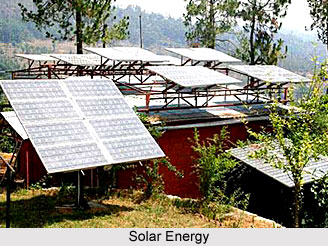 Solar Energy as Renewable Resource of Energy
Solar energy is one of the most important and oldest renewable resources of energy in India. It is the energy derived directly from the Sun. Along with nuclear energy; it is the most abundant source of energy on Earth. Solar energy is the fastest growing type of alternative energy that is increasing at 50 percent a year. It is the photovoltaic cell, which converts sunlight directly into electricity. The Sun yearly delivers more than 10,000 times the energy that humans presently use. There are a variety of technologies coming up around the world, which could be replicated to use solar energy. Cooking, water heating, lighting, and open air drying applications are common now-a-days, which use solar energy. There are also other applications like desalination, solar vehicles, agriculture, etc. which are coming up.
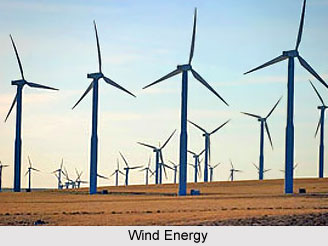 Wind Energy as Renewable Resource of Energy
Wind power is resultant from uneven heating of the Earth`s surface from the Sun and the warm centre. Most modern wind power is generated in the form of electricity by converting the rotation of turbine blades into electrical current through an electrical generator. Windmills is a much older technology that generated wind energy and is used to turn mechanical machinery to do physical work, like crushing grain or pumping water. The wind energy potential of India is about 45,000 MW out of which power of 8748 MW has been installed in India till 31st March 2008. India is one of the most important countries in generating the power through wind energy.
Wind Power in India has made a significant role in the domain of energy resources. India now ranks as a "wind superpower" with an installed wind power capacity of almost 1167 MW and about 5 billion units of electricity have been supplied to the national grid till date. The wind resource assessment programme includes wind monitoring and wind mapping that covers 800 stations in 24 states with 193 wind-monitoring stations in operations. Altogether 13 states of India acquire a net potential of about 45000 MW wind energy. The development of wind power in India began in the 1990s, and has significantly increased in the last few years.
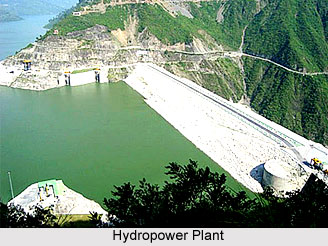 Hydropower as Renewable Resource of Energy
Hydropower is another form of renewable resources of energy in India obtained from the movement of water in rivers and oceans (or other energy sources). Water can likewise be used to generate electricity using turbines, or can be used mechanically to do useful work. It is a very common resource of energy in India. India has a whole hydro energy prospective of about 1.5 lakh MW of which about 20 percent is installed. Small hydro plant potential is about 15000 MW and most of it is in the northern and eastern hilly regions.
India is gifted with economically exploitable and feasible hydro potential assessed to be about 84,000 MW at 60 percent load factor. In addition, 6780 MW in terms of installed capacity from Small, Mini and Micro Hydel schemes have been assessed in India. Some of the advantages of Hydro Power include saving scarce fuel reserves, cost of generation, operation and maintenance is far lower than the other sources of energy, ability to start and stop quickly and immediate load acceptance makes it suitable to meet peak demand and for enhancing system reliability and stability, has higher efficiency (over 90 percent) compared to thermal (35 percent) and gas (around 50 percent) and so on.
Solar Energy as Renewable Resource of Energy
Solar water heaters have proved the most popular so far and solar photovoltaic for decentralised power supply is fast becoming popular all across the rural and remote areas. More than 700000 PV systems generating 44 MW have been installed all over the Indian states. Under the water pumping programme more than 3000 systems have been installed so far and the market for solar lighting and solar pumping is far from getting saturated. Solar drying is one area, which offers very good scenario in food, agricultural and chemical products drying applications.
More than 700000 PV systems of capacity over 44MW for different solar applications are installed all over India. The market segment and usage is mainly for home lighting, street lighting, solar lanterns and water pumping for irrigation. As the demand for power grows in the nation, traditional fuel based power-generating capacity also grows, SPV based power generation is believed to be a source to cater to the expected deficits. Especially in rural areas, where the likelihood of conventional electric lines is remote, SPV power generation has become best choice.
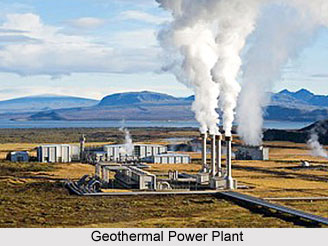 Geothermal power as Renewable Resource of Energy
Indian geothermal power is another active renewable resources of energy in India that have the capacity to produce 10,600 MW of power- a figure which is five time greater than the combined power being produced from non-conventional energy sources such as wind, solar and biomass. With escalating environmental problems with coal based projects, India has to depend on clean, cheap, rural based and eco-friendly geothermal power in future. Nuclear power is the fourth-largest source of electricity in India after thermal, hydro and renewable sources of electricity in India. As of 2008, India has 17 nuclear power plants in operation, generating almost 4,120 MW while 6 other are under construction and are expected to generate an additional of 3,160 MW approximately.
Geothermal power directly exploits the natural flow of heat from the ground. The accessible energy from natural decay of radioactive elements in the earths, crust, and mantle is roughly equal to that of incoming solar energy, particularly during the day. Oils from plants and seeds are often used as a replacement for non-renewable diesel. Methane is also considered as a renewable source of energy used in some Indian factories. Nuclear power or a breeder reactor is often used as renewable resources of energy.
India is blessed with abundance of water, sunlight, and biomass. Dynamic efforts during the past two decades are now bearing fruit as people in all walks of life have become more aware of the benefits of renewable energy. India has the world`s largest programme for renewable energy. Government created the Department of Non-conventional Energy Sources (DNES) in 1982. A complete Ministry of Non-conventional Energy Sources was established in 1992 and the Prime Minister controls the activities of this ministry. The activities of this department promote renewable energy technologies, an environment conducive to promote renewable energy technologies and renewable energy resource assessment. Creating an environment conducive for their commercialisation, research, development, and production of biogas units, solar thermal devices, solar photovoltaics, cook stoves, wind energy and small hydropower units are also some more responsibilities of the ministry.
As of 2009 survey, India stands 9th in the world in regards to number of operational nuclear power reactors. India stands at a promising position to acquire one of the most prestigious rankings as a supreme nation using renewable resources of energy at its best.