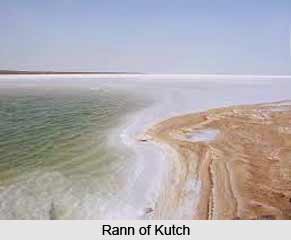
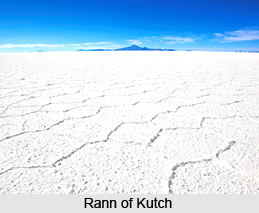
 The Rann of Kutch seasonal salt marsh in India is located in the Thar Desert bio-geographic area in the Indian state of Gujarat. The area is also spread across the Sind province in Pakistan. This is actually a seasonally marshy region and the word `Rann` stands for `salt marsh`. Kutch is the name of the district in Gujarat where this region is situated. The Rann of Kutch seasonal salt marsh covers a huge area of around 10,000 square miles and is positioned between the Gulf of Kutch and the mouth of the Indus River in southern Pakistan. To the northeast corner of Rann of Kutch, lies Luni River, originating in Rajasthan. The fact that the area has the endless desert area on one side and the sea on the other side makes the Rann of Kutch a more interesting region. The highest hill in the region measuring 1515 feet high lies on the border of the Kutch and the Rann of Kutch is counted among the wetlands of India.
The Rann of Kutch seasonal salt marsh in India is a seasonal terrain and it turns into a large expanse of the salty and isolated mud islands on the vast plains, during the dry season. The region also turns into the flooded grasslands, with the onset of monsoons and gets covered with the huge variety of tress and tall grasses, as well. The region receives rainfall brought by the monsoon during the months of July to September. The flat desert of salty clay and mudflats of Rann of Kutch seasonal salt marsh in India averages 15 metres above sea level during the summer monsoon in India. The area remains fill with standing waters, interspersed with sandy islets of thorny scrub and provides breeding grounds for some of the largest flocks of Greater and Lesser Flamingoes. The Gulf of Kutch is located on the west of this region and the Gulf of Cambay is on the east and both these places are united during the monsoon. This region was once connected to the Arabian Sea, before geologic forces within the Earth forced the land to rise and in turn, transformed this area into a lake. As the silt gradually filled it, the area became a seasonal salt marsh.
The eco region of Rann of Kutch seasonal salt march in India mainly represents the saline wasteland, where scrub flora and flooded grasslands are interspersed with swampy land. The region offers a refuge to the exotic wildlife and in spite of being hot and dusty, it holds rich bio diversity. The region harbours large population of Wild Asiatic Ass that is the member of the Wild Horse family. Apart from that, the region is also home to some other important species like the Desert Cat, Black Buck, Hayena Wolf, Gazelle, Blue Bull, Chinkaras, Wild Boar, Falcons, Nilgai, Striped Hyena, Caracal, Ghudkhur, etc. The region is quite famous for the Indian Wild Ass sanctuary, named the Little Rann of Kutch. In this sanctuary, the last of three species of Asiatic Wild Ass, the only ones in Asia, still exists.
The Rann of Kutch seasonal salt march in India is the only region which offers refuge to the migrating flamingoes. The area is home to a total of 13 species of Lark. The region also provides habitat to a large number of other bird species. The total number of bird species found in this region is more than 200 and they include the White Eared Bulbul, Shrikes, Indian Courser, Great Indian Bustard, Lesser Flamingo, Sarus Crane and Stone Plover. Some of the other bird species that can be found in the marshes lands of Kutch include Ibis, Spoonbill, Common Cranes, Pelican, etc. The biosphere reserve of Rann of Kutch is considered as an important area for preserving the critically threatened vulture species and several vulnerable species of Eagles, as well. Two of the birding hotspots in the Rann of Kutch include the Banni grasslands and Chhari Dhand. Apart from providing habitat to a rich variety of flora and fauna species, the Rann of Kutch seasonal salt marsh in India also provides habitat to a large number of tribal communities. Numerous indigenous people live in this region, as it has heterogeneous population of 18 different tribes, each with its own distinguished culture and traditions.